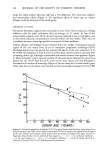
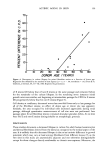
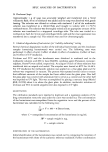
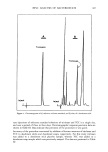
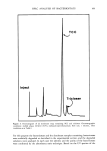
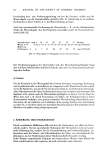
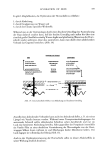
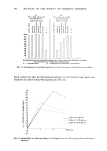
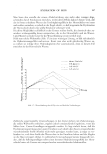
J. Soc. Cosmet. Chem., 32, 163-173 (May/June 1981) HPLC analysis of some bacteriostats in deodorant sticks and soaps RAJA G. ACHARI and DAVID CHIN, Research & Development Center, Bristol- Myers Products Division, 225 Long Avenue, Hillside, NJ 07207. Received February 5, 1981. Synopsis A stability-indicating HPLC method for the determination of some bacteriostats such as Triclosan (2,4,4'-trichloro-2'-hydroxydiphenylether) and TCC (3,4,4'-trichlorocarbanilide) is described. The liquid chromatographic separation is carried out using a •Bondapak Alkylphenyl column and the mobile phase consisting of 1:1 (V/V) acetonitrile:water. The method had been documented to be precise and accurate and has been successfully applied in assaying commercially available deodorant sticks and soap samples. INTRODUCTION Triclosan (I) (Irgasan DP-300 ©, 2,4,4'-trichloro-2'-hydroxydiphenylether) (Ciba-Geigy, Greensboro, NC) is a commonly used bacteriostat in deodorant sticks and soaps. TCC (II) (Monsanto, St. Louis, MO) (3,4,4'-trichlorocarbanilide) is mainly used in deodorant soaps. Various methods have been reported for the analysis of these bacteriostats in deodorants, but all of these methods suffer from certain drawbacks. Perfumes, other UV absorbing substances, or chemical breakdown products of the bacteriostats often interfere with ultraviolet and colorimetric methods (1,2). The gas chromatographic procedure of Demars and Yates (3) for the analysis of TCC is cumbersome and non-specific because the amines which are ultimately analyzed are also the probable chemical degradation products of TCC. One of the two reported HPLC procedures requires a gradient elution system (4) and the second requires a radial compression separation system (5). Both of the above systems are neither suitable nor available in all laboratories for routine analysis moreover, neither of the above HPLC methods has been tested to determine whether it is "stability-indicating" due to the chemical degradation of the bacteriostats in the finished products. The present study is aimed at developing a stability-indicating simple isocratic HPLC method for assaying triclosan in deodorant sticks and TCC in deodorant soaps. Chromatographic parameters have been provided to assay both triclosan and TCC should these be present in combination. The chemical structures of triclosan and TCC are shown below. 163

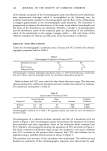
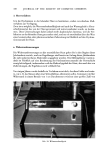
164 jOURNAL OF THE SOCIETY OF COSMETIC CHEMISTS O Cl C1 O • Cl C1 NHCNH C1 Cl HO TCC I II METHOD APPARATUS A modular liquid chromatographic unit consisting of a constant flow solvent delivery pump (Model 6000A, Waters Assoc., Milford, MA), a continuously variable UV-VIS spectroflow monitor with a capability of programming to read absorbance of an eluate at several wavelengths simultaneously, and of obtaining an absorbance spectrum between desired wavelengths (Model LC-75, Auto Control, Perkin-Elmer Corp., Norwalk, CT), a digital recorder (Model 56, Perkin-Elmer Corp.) and an integration device (Model SP-4000, Spectra-Physics, Santa Clara, CA) to calculate the area under the curve of the eluates, was used for chromatography. An alkylphenylsiloxane bonded column (•Bondapak Alkylphenyl, Waters Assoc.) was used for the separation of the bacteriostats with a mobile phase containing 1:1 (V/V) acetonitrile:water (HPLC grade, Baker Chemical Co., Phillipsburg, NJ). The bacterio- stats were monitored at 280 nm. STANDARD SOLUTIONS Appropriate amounts of triclosan and TCC were dissolved in methanol (HPLC grade, Baker Chemical Co.) and the appropriate aliquots of the solutions were further diluted using the mobile phase or 1:1 (V/V) methanol:water to yield a concentration range of 25 •tg/ml-75 •tg/ml for triclosan, and 6 •tg/ml-24 •tg/ml for TCC, respectively. SAMPLE PREPARATION A. Deodorant Sticks Approximately 1 g of the deodorant stick was accurately weighed into a 50-ml volumetric flask. 5 ml of methanol was added and the deodorant was dissolved by applying gentle heat on a hot plate. 25 ml of 1:1 (V/V) acetontrile:water was added. The solution gelled. It was warmed until dissolved and diluted to volume with additional 1:1 acetonitrile:water. The solution was cooled to room temperature and the volume was adjusted to mark if needed. The solution was mixed thoroughly and approximately 15 ml of the above solution was transferred into a stoppered centrifuge tube and placed in a methanol-ice bath for 30 min. The solution was centrifuged while cold to separate a clear supernatant from a small amount of gel which did not contain any bacteriostat. The supernatant was transferred to a sample vial and this solution was used for chromatography.
Purchased for the exclusive use of nofirst nolast (unknown)
From: SCC Media Library & Resource Center (library.scconline.org)