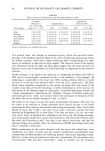
16 JOURNAL OF THE SOCIETY OF COSMETIC CHEMISTS (2) A. V. Hill, Diffusion of oxygen and lactic acid through tissues, Proc. Roy. Soc. (London), B104, 39- 96 (1928). (3) J. Crank, Mathematics of Diffusion, (Oxford Press, London, 1956), p 66. (4) C. Matano, The relation between the diffusion coefficients and concentrations of solid metals (the nickel-copper system), JapanJ. Physics, 8, 109-113 (1933). (5) Y. K. Kamath, S. B. Ruetsch, and H.-D. Weigmann, Microspectrophotometric study of ozone fading of disperse dyes in nylon, Textile Res. J., 53, 391-402 (1983). (6) E. I. Valko and G. Barnett, A study of the swelling of hair in mixed and aqueous solvents, J. Soc. Cosmet. Chem., 3, 108-117 (1952).

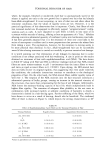
j. Soc. Cosmet. Chem., 36, 17-30 (January/February 1985) Component distributions in keratins and their estimation from amino acid analyses EMORY MENEFEE, Trichos Research, 5313 Rosalind Avenue, Richmond, CA 94805, Received October 31, 1984. Presented at the Annual Meeting of the Society of Cosmetic Chemists, New York, December 6-7, 1984. Synopsis Examination of published data supports the idea that aqueous swelling in fibrous keratins probably occurs as much in microfibrillar regions as in the matrix, except after crosslink cleavage, when the matrix becomes more hydrophilic and swellable. Approximately half the disulfide crosslinks are intramolecular, and thus not involved directly in mechanical behavior, though they may act as a reservoir for replenishing inter- molecular disulfides lost through sulfhydryl reaction. The swelling, mechanical, and reactive behavior of hair depend strongly on the location and composition of structural components, their hydrophilicity, and involvement in intermolecular crosslinking. At least four or five independent protein components are essential. Component proportions are estimated by a regression method that linearly combines the amino acids of the components to reproduce the overall amino acid analysis of the keratin. Five component proteins are taken from analyses of fractionated hair and wool: low, high, and ultra-high sulfur, cuticle, and high glycine-tyrosine. The compositions of human hair and wool samples, and certain pathological hair samples, are well-reproduced. Errors are greater when estimating compositions of other pathological hair samples or hair from lower order animals, suggesting possible requirements for the component proteins in these cases. INTRODUCTION Fifty years have passed since Goddard and Michaelis (1,2) found that two major fractions could be extracted from reduced wool fibers--one containing a higher cystine content than the other. Doubt remains, however, about how these and other components are distributed within a keratin fiber, how they contribute to the physical and chemical behavior of the fiber, or even how cystine crosslinks are connected and located. This uncertainty partly stems from the fact that about 100 distinct proteins can be isolated from a typical keratin, and that during this isolation procedure nearly all crosslinks must be broken. In recent years much of the keratin literature has supported the idea that mammalian keratins are all made up of roughly the same groups of proteins, combined differently in any particular keratin (3). This attractive notion would, if generally true, provide a very useful system by which to classify normal and aberrant keratins, and greatly simplify attempts to correlate composition with physical and chemical behavior. Un- fortunately, the fractionation procedures required for complete characterization of ker- atins are so tedious and time-consuming that few complete component analyses have 17
Purchased for the exclusive use of nofirst nolast (unknown)
From: SCC Media Library & Resource Center (library.scconline.org)