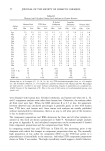
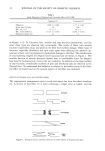
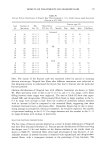
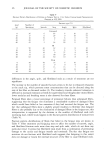
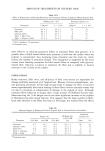
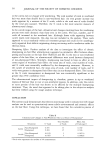
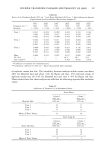
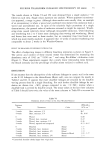
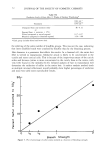
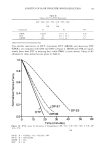
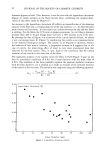
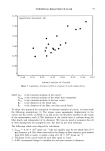
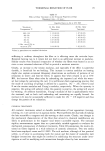
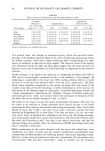
EFFECTS OF TREATMENTS ON NEGROID HAIR with distilled water, blotted dry, and conditioned at 65% RH and 2 iøC. No breakage was observed during the treatment. Humectant Treatments. Samples of Negroid hair fibers were treated with either distilled water for 30 rain at 40øC or 5% monoethanolamine thioglycolate at pH 8.5 for 30 min at 40øC. The fibers were not straightened during these pretreatments. Samples of fibers treated as above were then treated with the following humectant solutions: 1. 5% aqueous solution of polyacrylic acid (PAA) (MW = 1800) at pH 8.5 (adjusted with ethanolamine). 2. 30% aqueous solution of glycerin. 3. 30% aqueous solution of glycerin that was 2M in urea at pH 8.5 (adjusted with ethanolamine). 4. 10% aqueous solution of dimethylsulfoxide (DMSO). 5. 5% aqueous solution of polyacrylic acid that was 5% in dimethyl sulfoxide at pH 8.5 (adjusted with ethanolamine). Humectant treatments were carried out in two different ways. In the first, the hair fibers were treated with the appropriate humectant solution for 3 days at 40øC and then were conditioned at 65% RH and 21øC without rinsing. In the second treatment method, the samples were treated for 1 hour at 40øC each day for a period of three days, with no rinsing between treatments fibers were conditioned at 65% RH at 2 IøC. MOISTURE SORPTION Moisture sorption by the hair samples was determined by equilibrating mO.5 g quan- tities of dry hair (dried in vacuum over P205 for 3 days) for one week in desiccators containing appropriate saturated salt solutions to give the required relative humidities. RESULTS AND DISCUSSION COMPARISON OF NEGROID AND CAUCASIAN HAIR The manageability problems and damage arising from the kinky nature of Negroid hair have been discussed earlier in this paper. The relatively straight nature of Caucasian hair makes it more manageable and less prone to mechanical damage, so that there are significant differences in the mechanical and fractographic behavior of these two types of hair. In addition, there seems to be a significant difference in ellipticity, which may be of biogeneric origin. The ellipticity, extension and stress at break, and fraction of premature failures (arbitrarily defined as the percentage of fibers breaking below 22% extension) are shown in Table I. The data in Table !, though obtained for only one sample of Negroid hair, are believed to show characteristic differences and illustrate the problems associated with Negroid hair. Although these measurements were made at different strain rates, the differences in properties are typical. Some caution, however, should be exercised in interpretation of these results as they are at variance with those obtained by other workers (3). Scanning electron microscope studies of fracture ends of Negroid hair have shown five different patterns, i.e., smooth, step, angle, fibrillated, and split ends, diagrammed

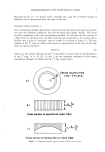
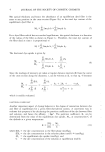
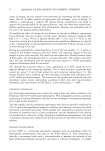
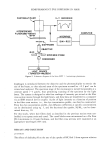
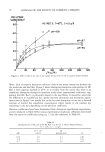
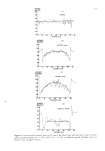
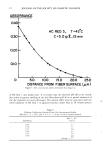
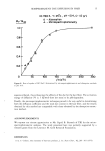
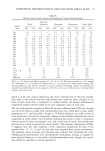
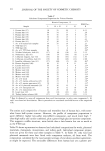
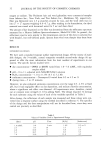
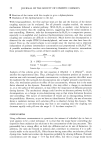
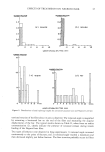
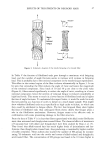
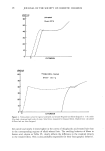
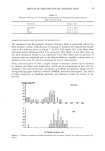
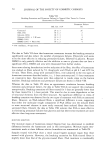
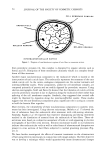
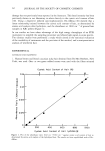
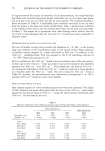
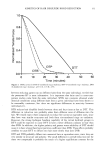
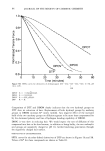
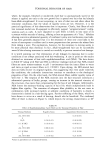
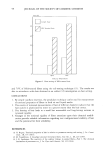
42 JOURNAL OF THE SOCIETY OF COSMETIC CHEMISTS Table I Some Properties of Negroid and Caucasian Hair at 65% RH Negroid (2) Caucasian (4) Ellipticity 1.895 + 0.083 1.17 + 0.04 Strain rate (%/min) 50 100 Brk. ext. (%) 27 + 5 38 + 1 Brk. stress(GN/m 2) 0.123 + 0.016 0.202 + 0.011 Premature failure (%) 22 2 in Figure 1 (2). In Caucasian hair, smooth and step fractures predominate, and the other three types are observed only occasionally. The cuticle of fibers with smooth fractures is generally intact and protects the fiber from further damage. Other types of fractures, especially fibrillated and split ends, apart from affecting the aesthetic ap- pearance of hair, lead to progressive longitudinal damage to the fiber. The distributions of axial splitting lengths for Negroid and Caucasian hair are shown in Figure 2. The number fraction of smooth fractures (shaded box) is considerably lower for Negroid hair than for Caucasian hair, even in the wet condition. In addition to the large number of step fractures, considerable numbers of split and fibrillated ends are observed in the Negroid hair. To understand this behavior in relation to the kinky nature of the fiber, the effect of tensile load on the twisted regions of the fiber was examined. EFFECTS OF TENSILE LOAD ON TWISTED FIBERS The experimental arrangement used to study this aspect has been described elsewhere (2). A section of hair fiber (2-5 mm) containing a single twist is loaded, and the Smooth L__] [ I, Step Fibrilloted Figure 1. Principal fracture patterns observed in tensile failure of Negroid hair fibers.
Purchased for the exclusive use of nofirst nolast (unknown)
From: SCC Media Library & Resource Center (library.scconline.org)