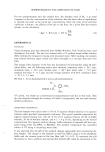
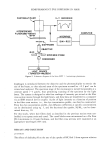
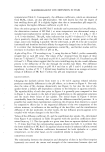
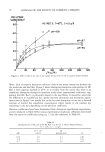
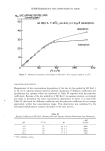
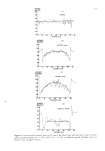
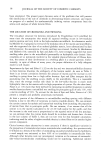
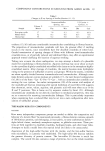
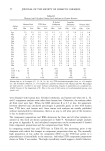
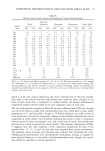
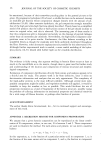
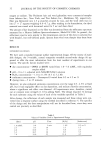
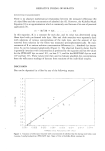
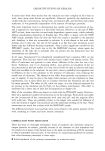
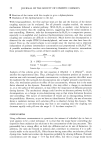
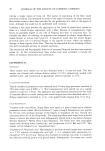
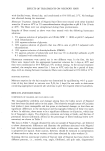
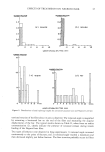
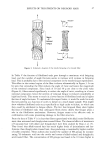
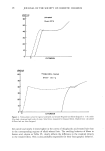
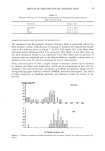
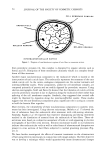
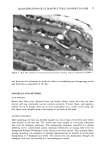
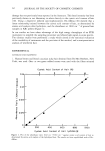
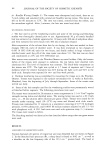
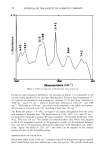
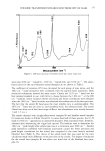
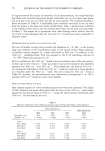
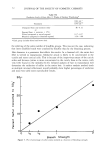
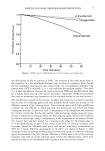
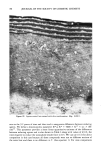
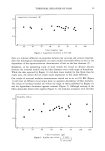
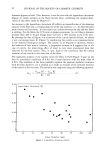
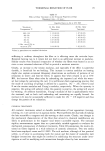
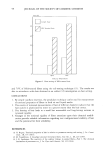
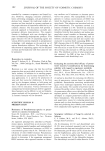
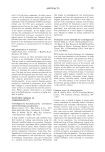
66 JOURNAL OF THE SOCIETY OF COSMETIC CHEMISTS 0.12. 0 Wavenumbers Figure 3. Difference spectrum of bleached hair minus virgin hair. Except for some frequency differences, the spectrum in Figure 3 is comparable to the one previously reported (5) for six-times-bleached hair. Previous band assignments (1- 3,5) placed the symmetric and asymmetric sulfonate S=O stretching vibrations at 1040 cm-• and 1175 cm-•, while we found these vibrations at 1042 cm-• and 1188 cm-•. The bands at 1219 cm-• and above can be assigned to the cysteic acid moiety. All are seen in L-cysteic acid (12), including a band near 740 cm -• The Bunte salt groups (- S- SO •) in Figure 4 are readily distinguished from the cysteic acid residues of bleached hair. The bands found at 1196, 1022, 633, and 525 cm-• are assigned to thiosulfate groups. Previous researchers (13) reported bands near 1190, 1022, 630, and 520 cm-• for methyl and ethylthiosulfate ions, which they assigned to the S = O asymmetric stretch, S = O symmetric stretch, S = O symmetric deforma- tion, and the S = O asymmetric deformation vibrations of the thiosulfate ions, respec- tively. Again, the bands at 1231 cm-• and above can be assigned to the cysteine moiety attached to the thiosulfate group. REPRODUCIBILITY OF THE METHOD Ratios were taken of the 1042 cm-• oxidation band (S = O) intensities against peptide (hair) bands before and after subtracting virgin hair spectra. The peptide bands used

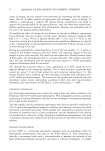
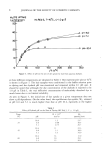
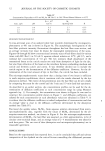
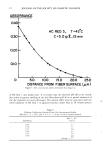
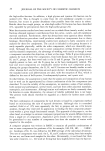
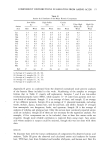
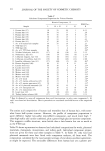
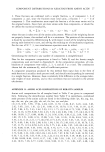
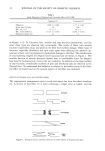
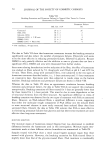
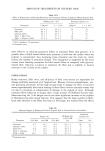
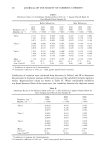
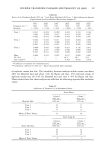
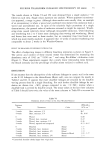
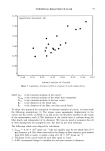
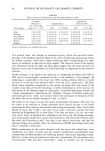
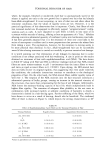
FOURIER TRANSFORM INFRARED SPECTROSCOPY OF HAIR 67 0.3 Wavenumbers [cm -• ] Figure 4. Difference spectrum of bisulfite-waved hair minus virgin hair. were near 1650 cm-• (amide I), 1230 cm-• (amide !II), and 1076 cm-1. The absor- bance ratios for the once-bleached tresses (Samples A) are shown in Table I. The coefficient of variation (CV) was calculated for each group of nine ratios, and the 1042 cm-• band intensities were correlated with the peptide band intensities. Both statistical evaluations showed the same result. Clearly the 1235 cm-• band was the best internal standard to use, with little to choose between the 1100 cm-• or the 900 cm-1 baseline. Lower variances (better precision) and better correlations were obtained when the 1042 cm- • band intensity was obtained after subtraction of the hair spectrum. The fact that the amide III band gave the most reliable ratio is understandable. The 1076 cm-t band was too close to, and interfered with, the sulfonate band. The amide I band was often out of the linear range of Beer's law (absorbances were usually between 1 and 1.5 a.u.). The results obtained with thioglycollate-waved (samples B) and bisulfite-waved (samples C) tresses are shown in Tables II and III. In more than half of these spectra, the S = O band at 1042 cm- • appeared as an unresolved shoulder. Peak intensities were, therefore, obtained after subtracting the virgin hair spectra. The baseline used to determine the 1042 cm-• peak height after subtraction was at a minimum near 1060 cm -•. Smaller peak intensities combined with baseline uncertainty caused the lower precision and peak height correlations for the waved hair compared to the more heavily oxidized bleached hair (Table I). The choice of the amide band that was used for the ratio calculation made little difference to the precision of the results. The degree of oxidation for the waved hair (samples B) was about one third that of the bleached hair (sam- ples A).
Purchased for the exclusive use of nofirst nolast (unknown)
From: SCC Media Library & Resource Center (library.scconline.org)