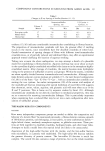
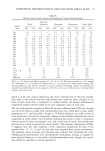
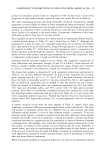
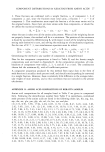
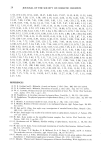
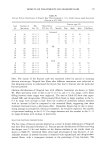
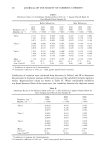
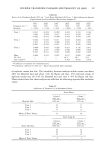
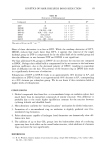
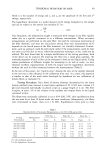
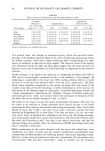
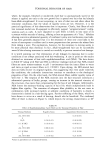
96 JOURNAL OF THE SOCIETY OF COSMETIC CHEMISTS Table III Effect of Cosmetic Treatments on the Torsional Properties of Hair Torsional Logarithmic Modulus in Rigidity Ratio Decrement (8) Air at 65% RH Hair Sample dyne cm -2 ) 10 •ø H20 0.1 N HC1 H20 0.1 N HCI Intact 1.02 (0.09) 0.26 (0.01) 0.16 (0.01) 0.40 (0.05) 0.44 (0. Bleached 1.05 (0.05) 0.14 (0.01) 0.11 (0.01) 0.44 (0.03) 0.49 (0.06) Dyed (Blond) 1.07 (0.05) 0.23 (0.01) -- 0.42 (0.02) Dyed (Black) 1.08 (0.13) 0.23 (0.01) 0.15 (0.01) 0.45 (0.04) 0.44 (0.02) Waved 1.01 (0.04) 0.09 (0.01) 0.06 (0.01) 0.56 (0.05) 0.47 (0.03) Relaxed 0.91 (0.11) 0.06 (0.02) -- 0.65 (0.04) -- Values in parentheses are standard deviations. In a general sense, the changes in torsional rigidity follow the expected course. Cleavage of the disulfide bonds by H202 in the course of bleaching substantially lowers the torsion modulus, while only a slight weakening effect (corresponding to a lesser degree of oxidation) is observed for dyed samples. The identical values of the rigidity ratio obtained for both the light and dark shades suggest that the more extensive dye deposits, in the case of dark shades, do little if anything to compensate for the oxidative cleavage. Further decrease in the rigidity ratio observed on transferring the fibers from H20 to HCI can be conventionally interpreted as due to the breaking of salt linkages the weakening is considerable in the intact hair (38% modulus decrease relative to water) and less so in the dyed and bleached fibers (34% and 21%, respectively). The latter result seems somewhat unexpected as one would anticipate that with many of the covalent cross links severed by bleaching, a further destabilization of the structure by elimination of salt linkages might be catastrophic. A possible explanation involves the "charge rearrangement" phenomenon (8). Oxidative cleavage of disulfide bonds gen- erates strongly acidic cysteic acid residues which then participate in formation of new salt links that are not readily disrupted at pH 1 or above. Of interest in this respect are also the results of logarithmic decrement. The latter can be viewed as an indicator of torque relaxation which should decrease as the bonds sustaining the shear stress are eliminated in the testing environment. Thus, the 8 values should be much less at pH 1 than they are in water, and such a pattern has been observed by Feughelman (9) in wool fibers. This does not seem to be the case either with intact, dyed, or bleached hair, although in the latter case, the charge rearrange- ment phenomenon might have caused some interference. The waved hair behaves more like wool the 8 decreases at pH 1 but only to the value of intact hair, and thus the observed change may possibly reflect the elimination of SS-SH interchange rather than that of coulombic interactions. Before commenting on the results obtained with the waved and relaxed hair, some clarification is in order. In both cases the cosmetic modification was performed using commercially available products and following product instructions regarding timing. However, a large excess of reagents was used and, consequently, the hair samples were over-processed. This was done intentionally, trying to simulate real life situations

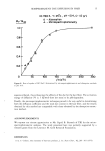
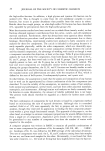
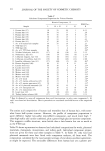
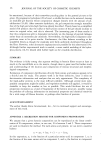
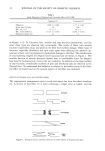
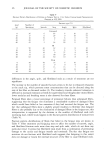
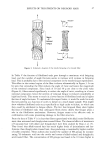
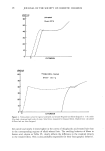
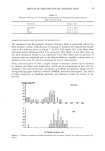
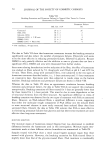
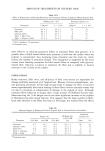
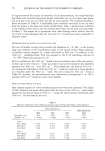
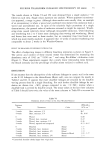
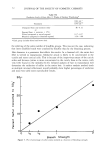
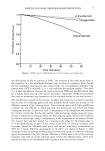
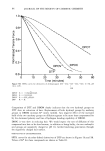
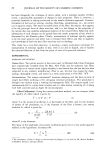
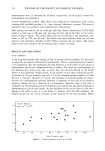
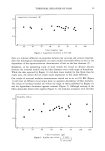
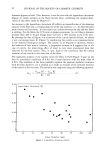
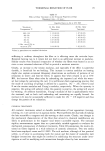
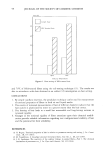
TORSIONAL BEHAVIOR OF HAIR 97 where, for example, bleached or oxidatively dyed hair is unscrupulously waved or the relaxer is applied not only to the new growth but is spread over hair that had already been alkali-straightened. It is not surprising, in view of what was said above about the treatment conditions, that the values of rigidity ratios are low. However, it is the practical significance of this observation that is important. Clearly, hair fibers of such low torsional moduli are ill-equipped to effectively support "antigravitational" config- urations such as curls. A wave imparted to such fibers is likely to lose most of its curvature within seconds of rinsing, offering at best an appearance of a "frizz." Alkaline relaxing converts a substantial quantity of combined cystine into lanthionine cross links. It has been generally assumed that it is the resistance of these new cross links to the action of mercaptans or sulfites used in wave preparations that prevents the relaxed hair from taking a wave. The explanation, however, for the resistance to waving seems to be more physical than chemical. In fact, alkali-straightened hair can be successfully waved if the relaxing treatment is carried out carefully to prevent excessive hair damage. It is worth pointing out that elimination of salt linkages by exposing hair to acidic conditions is not always associated with hair weakening. A case in point are the results obtained on treatment of hair with naphthalenesulfonic acid (NSA). The data shown in Table IV (along with 820 and HC1 as reference readings) indicate that NSA-treated fibers are more torsion-resistant to pH 1 environment than the intact, fibers to water and twice as rigid as intact fibers in 0.1 N HC1. Upon drying, the HCl-treated hair does not fully recover its original rigidity, thus suggesting that even under relatively dry conditions, the coulombic interactions continue to contribute to the rheological properties of hair. On the other hand, the NSA-treated fibers exhibit rigidity ratios of well over 1. The sorption of the NSA moleties into the hair structure introduces a substantial quantity of bulky groups, causing an increase in the internal viscosity of the structure, thus more than compensating for the loss of salt linkages. Additionally, NSA lowers the moisture-binding capacity of hair (10), which independently leads to higher fiber rigidity. The retention of adequate fiber pliability in the wet state in combination with increased rigidity at ambient conditions of humidity is clearly a characteristic desired in a hair-setting agent. Further stiffening of the fibers, which we have shown to occur as a result of heating, should also be beneficial. The combined effect of these is shown in Figure 6, which depicts the setting characteristics at 40 ø Table IV Effect of Naphthalenesulfonic Acid (NSA) on the Torsional Properties of Hair Testing Medium Rigidity Ratio Logarithmic Decrement (8) Air, 65% RH 1 0.20 (0.01) H20 0.26 (0.01) 0.40 (0.05) 0.1 N HC1 0.16 (0.01) 0.44 (0.11) Air, 65% RH 0.88 (0.02) 0.22 (0.02) 0.1 N NSA 0.32 (0.01) 0.41 (0.04) Air, 65% RH 1.11 (0.02) 0.21 (0.01) Values in parentheses are standard deviations.
Purchased for the exclusive use of nofirst nolast (unknown)
From: SCC Media Library & Resource Center (library.scconline.org)