212 JOURNAL OF THE SOCIETY OF COSMETIC CHEMISTS agents should have to fulfil their task of cleaning without causing significant damage to teeth. Dental requirements demand that a high cleaning effect is accompanied by as low a dentin abrasion as possible so that dentin at the dentin-enamel junction is not damaged. The fact that the enamel should also remain undamaged in the process appears obvious, even if a certain polishing effect seems desirable. A large number of methods have been developed for investigating the various param- eters. Special attention is naturally directed towards the measurement of clinically sig- nificant dentin abrasion. This is done today using the method developed by Graben- stetter (21), which involves measuring the abrasion of radiolabelled dentin (22-27) or by measuring surface profiles (25,28-31). Dentin abrasion has also been determined through weight loss (32). The same methods can be used in principle for measuring the degree of enamel abrasion (25,26,31,33). The roughness of enamel surfaces before and after treatment with dentifrices has been investigated in vitro and in vivo to discover whether products have a roughening or polishing effect. To this end, light reflection has frequently been employed as a mea- surement variable, in which case polychromatic light sources (34-40) and lasers (41,42) were used. Evaluations of the results have frequently been carried out using pictures taken with the aid of light or electron microscopes (38,39,43-45). There have, of course, also been attempts to determine the cleaning effect with in vitro methods. Initially substrates were coated with films such as paint coats (36,46,47). Today preference is given to the use of extracted human teeth with dental stain (48) or to synthetically discolored bovine teeth (49). The differences in light reflectance before and after treatment with the dentifrice serve as measurement variables. Numerous methods for examining these effects in clinical tests have been published (26,33,37,50-55). The publications by G. B. Winter eta/. (56) and W. B. Davis (57) supply valuable contributions to the cited complex of issues. Some of the methods quoted are also suitable for testing the effects of dentifrices on denture materials (58,59). AIM OF THE INVESTIGATION On the basis of currently available investigational results, it is assumed today that a dentifrice's cleaning effect improves with increasing dentin abrasion up to a limit not precisely specified (60). If there is, in fact, such a correlation, it clearly conflicts from a medical point of view with the already mentioned demands made of dentifrices, because products with high cleaning power for dental stain (discolored pellicle) would neces- sarily involve greater risk of damage to dentin at the dentin-enamel junction. Until now correlations between cleaning effect and enamel abrasion and between cleaning effect and scratching or polishing effects have been scarcely discussed. Since discolored pellicle is located on the enamel surface (61-65), the question arises as to why its removability is correlated with dentin abrasion and not with enamel abra- sion. This has been explained by the fact that the structure of pellicle consisting of proteins is more closely related to dentin than to enamel (66). This explanation is, however, somewhat unsatisfactory, as existing data from the literature also make a positive correlation between cleaning effect and enamel abrasion appear possible.

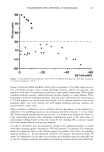
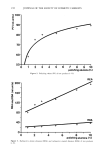
PARAMETERS FOR ASSESSING TOOTHPASTES 213 In a publication by Baxter eta/. (33) the enamel and dentin abrasions as well as clini- cally determined cleaning values for 5 calcium carbonate toothpastes are quoted. The authors ascertained with high correlation coefficients that the cleaning effect is linearly proportional to dentin abrasion. If on the basis of these data one calculates the regres- sion for the correlation of cleaning effect to enamel abrasion, one also arrives at a linear dependence with equally good correlation coefficients. The relationship to dentin abrasion was probably preferred because in another series of measurements, in which the pastes were tested with different cleaning agents, no posi- tive correlation between cleaning power and enamel abrasion became evident. This result could, however, be explained by the fact that the various cleaning agents rough- ened or polished the tooth enamel to different degrees and thereby also influenced the cleaning effect. References to such effects can be found in a publication of Wilkinson (26). These unanswered questions make it appropriate to carry out new investigations into the dependence of cleaning effect on enamel and dentin abrasion using cleaning agents or cleaning systems which do not roughen the enamel but polish it as well as possible. MATERIALS AND METHODS ENAMEL AND DENTIN ABRASION Enamel and dentin abrasion values are defined as the amount or relative amount of enamel or dentin removed from a tooth crown or root by means of an abrasive denti- frice. Abrasion values do not contain information about the profile of the abraded sur- face. The enamel and dentin abrasion values were determined in the conventional manner on radiolabelled tooth enamel (REA values) or on tooth roots (RDA values) according to the method of the American Dental Association (24). In all of the measurements, the test slurries were compared with a reference slurry containing 10 g of calcium pyrophosphate abrasion standard suspended in 50 ml of 0.5% carboxymethylcellulose. The RDA (REA) value of this mixture was arbitrarily taken as 100. The measurements were carried out by Missouri Analytical Laboratories, St. Louis, MO. SCRATCHING EFFECT The scratching value (SV) in this paper is defined as the percentage that a test dentifrice increases the roughness of enamel, whereby 0.040 •m is zero and 0.200 •m is - 100%. The more negative the number, the greater the scratching effect of the tooth- paste. In order to measure the scratching effect on tooth enamel, a surface-measuring appli- ance, Perthometer S5P with the RHTF 50e measuring head, was used. The measuring appliance was equipped with a fixture device for a form, by means of which the mea- suring plane of the preparation could be adjusted and shifted with the aid of two mi- crometer screws. This made it possible to scan identical measurement paths before and
Purchased for the exclusive use of nofirst nolast (unknown)
From: SCC Media Library & Resource Center (library.scconline.org)