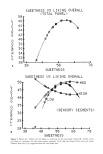
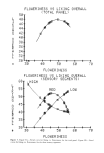
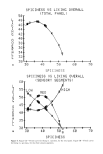
246 JOURNAL OF THE SOCIETY OF COSMETIC CHEMISTS From a variety of other studies, dealing with both food (e.g., coffee) and cosmetics (including perfumes), it appears that sensory preference segments do exist. One can ask these individuals to profile different products (using the same attributes and scales). Thus, these consumers probably do want products generating divergent sensory experi- ences (13). IMPORTANCE OF BLIND VS. BRANDED TESTING All products tested in this study were "blind," so that the consumers would not know the identity of the stimulus. However, in fragrances especially there is a strong branding effect. Prestige and brand may override sensory preferences. A fragrance that a segment might dislike on a pure sensory basis (e.g., for the light or low impact seg- ment) may rise dramatically in acceptance when it is branded. The rise in acceptance comes from the brand effect, not from the fragrance itself. NEXT STEPS FOR SENSORY SEGMENTATION The work reported here provides the reader with the basis for future research. Among the questions to be answered by further scientific research (of both a basic and an applied nature) are: 1. What particular packaging elements (e.g., color, size, graphics) correlate with the sensory segments? Does the sensory segmentation extend as clearly into packaging as it appears to extend into product sensory attributes? Do individuals segmenting on sensory preferences show similar preferences for packaging, or does packaging gen- erate a new (and perhaps different) segmentation of consumers? 2. What types of visual stimuli for advertisements appeal to the segments? What types of product statements? Do the sensory segments show different preferences for visual background (e.g., for advertisements)? Do they show different preferences for product description? The sensory segmentation procedure provides only the first and cursory glance into individual differences. If segmentation by this procedure is truly effective and mean- ingful, then it opens up a large arena of investigation into individual differences. The pervasive "problems" with individual variability may turn into scientific insights and marketing opportunities if, indeed, researchers can easily classify individuals into one of a limited set of preference segments. REFERENCES (1) G. Ekman and C. Akesson, Saltiness, sweetness and preference: A study of quantitative relations in individual subjects. Report No. 177, Psychological Laboratories, University of Stockholm, Sweden (1964). (2) R. M. Pangborn, Individual variations in affectire responses to taste stimuli. Psychonomic Science, 21, 125-128 (1970). (3) G. T. Mower, R. G. Mair, and T. Engen, "Influence of Internal Factors on the Perceived Intensity and Pleasantness of Gustatory and Olfactory Stimuli," in The Chemical Senses and Nutrition, M. R. Kare and O. Maller, Eds. (Academic Press, New York, 1977), Chapter 5. (4) H. R. Moskowitz, J. Chandler, R. Moldawer, and R. Laterra, Psychophysical measurement as a tool for perfumery and the cosmetic industry, J. Soc. Cosmetic Chemists, 30, 91-104 (1979).

SENSORY SEGMENTATION OF FRAGRANCES 247 (5) T. Engen, "Method and Theory in the Study of Odor Preferences", in Human ReJponses To Environ- mental Odors, A. Turk, J. W. Johnston, Jr., and D. G. Moulton, Eds. (New York, Academic Press, 1974), pp 212-241. (6) T. Engen, and D. H. McBurney, Magnitude and category scales of the pleasantness of odors, Journal of Experimental Psychology, 68, 435 -440 (1964). (7) J. H. Kenneth, A few odor preferences and their constancy, Journal Of Experimental P•ychology, 11, 56-61 (1928). (8) P. T. Young, Constancy of affective judgments to odors, Journal Of Experimental Psychology, 6, 182-191 (1923). (9) P. T. Young, A group experiment upon the affective reaction to odors, American Journal of Psychology, 49, 2327-2386 (1937). (10) R. W. Moncrieff, Odour Preferences (New York, Wiley 1966). (11) D. Foster, The development of olfactory preferences. Perfumery and Essential Oil Record, 248, 244- 246 (1950). (12) U. Berglund, Dynamic properties of the olfactory system. Annals, New York Academy of Sciences, 237, 17-27 (1974). (13) H. R. Moskowitz, New Directions For Product Testing and Sensory Evaluation of Food (Food and Nutrition Press, 1985).
Purchased for the exclusive use of nofirst nolast (unknown)
From: SCC Media Library & Resource Center (library.scconline.org)