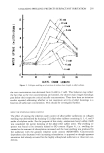
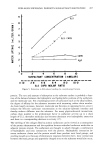
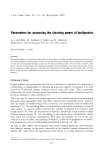
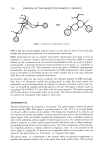
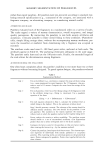
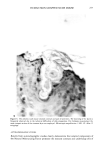
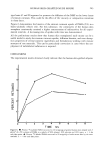
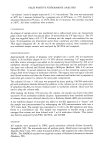
HUMAN SKIN GRAFTED NUDE MOUSE 253 Base B: This was an w/o-type cream. It contained branched chain esters, carbomer, polysorbate 60, triethanolamine, glycerine, and water. Base C: This was an o/w-type lotion. This emulsion contained branched chain esters, carhomer, decyl oleate glycerine, and water. Base D: Base D was also an o/w-type lotion. Its main constituents were branched chain esters, carhomer, polysorbate 20, ethylene glycol, butylene glycol, and water. Para amino benzoic acid (PABA) (ICN Chemical and Radioisotope Division) studies were initiated simultaneously to measure its penetration kinetics in the stratum cor- neum. Tape-stripping analyses Optimization of the number of strippings of the mouse and the transplant skins was determined by use of a phase-contrast microscope (Nikon, Nippon, Kogaku [USA] Inc.) after each series of strippings. Twenty strippings appeared to be sufficient to remove both mouse and human stratum corneum. The rate of removal of stratum corneum was also determined. This was done by cutting surgical tape (Minnesota Mining and Manufacturing, Blenderin Surgical Tape) into precisely measured pieces. Each piece was weighed accurately to the fifth decimal place. The skin was serially stripped with sections of tape, and the tapes were reweighed to determine the quantity of stratum corneum adhering to the tape. The efficiency of tape-stripping techniques was assessed by applying a known amount of radiolabeled chemicals to a marked area of the human graft in the same manner as '% Figure 1. Athymic nude mouse grafted with human skin behind left front leg (6 months post-grafting).

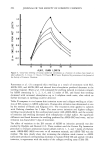
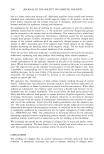
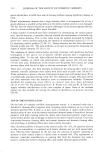
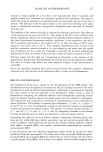
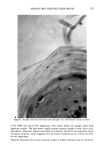
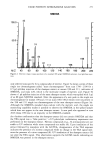
254 JOURNAL OF THE SOCIETY OF COSMETIC CHEMISTS described above. After the applied dose had dried, the external skin surface was cleansed with water and cotton swabs. All cleansing materials were placed into scintillation vials containing 10 ml of scintillation fluid (New England Nuclear, Biofluor Scintillation Fluid). Following the cleansing, the dosed area was tape-stripped twenty times with the surgical tape. The tape strips were placed in scintillation vials containing 10 rnl of scintillation fluid and radioactivity determined by counting on a scintillation counter Figure 2. Photomicrograph of biopsy of human skin graft following exposure to aqueous solution of •4C-labeled alanine for two hours, then cryostated to 6 !xm thickness and autoradiographed.
Purchased for the exclusive use of nofirst nolast (unknown)
From: SCC Media Library & Resource Center (library.scconline.org)