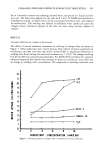
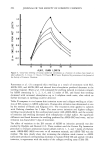
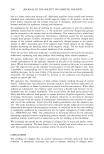
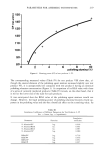
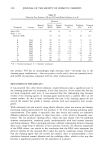
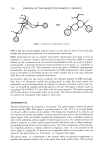
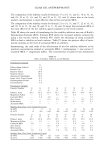
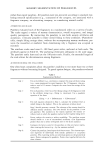
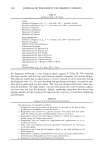
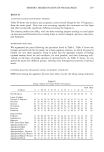
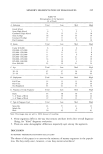
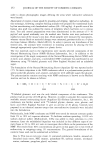
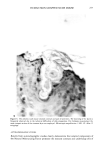
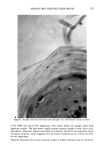
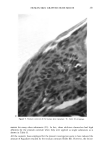
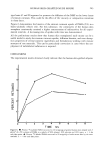
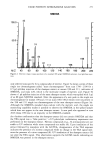
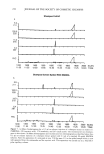
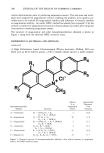
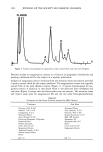
284 JOURNAL OF THE SOCIETY OF COSMETIC CHEMISTS FLAVOR B D i I I 1 Figure 3. Typical chromatogram for sanguinaria extract isolated from oral rinse and toothpaste. Detailed studies on sanguinarine content as a function of geographic distribution and growing conditions will be the subject of a separate publication. Analysis of sanguinaria extract resulting from the chemical extraction process provided a quality control check for the extract produced. The sanguinarine content was typically around 50% of the total alkaloid content (Figure 1). A typical chromatogram for san- guinaria extract is identical to that found when it was extracted from toothpaste and oral rinse (Figure 3) except that the flavor peaks were not present. The retention times and relative peak areas for sanguinarine (B) and the five other benzophenanthridine Table III Toothpaste and Oral Rinse Formulas Analyzed by HPLC Method Toothpaste Oral Rinse Glycerin, 95% U.S.P. Sorbitol, 70% U.S.P. Carrageenan, F.C.C. Deionized Water Zinc Chloride, U.S.P. Dicalcium Phosphate, Dihydrate Hydrated Silica Sodium Saccharin Citric Acid, U.S.P. Sanguinaria Extract Titanium Dioxide, U.S.P. Sodium Lauryl Sulfare Flavor Deionized Water Zinc Chloride, U.S.P. Glycerin, 96% U.S.P. Sodium Saccharin, U.S.P. SDA 38B Alcohol Poloxamer 407 Polysorbate 80, N.F. Flavor Citric Acid, U.S.P. Sanguinaria Extract pH 5.0 pH 3.2

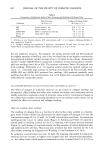
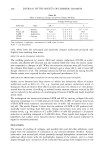
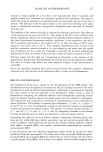
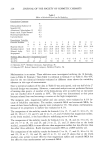
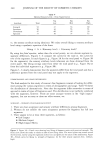
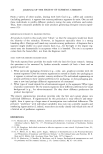
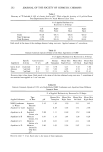
SANGUINARINE ANALYSIS BY HPLC 285 Table IV Stability of Sanguinarine in Toothpaste (ambient temperature) Containing 750 •tg/g Sanguinaria Extract Equivalent to Theoretical Input Levels of 225 •tg/g Sanguinarine Time Elapsed (weeks) Sanguinarine (•tg/g) 0 174.8 2 163.3 12 167.6 16 154.4 28 158.4 alkaloids in the extract, chelirubine (A), sanguirubine (C), chelilutine (D), cheler- ythrine (E), and sanguilutine (F), are given under Figure 1. The method was utilized to verify sanguinarine levels in the oral rinse* and toothpaste* in order to assess shelf life stability. The results from oral rinse (Table II) suggest that sanguinarine had a 2.3% loss in content in unopened bottles over the 31-month period in which the test was conducted. Accelerated stability studies at 40øC for three months, but not reported here, indicate that the sanguinaria stability was sufficient for at least a three-year shelf life. In shelf life testing conducted on a silica and dicalcium phosphate abrasive toothpaste formula containing sanguinarine (Table III), it was found that a 9.4% decrease in san- guinarine content occurred over 28 weeks (Table IV). Accelerated stability testing at 40øC for three months, not reported here, indicates that sanguinarine stability was sufficient for at least a two-year shelf life. SUMMARY AND CONCLUSION A method of analyzing sanguinarine in the dried rhizomes of Sanguinaria canadensis, sanguinaria extract, and oral care products has been reported and its application to quality control and stability of oral hygiene products containing sanguinaria extract demonstrated. REFERENCES (1) American Pharmaceutical Association, National Formulary, Rev. 7, Washington, DC, American Pharmaceutical Association, pp 191, 368, 416 (1940). (2) V. O. Homerberg and A.M. Beringer, An assay for sanguinaria, American Journal Pharmaceutical, 85, 395-397 (1913). (3) S. A. E. Hakim, V. Mijovic, and J. Walker, Distribution of certain poppy-fumaria alkaloids and a possible link with the incidence of glaucoma, Nature 189, 198-201 (1961). (4) S. A. E. Hakim, V. Mijovic, and J. Walker, Experimental transmission of sanguinarine in milk, Nature, 189, 201-204 (1961). * Viadent ©, a subsidiary of Vipont Laboratories, Inc., 220 East Olive Street, Fort Collins, CO 80524.
Purchased for the exclusive use of nofirst nolast (unknown)
From: SCC Media Library & Resource Center (library.scconline.org)