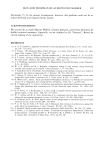
CLEANSING BAR EVALUATION 327 (15b) P. G. M. van der Valk, M. C. Crijns, J.P. Nater, and E. Bleumink, Skin irritancy of commer- cially available soap and detergent bars asmeasured by water vapour loss, Dermatosen, 32, Heft 3 (1984). (16) F. Herrmann, H. Ippen, H. Schaefer, and G. Sthttgen, Biochemie der Haut (Georg Thieme Verlag, Stuttgart, 1973). (17) G. Piewig and A.M. Kligman, Acne (Springer-Verlag, 1975). (18) P.M. Elias, Epidermal lipids, membranes, and keratinization, Int. Soc. of Tropical Dermato/ogy. 20, 1-19, (1981). (19) G. Locher, Permeabilitiitspriifung der Haut Ekzemkranker und Hautgesunder far den neuen Indi- kator Nitrazingelb -Geigy-, Modifizierung der Alkaliresistenzprobe, pH-Verlauf in der Tiefe des stratum corneum, Dermato/ogica, 124, 159-182 (1962). (20) R. Aly, Ch. Shirley, B. Cunico, and H. I. Maibach, Effect of prolonged occlusion on the microbial flora, pH, carbon dioxide and transepidermal water loss on human skin, Journal of Investigative Derma- to/ogy, 71, 378-381 (1978). (21) G. Imokawa, K. Sumura, and M. Katsumi, Study on skin roughness caused by surfactants: I. A new method in vivo for evaluation of skin roughness, Journal of the American Oil Chemists Society, 52, 479-483 (1975). (22a) B. Chance, B. Schoener, R. Oshino, F. Itshak, and Y. Nakase, Oxidation-reduction ratio studies of mitochondria in freeze-trapped samples, NADH and flavoprotein fluorescence signals, Journal of Bio- logical Chemistry, 254, 4764-4771 (1979). (22b) Aliquots of cell-suspensions containing 3 X 10⁵ VERO-cells (Flow, Meckenheim FRG) in PBS pH 7.2 + 5% FCS/ml were mixed with aliquots of PBS or with aliquots of PBS-containing 0, 1% of SDS fluorescence-values (Ex 360, Em 440) decreased about 10% in the SDS-containing suspension compared to SDS-free dispersion after mixing. (23) G. Sauermann and U. Hoppe, Bestimmung und Beeinflussung des Volumens humaner Hornepithel- zellen, J•rztl. Kosm., 12, 185-207 (1982). (24) H. Wilmsmann and A. Marks, Zur Reaktion oberfliichenaktiver Verbindungen mir Keratin Und Enzymen, Fette, Seifen, Anstreichm. 61. Jahrg. Nr. 10, 1959, S. 969.

j. Soc. Cosmet. Chem., 37, 329-350 (September/October 1986) Stabilization of oil-in-water emulsions by gums JOEL L. ZATZ and BERNARD K. IP, Rutgers University, College of Pharmacy, Busch Campus, P.O. Box 789, Piscataway, NJ 08854. Received January 9, 1986. Presented at the Annual Scientific Seminar of the Society of Cosmetic Chemists, New York, June 5-6, 1985. Synopsis Model emulsions containing 10% mineral oil, oleth 3, oleth 10, methylparaben, propylparaben, water, and several concentrations of selected gums were prepared. A two-step manufacturing procedure, designed to prevent variations in initial particle size in emulsions containing the sanhe emulsifier concentration, was employed. Median particle size, measured by an electronic sizing technique, was inversely related to emul- sifter concentration. There was no significant change in median particle size of the emulsions after storage for over one year. All of the emulsions were flocculated to sonhe extent. Initial viscosity values of emulsions containing ionic polymers were a function of emulsifier concentration, due, we believe, to residual ions. Emulsion viscosity changed with tinhe in many cases. The logarithm of creaming rate was a linear function of gum concentration, making it possible to compare different gums quantitatively. The order of effective- ness in retarding creaming was xanthan gum carboxymethylcellulose, high viscosity methylcellulose, 4000 cp. Inclusion of high concentrations of sodium sulfate and/or storage at elevated temperature (45øC) decreased emulsion stability markedly. Under these conditions, the rate of oil separation was generally inversely related to polymer concentration. INTRODUCTION Naturally occurring macromolecules, such as gums, have been used as stabilizers in food, cosmetic, and pharmaceutical emulsions for many years (1,2). Stabilization was attributed to the formation of rigid films at the interface between oil droplets and aqueous solutions of the macromolecules (3,4). Biswas and Haydon (5) investigated the viscoelastic properties of the adsorbed film formed by various proteins, such as albumin, pepsin, lysine, and arabinic acid. They found that stability of the droplets against coalescence increased with increased film viscosity and thickness. Polymers that are not surface-active may influence emulsion stability by affecting rheo- logical behavior of the external phase so as to minimize or slow the process of creaming. Beneficial rheological characteristics include pseudoplastic behavior and/or the presence of a yield value which confers high viscosity at rest while permitting such high shear activities as shaking and pouring. Xanthan gum is a high-molecular-weight natural polysaccharide produced by the fer- mentation of Xanthomonas campestris in a glucose medium. The polymer was originally isolated and characterized by Jeanes and coworkers (6). The xanthan molecule exhibits a high solution viscosity with increasing ionic strength the effect of salt on solution 329
Purchased for the exclusive use of nofirst nolast (unknown)
From: SCC Media Library & Resource Center (library.scconline.org)