330 JOURNAL OF THE SOCIETY OF COSMETIC CHEMISTS viscosity depended on the xanthan gum concentration (7). Milas and Rinando (8) inves- tigated the xanthan conformation and concluded that the gum underwent chain melting at a certain temperature, which depended on the ionic strength but not on polymer concentration. Heat promotes the transition to a denatured structure at low ionic strength the xanthan conformation is stabilized at high ionic strength (9). Holz- warth proposed that the xanthan molecule underwent a transition from native --- dena- tured -- renatured form as salt was added (9). The native molecule has a stiff chain conformation and is arranged in a double or triple helix. Xanthan gum solution is extremely pseudoplastic (10) and shows little evidence of thixotropy, except perhaps at low shear (7). The stiff polymer chains form transient aggregates (11) and force is required to dissociate these aggregates, resulting in shear thinning. In the absence of shear, reaggregation takes place almost immediately. Vis- cosity of aqueous xanthan gum solutions is relatively insensitive to salts and changes in temperature (7, 12). The inability of xanthan gum to lower the surface tension of water (13) suggests that its functionality as an emulsion stabilizer is not due to an interfacial mechanism, but depends instead on bulk phase rheological considerations. The present investigation was undertaken to study the effect of concentration of xanthan gum and other polymers on emulsion droplet coalescence and sedimentation rate (or creaming). Previous work has shown that emulsion properties are sensitive to manufacturing tech- nique (14) and the concentration of emulsifier used (15). Since we were concerned with effects of formulation on emulsion stability, we employed a standardized manufacturing procedure. 10% mineral oil-in-water emulsions containing several concentrations of nonionic emulsifiers were investigated. A difficulty in studying emulsion stabilization by polymers is that viscosity effects during manufacture may influence the initial particle size, upon which many properties of emulsions and the rate of creaming are strongly dependent. The comparison of a series of emulsions containing different polymers or different polymer concentrations becomes very complicated if particle size is a variable. We chose a consistent manufacturing procedure designed to avoid this problem. EXPERIMENTAL MATERIALS Distilled water was used to prepare the emulsions. Light mineral oil (Class III B, Say- bolt viscosity 125/135, Lot #710466, Fisher Scientific Co., Fair Lawn, NJ) was of laboratory grade. The surfactants were commercial samples of oleth 3 and oleth 10 (Volpo 3, Lot #660 Volpo 10, Lot #7178 both fragrance grade Croda Inc., NY). Xanthan gum (Keltrol, Lot #80834A, Kelco, Division of Merck & Co., Inc., San Diego, CA) was of food grade (M.W. = 13-50 million (16)). Sodium carboxymethyl- cellulose (Fisher Scientific Co., Fair Lawn, NJ) was CMC-7HSP (M.W. = 700,000 (17)). Methylcellulose (Methocel, Dow Chemical Company) was A4M premium U.S.P. grade (M.W. = 86,000 (18)). Methyl-p-hydroxylbenzoate (Fisher Scientific Co., Fair Lawn, NJ), propyl-p-hydroxylbenzoate (Eastman Kodak Co., Rochester, NY 14650),

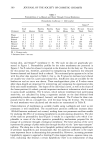
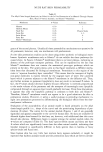
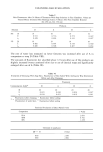
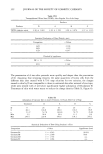
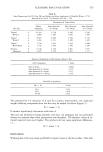
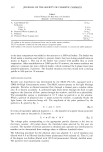
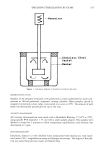
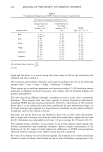
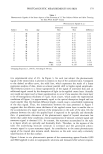
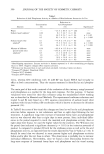
EMULSION STABILIZATION BY GUMS 331 and sodium sulfate (J. T. Baker Chemical Co., Phillipsburg, N J) were analytical grade reagents. All chemicals were used as received. GLASSWARE All glassware used in these experiments was washed thoroughly, rinsed at least twice with tap water, and at least once with distilled water before use. Glassware for sedimen- tation testing and for storage was sterilized in boiling water for at least 2 minutes to avoid mold growth. Scrupulous care was taken with the beakers and paddles of mixers that were used in the preparation of the reaction vessels. They were washed and rinsed as described, immersed in an ultrasound bath for 10 minutes, and then rinsed with filtered distilled water to insure that no residual material from the washing steps re- mained. PREPARATION OF PRESERVED WATER Preserved water was prepared by dissolving 0.18% methylparaban and 0.02% propyl- paraban in distilled water at around 60 to 65øC with constant stirring. Higher tempera- tures were avoided to prevent hydrolysis. PREPARATION OF STOCK SOLUTIONS A 1% (w/w) xanthan gum stock solution was prepared by sprinkling the dry powder slowly into the vortex of vigorously agitated preserved water. This technique provided good dispersion and the gum went into solution rapidly. Mixing was continued until all powder was thoroughly wetted and the mixture was smooth. The polymer solution was allowed to stand at room temperature for 24 hours before using. A 3% (w/w) sodium carboxymethylcellulose solution was prepared the same way as described above. A 1.851% (w/w) methylcellulose solution was prepared by mixing the dry powder thoroughly with V3 of the required total volume of preserved water at 80 to 90øC. Mixing was continued until all particles were thoroughly wetted. The remainder of the preserved water required was added cold. Agitation was continued until the mixture was smooth. The product was then cooled to 0 to 5øC for about 30 minutes. All polymer solutions were kept for 24 hours at room temperature before use to insure complete hydration. A 10% (w/w) sodium sulfate solution was prepared by dissolving the required amount of sodium sulfate in preserved water presaturated with mineral oil. The solution, which was freshly prepared when needed, was then passed through a 0.22-micron millipore membrane filter. PREPARATION OF MASTER EMULSION The master emulsion was prepared in a Gifford-Wood Homomixer model 1L-75 (J. W. Greer, Inc., Wilmington, Massachusetts). The general formula for the oil-in-water emulsion containing 1% (w/w) emulsifier concentration is shown in Table I. The sur- factants were dissolved in the oil phase which was warmed to 45øC. The water (a-phase)
Purchased for the exclusive use of nofirst nolast (unknown)
From: SCC Media Library & Resource Center (library.scconline.org)