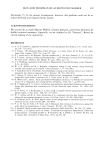
350 JOURNAL OF THE SOCIETY OF COSMETIC CHEMISTS ACKNOWLEDGEMENT The authors thank the Kelco Division, Merck and Company, Inc., for supporting this project, and Ortho Pharmaceutical Corporation for use of instrumentation. REFERENCES (1) T. W. Schwartz, Emulsions with hydrocolloids, Amer. Perrum. Cosmet., 77, 85-92 (1962). (2) P. Kovacs and B. Titlow, Stabilizing cottage cheese creaming emulsions with a xanthan gum blend, Amer. Dairy Review, 34J-34N (April 1976). (3) J. A. Serralach and G. Jones, Formation of films at liquid-liquid interfaces, Ind. Eng. Chem., 23, 1016-1023 (1931). (4) J. A. Serralach and R. J. Owen, Strength of emulsifier films at liquid-liquid interfaces, ibid., 25, 816-821 (1933). (5) T. F. Tadros and B. Vincent, "Emulsion Stability," in Encyclopedia of Emulsion Technology, P. Becher, Ed. (Marcel Dekker, Inc., New York, 1983), Vol. 1, pp 129-286. (6) A. Jeanes, J. E., Pittsley, and F. R. Senti, Polysaccharide B-1459: A new hydrocolloid polyelectro- lyre produced from glucose by bacterial fermentation, Appl. Polymer, Sci., 5, 519-526 (1961). (7) J. L. Zatz and S. Knapp, Viscosity of xanthan gum solutions at low shear rates, J. Pharm. Sci., 73, 468-471 (1984). (8) M. Milas and M. Rinando, Conformational investigation on the bacterial polysaccharide xanthan, Carbohyd. Res., 76, 189-196 (1979). (9) G. Holzwarth, Conformation of the extracellular polysaccharide of Xanthomonas campestris, Biochem. 15, 4333-4339 (1976). (10) P. J. Whitcomb., B. J. Ek, and C. W. Macosko, Am. Chem. Soc. Symp. Set., 45, 160-173 (1977). (11) E. R. Morris, "Molecular Origin of Xanthan Solution Properties," in Extracellular Microbial Polysac- charides, P. A. Sanford and A. Laskin, Eds. (ACS, Washington D.C., 1977), pp 81-89. (12) Xanthan Gum/Keltrol/Kelzan, 2nd ed. (Kelco Div. of Merck Co., Inc., 1976). (13) J. S. Tempio and J. L. Zatz, Interaction of xanthan gum with suspended solids, J. Pharm. Sci., 70, 554-558 (1981). (14) P. Becher, Emulsions: Theory and Practice, 2nd ed. (ACS Monograph Series, Reinhold Publishing Corp., New York, 1966), pp 267-325. (15) D. Fairhurst, M.P. Aronson, M. L. Gum, and E. D. Goddard, Some comments on non-ionic sur- factant concentration effects in oil-in-water emulsions, Colloids and Surfaces, 7, 153-159 (1983). (16) F. R. Dintzis, G. E. Babcock, and R. Tobin, Studies on dilute solutions and dispersions of the polysaccharide from Xanthomonas campestris NRRLB- 1459, Carbohyd. Res., 13, 257- 267 (1970). (17) Cellulose Gums.' Chemical and Physical Properties (Hercules Incorporated, 1980). (18) Handbook on Methocel.' Cellulose Ether Products (Dow Chemical Company, 1978). (19) J. L. Zatz and C. Yarus, Stabilization of sulfamerazine suspension by xanthan gum, Pharm. Res., 3, 118-121 (1986). (20) J. R. Van Wazer, J. W. Lyons, K. Y. Kim, and R. E. Colwell, Viscosity and Flow Measurement, (Interscience, a Div. of John Wiley & Sons, Inc., New York, 1966), p 15. (21) T. Mitsui, Y. Machida, and F. Harusawa, An application of the phase-inversion temperature method to the emulsification of cosmetics. I. Factors affecting the phase-inversion temperature, Bull. Chem. $oc. of Japan, 43, 3044-3048 (1970). (22) W. C. Liao and J. L. Zatz, Effect of added salts on flocculation of local anesthetic suspensions con- taining nonionic surfactants, J. Soc. Cosmet. Chem., 31, 123-131 (1980).

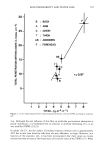
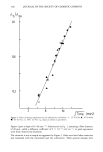
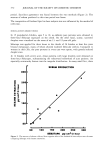
J. Soc. Cosmet. Chem., 37, 351-357 (September/October 1986) In vivo relationship between percutaneous absorption and transepidermal water loss according to anatomic site in man DIDIER DUPUIS, ANDRI• ROUGIER, CLAIRE LOTTE, DONALD R. WILSON, and HOWARD I. MAIBACH, Ddpartement de Bio/ogie, Laboratoires de Recherche Fondamenta/e de L'Oreal, 1 avenue Eugbne Schue//er, 93600 Au/nay sous bois, France (D. D., A.R., C.L. ), and Department of Dermato/ogy, University of California, San Francisco, San Francisco, CA 94143 (D.R.W, H.I.M.). Received May 2 7, 1986. Synopsis The relation between transepidermal water loss (TEWL) and percutaneous absorption of benzoic acid has been studied as a function of anatomic location in vivo in man. The results suggest a possible linear relation (r = 0.97, p 0.001) between the two parameters. This confirms the importance of anatomic site on the degree of permeability of the cutaneous barrier and the value of measurements of TEWL and penetration in the evaluation of its functional state. INTRODUCTION In its role as a barrier, the skin participates in homeostasis by limiting 1): water loss (1,2), and 2): percutaneous absorption of environmental agents (3,4). The stratum corneum's role of a double barrier is intimately linked to its degree of hydration (5,6), transport mechanisms being diffusional (3,7). In man (8,9) and in animals (10), an increase in water permeability of the skin corresponds to an increase in permeability to topically applied compounds. However, most of the studies dealing with this topic are only qualitative observations and the relationship linking these two parameters is unknown. At present, TEWL can be considered a parameter indicative of the functional state of the cutaneous barrier (11, 12, 13). Among the factors modifying the in vivo percutaneous absorption of a compound, anatomic site is of particular importance (14, 15). The present study attempts to establish the relationship between TEWL and penetra- tion, as a function of anatomic site in man. 351
Purchased for the exclusive use of nofirst nolast (unknown)
From: SCC Media Library & Resource Center (library.scconline.org)