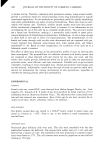
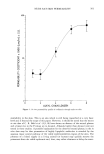
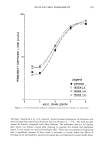
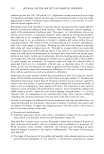
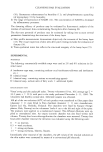
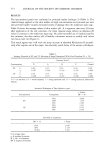
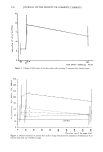
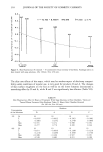
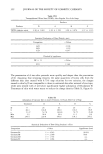
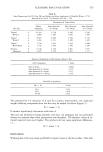
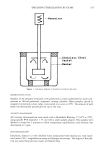
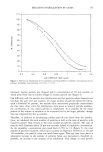
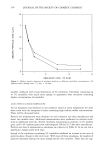
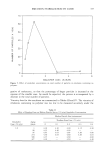
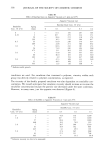
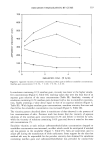
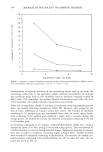
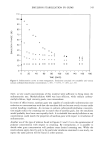
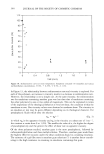
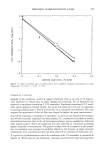
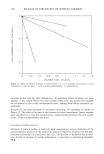
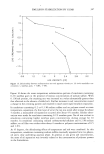
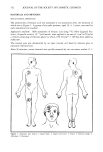
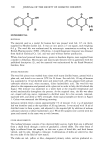
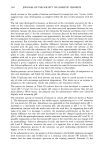
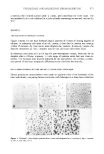
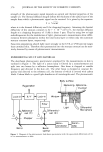
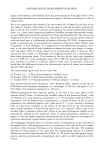
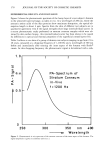
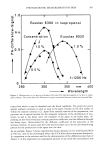
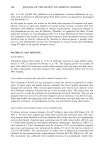
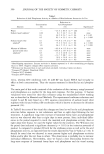
352 JOURNAL OF THE SOCIETY OF COSMETIC CHEMISTS MATERIALS AND METHODS PERCUTANEOUS ABSORPTION The penetration of benzoic acid was measured at six anatomical sites, the locations of which are in Figure 1. A group of six male patients, aged 34 --- 2 years, was used for each anatomical site studied. Application conditions. 1000 nanomoles of benzoic acid (ring •4C) (New England Nu- clear), of specific activity 10 -3 •Ci/nmole, were applied to an area of 1 cm 2 in 20 •1 of a vehicle consisting of ethylene glycol to which 10% Triton © x 100 had been added as surfactant. The treated area was demarcated by an open circular cell fixed by silicone glue to minimize chemical loss. After 30 minutes, excess chemical was quickly removed by two successive washes (2 X Figure 1. Anatomic sites tested. 1: Upper back. 2: Upper outer arm. 3: Chest. 4: Anterior thigh. 5: Abdomen. 6: Forehead.

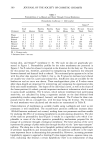
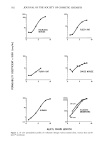
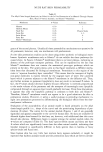
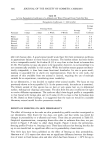
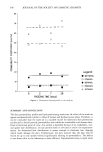
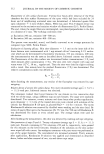
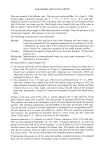
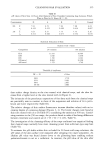
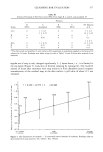
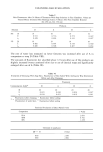
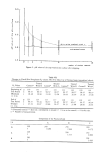
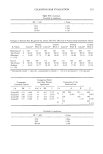
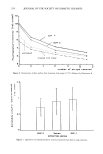
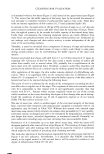
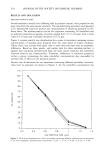
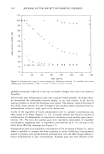
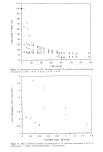
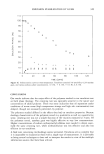
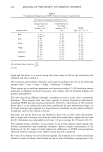
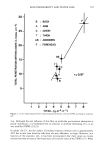
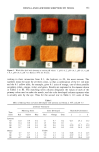
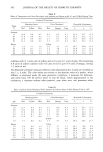
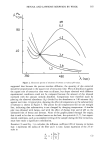
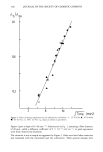
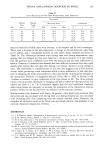
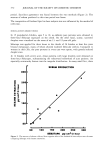
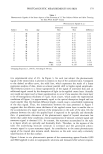
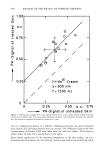
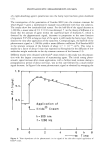
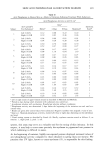
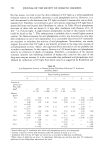
SKIN PERMEABILITY AND WATER LOSS 353 300 I•l) with an ethanol-water mixture (95:5), followed by two rinses (2 x 300 I•l) with distilled water and gentle drying with a cotton swab. Measurement conditions. Utilizing literature data relating to the kinetics of urinary excre- tion of benzoic acid administered intravenously and orally (16, 17) or percutaneously (18, 19,20) in different species, the total quantities absorbed during the four days fol- lowing application were calculated, after counting in scintillation liquid the quantities found in the urine in 24 hours, which contains 75% of the total quantity absorbed. TRANSEPIDERMAL WATER LOSS After completion of the benzoic acid treatment, TEWL was measured with an Evapo- rimeter EPIC (Servo Med, Sweden) from a contralateral site (same anatomic region) in each subject. The handheld probe was fitted with a 1-cm tail chimney extension to reduce air turbu- lence around the hydrosensors and metallic shield (supplied by Servo Med), eliminating the possibility of sensor contamination. Measurements (gm' m -2' h -1) stabilized within 30-45 seconds. Immediately following TEWL measurements, skin temperature was taken with a surface probe (Tele-Thermometer, Yellow Springs Instruments Co., USA). All TEWL were corrected to a common skin temperature of 30øC, reducing this thermal variable (21). Since the room environment was comfortable (room temperature 20øC, relative humidity 60%) and the subjects were physically inactive, the TEWL should closely reflect stratum corneum water flux without sweating interference. RESULTS Table I shows, for each site studied, the quantities of benzoic acid present in the urine at 24 hours, as well as the calculated total quantities absorbed over a period of four days. The table also gives the values of the TEWL corresponding to each site. As shown in Figure 2, for all the sites taken together a linear relation exists between the values of the total penetration of benzoic acid and the values of the TEWL (Figure 2) (r = 0.97, p 0.001). DISCUSSION Although it is widely accepted that anatomic site plays an important role in the degree of absorption of molecules and in TEWL, the literature contains no data defining their relationship. Our results (Table I, Figure 2) show that for the anatomic site studied and within the range of TEWL and penetration values determined, there exists a direct relation be- tween the permeability of the skin to water and the percutaneous absorption of a non- water-soluble compound, such as benzoic acid. Thus it can be seen that the values for both TE¾7L and benzoic acid penetration differed significantly for the arm, the ab- domen, and the forehead, and are linearly correlated. However, even if it is true that no statistically significant differences have been found between the values reported for the
Purchased for the exclusive use of nofirst nolast (unknown)
From: SCC Media Library & Resource Center (library.scconline.org)