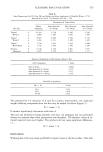
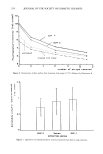
374 JOURNAL OF THE SOCIETY OF COSMETIC CHEMISTS Thus, it is quite easy to obtain a facial "profile" from representative areas. Women often declare that they are oily in certain facial areas and dry in others. We have con- firmed this markedly uneven distribution in some individuals. Also, we have found marked discrepancies between subjective estimates of oiliness in different facial regions and objective measurements of sebum production. Many adult females overestimate oiliness. Sebutape enables at least a semi-quantitative objective assessment which may help to rationalize daily cosmetic practices. The values for sebum production obtained by hexane extraction of Sebutape correlate very well with conventional gravimetric techniques. It is entirely practical to make a high contrast photographic record of the follicular pattern and then send off the tapes to a laboratory for quantitative and qualitative analysis. The response to endocrine and pharmacologic treatments which modify sebaceous secretion can be conveniently moni- tored in this way. Nordstrom eta/, of our laboratory have evaluated this sebum-sensitive device in detail (14). They found that sebum production was constant over a six-week period in ten persons. Also, measurement of the quantity and composition of the surface lipids corre- lated highly with those obtained by the conventional hexane extraction technique. ACKNOWLEDGMENTS We wish to thank Dr. Gary Grove for his expert assistance. This work was supported in part by Grants #AG00788 and #AM27253 from the National Institutes of Health. REFERENCES (1) J. s. Strauss and P. E. Pochi, The quantitative gravimetric determination of sebum production, d. Invest. Derre., 36, 293 (1961). (2) H. Schaffer, The quantitative differentiation of sebum excretion using physical methods. J. Soc. Cosm. Chem., 24, 331 (1973). (3) D. St. Legar, C. Berreby, C. Dubuz, and P. Agache, The lipometer: An easy tool for rapid quantita- tion of skin surface lipids (SSL) in man. Arch. Derre. Res., 265, 79 (1979). (4) W. J. Cunliffe, J. N. Kearney, and N. B. Simpson, A modified photometric technique for mea- suring sebum excretion rate, d. Invest. Derm., 75, 394 (1980). (5) US PATENT #4,532,937. (6) G. L. Grove, Dermatological applications of the Magiscan image analysing computer, Bioengineering and the Skin, 3, 173 (1984). (7) M. R. Ruggieri, K. J. McGinley, J. J. Leyden, and J. C. Touchstone, "Reproducibility and Preci- sion of Quantitation of Skin Surface Lipids by TLC," in Advances in Thin Layer Chromatography, J. C. Touchstone, Ed. (John Wiley & Sons, Inc., New York, 1982), pp 249-259. (8) G. Piewig and A. M. Kligman, Acne: Morphogenesis and Treatment (Springer-Verlag, Berlin, Heidel- berg, 1975). W. J. Cunliffe and S. Shuster, The rate of sebum excretion in man, Brit. d. Derre., 81, 697 (1969). R. Brun, K. Endedin, and E. Kull, A propos de Sebum-tests, Dermatologica, 106, 165 (1953). J. G. Smith, The aged human sebaceous gland, AMA. Arch. Derre., 80, 663 (1959). K. K. Jones, M. C. Spencer, and S. A. Sanchez, The estimation of the rate of secretion of sebum in man, d. Invest. Derre., 17, 213 (1951). A.M. Kligman and W. B. Shelley, An investigation of the biology of the human sebaceous gland,.]. Invest. Derre., 30, 99 (1958). K. M. Nordstrom, H. G. Schmus, K.J. McGinley, and J. J. Leyden, Measurement of sebum output using a lipid absorbent tape, d. Invest. Derm., 87, 260 (1986). (9) (10) (11) (12) (13) (14)

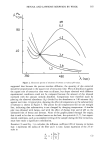
j. Soc. Cosmet. Chem., 37, 375-385 (September/October 1986) Evaluation of drug penetration into the skin by photoacoustic measurement K. KOLMEL, Universita'ts-Hautklinik, von-Siebold-Str. 3, 3400 Gb'ttingen, Federal Republic of Germany, and A. NICOLAUS, B. SENNHENN, and K. GIESE, Institut fiir Medizinische Physik und Biophysik der Universit, it, Gosslerstr. 10 F, 3400 Gb'ttingen, Federal Republic of Germany. Received March 4, 1986. Synopsis In this study photoacoustic spectroscopy was used to measure in vivo the ultraviolet absorption spectra of various sunscreen preparations topically applied to the inner aspect of the forearm. By means of the depth sensitive photoacoustic technique it was possible to differentiate between the absorption of light within the outermost layers of treated skin and within the total horny layer. From observation of the photoacoustic signal after application of the sunscreen to the skin, information about its penetration behavior was ob- tained. INTRODUCTION According to Wester and Maibach the following in vivo methods are used for the deter- mination of percutaneous absorption: measurements of radioactivity in excreta or blood after topical application of radiolabeled agents, surface recovery, surface disappearance, and biological or pharmacological response (1). Although cellophane-tape stripping is frequently considered as an in vivo method too, it holds an intermediate position as the horny layer is destroyed at the investigated skin area. Using sunscreens as an example, we will demonstrate that photoacoustic spectroscopy is a new technique which can be used for determining in vivo the penetration behavior of topically applied agents. For methodological reasons the main information obtained concerns penetration into the horny layer. Photoacoustic spectroscopy has been shown to be a promising technique for obtaining optical absorption spectra of biological tissues (2,3), with interesting potential as a tool for noninvasive spectral analyses in medicine (4). In the area of dermatology, the method has been used to study the water content of the stratum corneum and for the determination of the distribution of drugs in the skin (5,6). With this technique a rhythmically chopped monochromatic beam of light is directed onto the sample. It is on the bottom of an airtight cell with a quartz window on the opposite side to allow light incidence. The surface of the sample becomes rhythmically heated due to the absorption of light. In the adjacent sealed gas space the periodic heating of the surface yields pressure oscillations which can be detected by a sensitive microphone. The 375
Purchased for the exclusive use of nofirst nolast (unknown)
From: SCC Media Library & Resource Center (library.scconline.org)