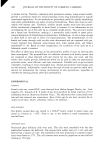
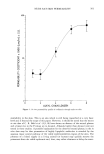
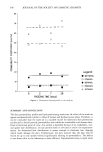
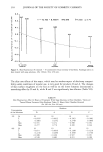
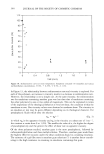
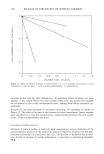
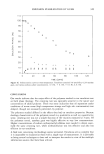
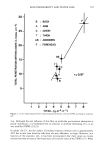
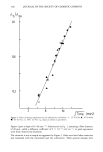
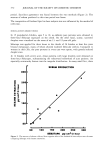
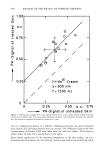
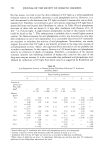
372 JOURNAL OF THE SOCIETY OF COSMETIC CHEMISTS period. Excellent agreement was found between the two methods (Figure 2). The amount of sebum produced in this time period was linear. The composition of forehead lipid in three subjects was not influenced by the method of collection. MISCELLANEOUS OBSERVATIONS In 15 prepubertal children, ages 5 to 10, no definite pore patterns were obtained in three-hour Sebutape exposures on the cheek. On the other hand, scanty, scattered droplets were visualized on the noses of six 11- and 12-year-old girls. Sebutape was applied for three hours to the cheeks of 26 females at least five years beyond menopause, many of whom showed widened follicular orifices. Compared to women in their 20s, the pore patterns in every case were sparse, with greatly reduced droplet sizes. In 12 females with severe acne, dense patterns with large droplets were obtained on three-hour Sebutapes, substantiating the reknowned seborrhoea of acne patients. An especially noteworthy feature was the irregular distribution. In many small foci, there SEBUM PRODUCTION 300 ß I 2OO I ß ß I 100 I 50•- ! ! ! ! . 50 1OO 150 200 250 300 SEBUTAPE pg/cm2/3 hour Figure 2. The amount of sebum collected from opposite sides of the forehead of nine subjects was the same comparing Sebutape with hexane extraction.

VISUALIZING AND MEASURING SEBUM SECRETION 373 were virtually no droplets. This was especially noticeable in the vicinity of well-devel- oped papules. This satellite zone of inactivity corresponds to histologic observations showing involution of sebaceous glands surrounding highly inflamed follicles (8). Typi- cally in ache, very large and small droplets are densely interspersed. We also found Sebutape useful for monitoring the decline of sebaceous gland activity in ache conglobata patients receiving 1 mg/kg of cis-retinoic acid daily. Diminished pat- terns were clearly discernable by two weeks these were virtually absent by two months. DISCUSSION Too much, or too little, facial sebaceous secretion has been a major impetus for devel- oping quantitative procedures for estimating sebum output. The Strauss and Pochi gravimetric method or some variant of it, in which sebum is trapped in a lipid ab- sorbing matrix, is the source of most of our knowledge of the physiology of the human sebaceous gland (1, 9-12). However, the gravimetric methods require meticulous attention to details and exacti- tude at every step. With hexane extraction of a protected site, loss of sebum is a worry. Then, too, three hours is a rather long time to keep the face immobile. These proce- dures give no information on the amount of sebum extruded from individual follicles. Previous attempts to visualize follicular droplet patterns utilized osmic acid to blacken the sebum (13). Apart from being an obnoxious substance, osmic acid usually gave blurred patterns owing to lateral spreading of sebum in the cigarette paper or smudging by slight facial movements. The lipometer photometric technique has the virtue of simplicity, but we have found that the method lacks sensitivity at either high or low rates of sebum secretion. Sebutape has several advantages. It is simple and convenient. It can be self-adminis- tered. Because of firm adhesion to the skin surface, facial movements do not affect the patterns. Agreeably, sweating has no effect due to the hydrophobic nature of the film. The tiny droplets from vellus follicles are just as sharply defined as the much larger ones from sebaceous follicles. We wish to emphasize that visualizing droplet patterns has importance which up to now has gone largely unrecognized. New insights can be gleaned. One of our stimu- lating observations is that the output from a given follicle is variable and not constant, unlike hair growth. When Sebutape patterns were obtained at weekly intervals from oily persons, we could show that within a matter of weeks, some precisely identified follicles were producing substantially more or less sebum than originally. Follicles pro- ducing voluminous droplets could virtually shut down. The sebaceous gland is a plastic structure whose size and output apparently changes more or less randomly. Awareness of these fluctuations may help us understand such phenomena as pre-menstrual flares of ache. Greater study is warranted. The availability of extremely sensitive analytical techniques such as gas chromatography and mass spectrometry makes it pos'sible to undertake quantitative and qualitative analyses of individual droplets, simply by "punch biopsies" of Sebutape. We would not find it shocking if the composition of sebum varied from follicle to follicle! Sebutape is readily adaptable to all facial areas: the nose, cheeks, chin, and forehead.
Purchased for the exclusive use of nofirst nolast (unknown)
From: SCC Media Library & Resource Center (library.scconline.org)