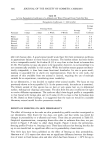
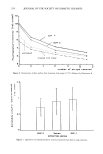
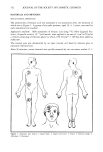
388 JOURNAL OF THE SOCIETY OF COSMETIC CHEMISTS ally, it is also possible that preformed acid phosphatase is released differently by irri- tants such as chemical or physical agents from latent sources as proposed by Rutherford and Pawlowski (7). In this paper we report our results on the short-term response of lysosomal acid phos- phatase activity in tape-strip biopsies of normal human stratum corneum after skin treatment with different surfactants at various concentrations. Long-term changes in acid phosphatase activity may be different. Therefore, we quantified the effect of other surfactant solutions on acid phosphatase after 4 or 8 days following the final treatment and designated these results as the long-term response. Since lysosomal enzymes in skin irritation may be directly influenced by chemical or physical agents, a possible alter- ation in acid phosphatase activity was investigated in normal human skin fibroblasts using UV light as an optimal irritation source. MATERIALS AND METHODS HAND DIPPING Volunteers dipped their hands in 1 liter of surfactant solutions in glass beakers main- tained at 41øC as described by Prottey et al. (8). The dipping period was usually 10 min, after which the hands were rinsed under running tepid tap water and then dried. In these experiments tape-strip biopsies were taken immediately before and 30 min after dipping. EVALUATION OF HUMAN SKIN IRRITANCY (ELBOW WASHING TEST) The technique of Frosch (4) was employed to assess the irritation properties of surfac- tants. In brief, male and female human volunteers free from visually observable skin damage were recruited. Their internal upper forearms were treated twice daily for 4 min with different surfactant solutions for up to five successive days. The treated area was rated on a 0 to 3 scale for erythema 20 min following each daily treatment. The test was stopped when one test site reached the endpoint (score of erythema: 3) or after five days. Three days before the beginning of the test, as well as four and eight days after the final surfactant treatment, acid phosphatase activity was determined as described below. SKIN SAMPLES AND DETERMINATION OF ACID PHOSPHATASE To obtain stratum corneum biopsies, Scotch © adhesive tape strips (3M Magic 810, 20 mm X 50 mm) were applied and taken from treated and untreated areas. The tape- strip biopsies were attached on 60-mm diameter Petri dishes and their acid phosphatase content determined. Standard assay conditions were 50 mM citrate buffer, pH 4.8, and 5.5 mM freshly prepared p-nitrophenyl phosphate (Boehringer, Mannheim, FRG) in a total volume of 1.0 ml. Incubations were for 30 min at 25øC on the attached complete tape strip, and reactions were terminated by adding 0.5 ml of the reaction mixture to 1 ml 0.1 M NaOH. The concentration of yellow color of liberated p-nitrophenol was obtained by spectrophotometric measurements (Unicam SP1700, Philips) at 405 nm. The instrument was calibrated with standard solutions of p-nitrophenol. Under these

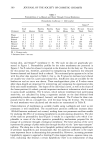
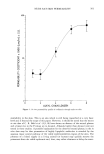
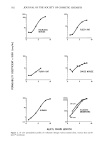
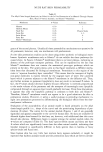
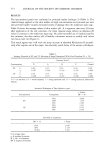
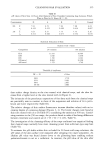
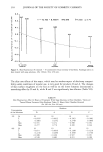
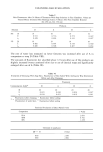
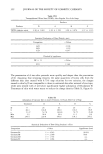
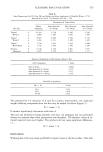
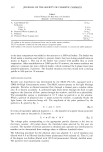
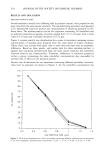
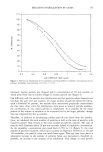
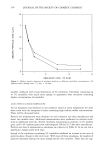
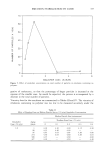
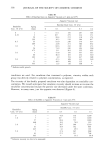
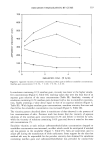
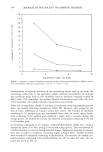
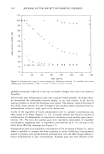
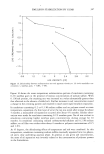
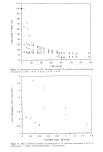
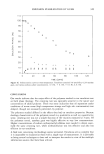
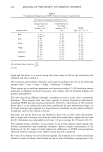
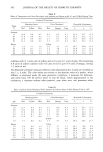
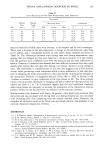
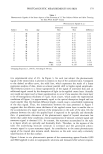
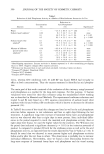
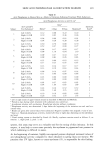
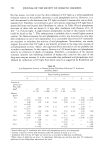
SKIN ACID PHOSPHATASE AS IRRITATION MARKER 389 conditions, the coefficient of extinction was 18.5, and therefore the activity of acid phosphatase was calculated as follows: measured O.D.4o 5 X 5.4 mU/10 cm 2 (9). STATISTICAL METHODS Differences between the test substances as assessed by the visual scoring system or the determination of acid phosphatase activity were tested by paired comparison of the test areas in the same individual using the Wilcoxon matched-pair signed rank test. CULTURING AND IRRADIATION CONDITIONS OF HUMAN SKIN FIBROBLASTS Foreskin-derived normal human skin fibroblasts 3229 were a gift from Dr. Robert Zimmerman (Boston, MA). The cells were cultured in Dulbecco's modified Eagle's medium (DME) with 10% heat-inactivated fetal calf serum (Gibco) as described pre- viously (10). Approximately 3 x 10⁵ fibroblasts were seeded into 6-cm Petri dishes and allowed to grow in a 37øC 5% CO2 incubator for 5-6 days at which time they were confluent. Prior to irradiation the medium was removed and the monolayers were washed with phosphate-buffered saline (PBS), pH 7.2. The cells were irradiated in 1.2 ml of PBS on a rotating platform with light from a 6W germicidal lamp (Philips) under sterile con- ditions. The yielding fluence rate of 0.15 W/m -2 was determined with a IL770A germicidal/erythemal radiometer equipped with a SEE 400 photodetector containing a NBS 254-nm interference filter (International Light, Newburyport, MA). After irra- diation, cells were incubated with fresh medium for 0-9 days. The determination of the acid phosphatase was directly in the Petri dish as described above and the protein concentration was measured by the method of Lowry et al. (11). RESULTS AND DISCUSSION In a previous report Protrey et al. (8) observed reduced acid phosphatase activity as a short-term effect in tape-strip biopsies of human skin following hand-dipping of volun- teers in various surfactant solutions compared to pre-dipping values. They employed spectrofluorimetric assays involving 4-methylumbelliferyl phosphate as substrate. We have extended this basic experiment using p-nitrophenyl phosphate as substrate with different surfactants at various concentrations as listed in Table I. Our results show a reduction of lysosomal acid phosphatase activity after treatment with stronger surfac- rants. We have further observed that this enzyme activity decreased with higher con- centrations of the tested surfactant solutions. Our finding of enhanced reduction of acid phosphatase activity with stronger surfactants supports the data of Protrey et al. (8). It disagrees with other reports (2,7,12) which described an increase of acid phosphatase activity in short-term experiments on surfactant-treated skin. However, these test systems may be not directly comparable to our experimental conditions. It is also con- ceivable that some substances have different influences on the activity of acid phospha- rase. Hiibscher and West (13) observed that mammalian acid phosphatase was inhibited by fluoride but not by EDTA and found the opposite for alkaline phosphatase. In our experiments (data not shown), 2 mM KF inhibited 10% of the measured enzyme ac-
Purchased for the exclusive use of nofirst nolast (unknown)
From: SCC Media Library & Resource Center (library.scconline.org)