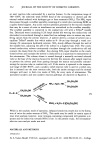
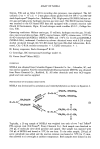
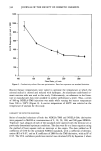
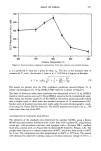
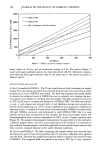
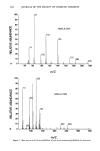
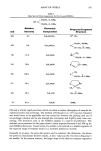
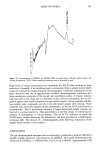
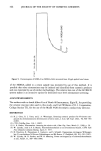
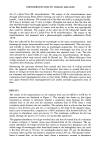
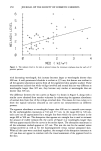
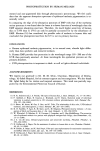
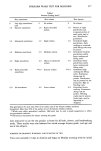
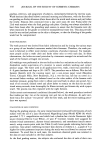
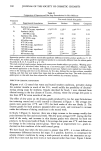
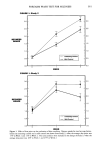
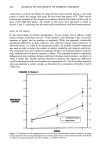
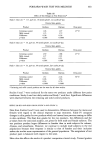
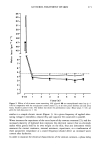
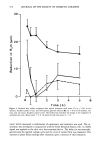
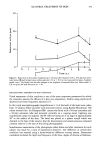
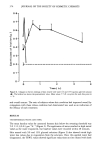
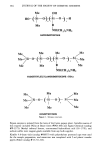
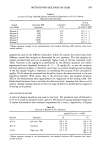
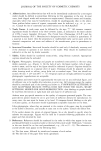
ASSAY OF NDELA 341 Table I Mass Spectral Peak Assignments for Bis-(O-acetyl)NDELA mlZ ON-N / CH2CH2-O-SiMe3 CH2CH2-O -SiMe3 Relative Elemental Proposed Fragment Intensity Composition Structure 263 9.7 C9H23N203Si 2 M•-CH3 232 8.0 C9H22NO2Si 2 146 21.0 C6H •6NOSi 144 39.0 C6H14NOSi 130 100.0 CsH12NOSi N 117 33.1 C4H11NOSi / CH2CH2-OSiMe3 CH-CH2-O =SiMe 2 I'•N •' CH2 CH2CH2-O•SiMe 3 //CH2 CH2CH2-O • SiMe2 o- __NH CH 3 %CH 3 103 59.2 C4H l!Osi CH 2 = O-SiMe 3 73 81.9 C3H9•i •)SiMe3 (26) and is a fairly rapid procedure which can allow a modest throughput of samples for industrial audits and screenings. The method of Fukunda et al. (47) was also evaluated and would seem to be applicable and less costly but involves the packing and use of ion-exchange columns and so was deemed less convenient and slightly more time-con- suming. The derivative used in the NDELA analysis is a matter of preference. The standard curve presented in this paper shows a linear response between 0 and 500 ng for each NDELA derivative. Construction of a similar curve limited to a smaller segment of the expected range of response results in a narrower prediction interval. Generally in an assay, the more data points used to construct the calibration, the better the power to discriminate between results, as the t value and the 1/n term in Equation 3 are smaller. In the present instance, the larger slope of the detector response regression

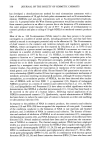
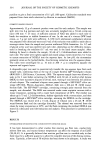
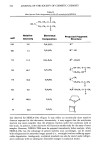
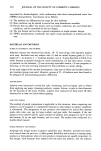
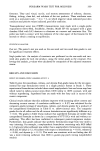
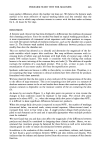
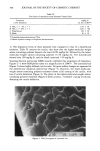
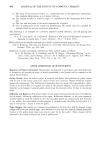
342 JOURNAL OF THE SOCIETY OF COSMETIC CHEMISTS Table II Mass Spectral Peak Assignments for Bis-(O-trimethylsilyl)NDELA ON-N 0 / CH2-CH2-O-C-CH3 CH2-CH2-O-C-CH 3 II o Relative Elemental Proposed Fragment mlZ Intensity Composition Structure 218 3.8 CsH14N205 M ß 188 7.5 CsH14NO4 M ß _ NO 175 11.0 C6H11 N204 M (• - CH3CO 145 48.7 C6H11NO3 e//CH-CH2-O-C-CH3 N II CH2CH2_OH O 116 58.6 CsH9NO2 '• •/CH2 CH2CH2-O-C-CH3 II o 103 18.1 C4H9NO2 H2N - CH2CH 2 -O - C- CH 3 II o / \ 87 100.0 C4H702 O-.•O 74 32.6 C3H502 [ O line observed for NDELA-OAc (Figure 5) may reflect an intrinsically more sensitive detector response for this derivative alternatively, it may suggest that the acetylation reaction was more complete than the silylation reaction under the conditions used in this study. In practice, either derivative will function satisfactorily for the assay of most samples. However, NDELA-TMS must be prepared immediately before analysis, while NDELA-OAc has the advantage of greater stability and, accordingly, can be stored with refrigeration for somewhat longer periods (i.e., overnight) without suffering appre- ciable degradation. Analogously, acetylated standards can also be stored under refriger- ated conditions with no subsequent detectable changes in analytical results.
Purchased for the exclusive use of nofirst nolast (unknown)
From: SCC Media Library & Resource Center (library.scconline.org)