GLYCEROL TREATMENT OF SKIN 381 (lO) (11) (12) (13) (14) (15) (16) (17) (18) (19) (20) (21) P. Corcuff, J. de Rigal, J. L. Leveque, S. Makki, and P. Agache, Skin relief and ageing, J. Soc. Cosmet. Chem., 34, 177-180 (1983). L. J. Wolfram, Friction of skin, J. Soc. Costnet. Chetn., 34, 465-476 (1983). W. A. Gerrard and I. M. Stimpson, A versatile friction meter based on a viscometer, Lab. Pract., 33, 82-83 (1984). W. A. Gerrard, Friction and other measurements of the skin surface, Bioeng. Skin., 3, 123-139 (1987). R. T. Tregear, Physical Functions of Skin (Academic Press, London, 1966), pp. 53-72. E.J. Clar, M. Cambrai, and C. Sturelle, Study of skin horny layer hydration and restoration by impedance measurement, Costnet. Toiletries., 97, 33-40 (1982). A. C. Jason and J. C. S. Richards, The development of an electronic fish freshness meter, J. Phys. E. Sci. Instr., 8, 826-830 (1975). C. Prottey, The clinical evaluation of skin dryness--A new approach, IFSCC/SCCJoint Con•brence on Skin, San Francisco (1983). I. H. Blank, Mechanism of the action of agents used for the relief of dry skin, Proc. Sci. Sect. Toilet Goo& Assoc., 23, 19-23 (May 1955). M. M. Rieger and D. E. Deem, Skin moisturisation. II. The effects of cosmetic ingredients on human stratum corneum, J. Soc. Costnet. Chetn., 25, 253-262 (1976). D. H. Powers and C. Fox, The effect of cosmetic emulsions on the stratum corneum, J. Soc. Costnet. Chem., 10, 109-116(1959). M.D. Bart and E. Fairhurst, Hydration of the stratum corneum., Int. J. Costnet. Sci., 8, 253-264 (1986).

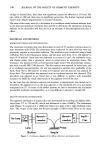
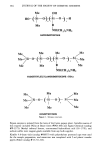
j. Soc. Cosmet. Chem., 39, 383-392 (November/December 1988) Method to determine silicones on human hair by atomic absorption spectroscopy EMMETT G. GOOCH and GRETCHEN S. KOHL, Dow Corning Corporation, 2200 West Salzburg Road, Midland, MI 48686-0994. Received June 4, 1987. Synopsis This method consists of an enzyme digestion of hair samples to which silicone-containing hair products have been applied. The released organosiloxane is recovered by liquid-liquid extraction into an organic solvent. The silicon content of the solvent extract is measured by atomic absorption spectroscopy (AAS) to determine the total mass of deposited silicone on the hair. INTRODUCTION Hair does not contain naturally occurring amounts of organosilicon (silicone) species (1). Generally, naturally occurring siliceous moieties are in the form of silica, silicates, or substituted silicates. Unlike most commonly found siliceous materials, organosi- 1oxane polymers, provided they are not crosslinked, are soluble in organic solvents. This organosiloxane solubility in organic solvents forms the basic concept for a selective solvent extraction approach. However, some siloxanes such as aminofunctional siloxanes bind so tightly to hair that mere solvent extraction is not sufficient for quantitative removal. Therefore, the first step in the development of this method was to find a way to physi- cally release the siloxanes from the hair. The next step was an organic solvent extraction of the siloxane, followed by atomic absorption spectroscopy analysis of the extract. EXPERIMENTAL MATERIALS Test tresses were made of virgin European, natural brown hair obtained from DeMeo Brothers, Inc. The siloxanes used are illustrated in Figure 1 and were applied as emul- sions, diluted to 0.25 or 1.0 weight % silicone active in deionized water, as specified for each experiment. A 200-g treatment bath of diluted emulsion was used for each 12-g hair tress prepared. Each tress was pre-washed with a non-silicone-containing shampoo, and then dipped into a treatment bath for 30 seconds. The tress was rinsed under 40øC running tap water for 30 seconds, and then air dried prior to sample prepa- ration. The dimethylpolysiloxane fluids (dimethicones) used for AAS calibration were Dow Corning © 200 fluids, 350 and 1000 centistoke viscosity. 383
Purchased for the exclusive use of nofirst nolast (unknown)
From: SCC Media Library & Resource Center (library.scconline.org)