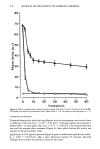
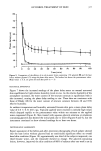
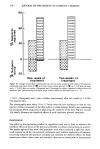
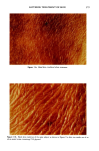
j. Soc. Cosmet. Chem., 39, 367-381 (November/December 1988) Changes in the physical properties of the stratum corneum following treatment with glycerol M. D. BATT, W. B. DAVIS, E. FAIRHURST, W. A. GERRARD and B. D. RIDGE, Beecham Products Research Department, St. George's Avenue, Weybridge, Surrey, England KTI 3 ODE. Received May I, 1987. Synopsis Preparations containing the humectant glycerol were applied topically to the skin of young adults, and the physical effects of glycerol on the stratum comeurn were examined using instrumental techniques. Reductions in transepidermal water loss and electrical impedance, smoothing of the skin surface profile, and an increase in the coefficient of friction were found to accompany an improvement in the expertly assessed condition of the skin. Such changes, found to last for periods in excess of eight hours, were similar to those observed transiently after the topical application of distilled water. INTRODUCTION Water is well known to play an important part in maintaining stratum corneum flexi- bility. In vitro, separated corneum is hard and brittle and the classic experiments of Blank (1) have shown that water is an effective plasticiser. In vivo, dry skin is more apparent on exposed body sites than on protected areas (2). A dry, cold environment is highly conducive to dry skin formation (3), and low relative humidity with increased evaporative loss of water is a major factor (4). Topical treatment, using oil-in-water or water-in-oil emulsions, presents a ready means of supplying water to the outer surface of the skin. However, rapid evaporation of this product water results in only a transient, although measurable, benefit. A logical ap- proach to retaining water in the stratum corneum is the use of topically applied humec- tants (5,6) either in solutions or emulsions. It would be expected that humectants on, or immediately below, the surface of the stratum corneum would both retain applied water and reduce transepidermal water loss (TEWL). In this work, the effects of glycerol on TEWL have been examined under normal am- bient conditions and compared with its effects on three parameters associated with stratum corneum hydration. These were smoothing of the skin surface profile, skin friction, and electrical impedance. A photographic evaluation of skin condition after glycerol treatment was also carried out. 367

368 JOURNAL OF THE SOCIETY OF COSMETIC CHEMISTS METHODS MATERIALS Glycerol (Analar Grade) was obtained from BDH Ltd., Poole, England, and stored in tightly closed containers at room temperature until required. Simple o/w creams and lotions were prepared, based on mineral oil emulsions, in which the glycerol replaced part of the water phase. TRIAL DESIGN For the instrumental measurements, single applications of glycerol in aqueous solutions or cosmetic emulsions were applied evenly by an experienced operator using a dose of 0.05 ml per 20 cm 2 of inner forearm skin, unless otherwise stated. Appropriate con- trol-treated sites were included and readings were taken at intervals over the subsequent eight hours. Young adults of both sexes, aged between 18 and 35 years, were used. Six to eight volunteers, each offering two or three test sites per forearm, were normally found to be sufficient. All treatments and readings were carried out under conventional, double-blind conditions. Wherever possible an equivalent contralateral site was used as a within-person control, and all data were obtained from normal healthy skin. In order to minimise sweating, the ambient conditions did not exceed 20øC and 60% RH. For the photographic assessment of skin condition, 15 female volunteers, aged between 19 and 57 years and with dry skin on the backs of their hands, took part in a double- blind crossover trial. The glycerol lotion was compared with the same lotion without glycerol. Treatment was at least twice daily, ad lib, home-use. Each phase of the trial was of two weeks duration, with one week without treatment between the two halves of the crossover. MEASUREMENT OF THE RATE OF TRANSEPIDERMAL WATER LOSS (TEWL) A Servomed EP1 Evaporimeter (Servomed AB, Stockholm-Viillingby, Sweden) was used to measure water flux through the skin of volunteers before and during treatment. This method is based on the estimation of the vapour pressure gradient immediately adjacent to the surface of the skin (7) and permits the surface investigated to be exposed to normal ambient air even during the short period of measurement. The instrument's detector was placed against the skin area to be tested and allowed to equilibrate for 30 seconds. Then the internally computed TEWL was recorded. The probe consists of thermistors and surface relative humidity detectors set 0.5 and 1.0 cm from the skin surface. A 5-cm tube of paper, 1 cm in diameter, was attached to the back face of the detector in order to reduce fluctuations in the reading caused by turbu- lence of the air in the vicinity of the probe. The modification allowed the operator to take frequent readings without unduly occluding the test area and generated more re- producible data than when local air movements caused readings to fluctuate. MEASUREMENT OF SKIN SURFACE TOPOGRAPHY There are a number of parameters used by engineers to define the roughness or smooth- ness of surfaces, and these can be used to measure the roughness of skin surface replicas
Purchased for the exclusive use of nofirst nolast (unknown)
From: SCC Media Library & Resource Center (library.scconline.org)