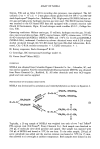
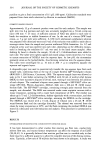
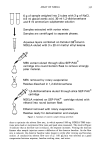
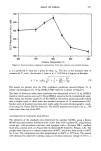
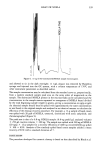
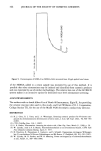
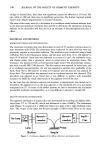
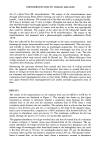
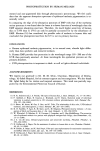
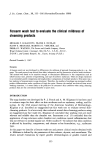
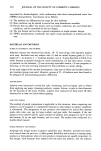
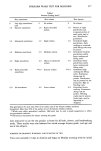
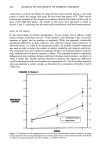
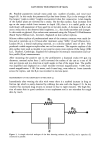
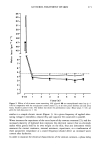
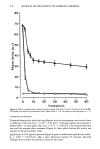
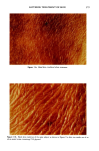
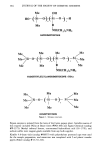
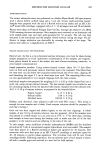
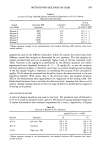
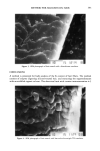
GLYCEROL TREATMENT OF SKIN 369 (8). Possible parameters include mean peak size, number of peaks, and total trace length (9). In this study the parameter Rtm has been chosen. Rtm is the average of the five largest "peak-to-valley" heights encountered when five consecutive 1-mm lengths of the surface plane are traversed by a stylus. On the skin surface, R•m increases with age as the major visible lines increase in depth (10) thus it is a useful guide to an individual's self-assessment of how aged his or her skin looks. A decrease in R•m indi- cates a reduction in the observed skin roughness, i.e., skin looks smoother and younger. In this work on glycerol, R•m values were measured using the Talysurf 10 Profilometer (Rank Taylor Hobson Ltd., Leicester, England) on skin surface replicas. Silicone rubber replicas of predetermined areas of the stratum corneum were made be- fore and at intervals up to 24 hours after treatment using "Silflo" (J and S Davies Ltd., London N12), a dental replicating material, at a silicone:catalyst ratio of 20:1. This produced a stable negative replica after two to five minutes. The negative replicas of the skin surface were used as moulds to cast positive epoxy resin replicas (Ciba Geigy (UK) Ltd., Duxford, Cambridge, England) for subsequent microscopic examination and sur- face profile (R•m) measurements. After mounting the positive cast in the profilometer a diamond stylus (10 Ixm tip diameter, nominal stylus force 2 mN) traversed the surface of the cast at a rate of 30 mm per minute and in a direction at right angles to that of the major lines. The profile was amplified and displayed on a chart recorder (vertical magnification X 200, hori- zontal magnification X 10). Six traces, each 6-mm long, were taken at 1-mm intervals across the replica, and the Rtm was recorded in microns (ixm). MEASUREMENT OF THE COEFFICIENT OF FRICTION (•) Immediately after wetting the skin with water there is a marked increase in drag or friction (Ix) which is easily detected by rubbing the area with the finger (! 1). In dry weather this increased drag returns to normal in four to eight minutes. The high fric- tion of moist skin in good condition is not unpleasant and is not mistaken for rough skin by touch. Figure 1. A simple electrical analogue of the skin showing resistors (R• and R2) and a capacitor (C) connected in parallel.

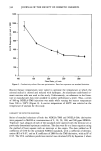
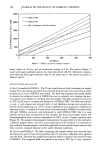
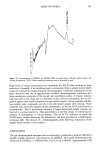
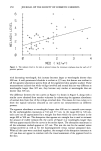
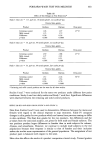
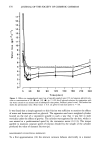
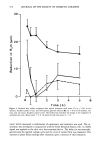
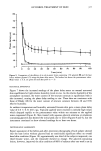
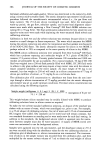
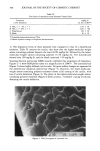
370 JOURNAL OF THE SOCIETY OF COSMETIC CHEMISTS 17- 16- 15- 14- 13- 12- 11- 10- 9- 8- 7- 6- .. 5 4 3- 2- 1- O- I I I I I I I I I 5 30 60 90 120 150 180 210 240 Time (min) Figure 2. Effects on transepidermal water loss of topically applied water (O) and aqueous glycerol solu- tions at concentrations of 5% (•') and 15% (&), (p 0.05 for all glycerol solutions by comparison with the water control at ten minutes and all subsequent time points, Student's paired t-test). The broken line shows the pretreatment value. Mean values ñ S.E. are given for each data point (n = 10). It was found that a simple approach to skin friction was sufficient to monitor the effects of water and humectants such as glycerol. The apparatus used was a weighted cylinder located on the end of a viscometer spindle in such a way that it was free to slide vertically under the effects of gravity. The cylinder was supported by the skin, whilst it was rotated at a predetermined speed by the viscometer motor (12,13). The torque applied to maintain constant speed of rotation divided by the weight of the cylinder produced the value of dynamic friction (ix). MEASUREMENT OF ELECTRICAL IMPEDANCE To a first approximation (14) the stratum corneum behaves electrically in a manner
Purchased for the exclusive use of nofirst nolast (unknown)
From: SCC Media Library & Resource Center (library.scconline.org)