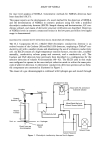
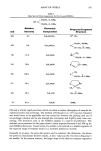
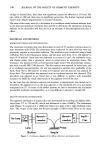
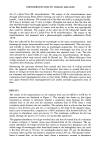
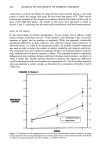
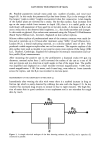
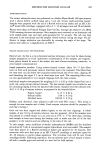
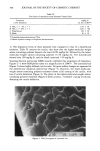
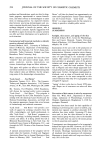
ASSAY OF NDELA 331 for trace level analysis of NDELA. Colorimetric methods for NDELA detection have been described (36,37). This paper reports on the development of a novel method for the detection of NDELA and the determination of NDELA in cosmetic products using GC with a modified electrolytic conductivity detector (ELCD). Sample cleanup and derivatization, GC con- ditions utilized, and means of derivative structure verification are described. Detection of NDELA levels in cosmetic creams and lotions in the low parts per billion level (ppb) range is demonstrated. ELECTROLYTIC CONDUCTIVITY DETECTION (ELCD) PRINCIPLES OF OPERATION The O.I. Corporation (O.I.C.) Model 4420 electrolytic conductivity detector is an evolved version of the Coulson (38) and Hall (39) detectors, employing a Teflon © con- ductivity cell with a smaller volume and abandoning the use of a reference conductivity cell. An ELCD consists of a high-temperature reaction furnace, reaction tube, scrubber assembly, conductivity solvent pump and reservoir, and a conductivity cell. The Coulson and Hall detectors have previously been described in a configuration for the selective detection of volatile N-nitrosamines (40-42). The ELCD used in this study was configured to operate in the non-catalytic reductive mode to utilize the same prin- ciple of selective detection. In electrolytic conductivity detection systems such as these, the components are connected as illustrated in Figure 1. The eluant of a gas chromatograph is combined with hydrogen gas and routed through Scrubber Ceramic Reaction Tube Reactor Furnace Vent Eluant from gas chromatograph Transfer Line L I Conductivity Cell • Hydrogen Solenoid Valve pH adjustment loop Vessel with 2% ammoniu hydrosolu I Mixed Resin Bed and Solvent Stream Splitter Solvent Pump Solvent Reservoir Figure 1. Electrolytic conductivity detector block diagram.

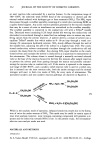
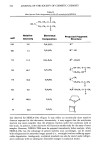
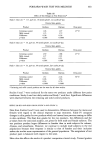
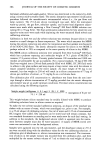
332 JOURNAL OF THE SOCIETY OF COSMETIC CHEMISTS an inert reaction tube surrounded by a reaction furnace. In the temperature range of 500-650øC the relatively weak N-NO bond of the nitrosamine is cleaved and the nitrosyl radical reduced with hydrogen gas to form ammonia (NH3). The NH 3 vapor then passes through a scrubber assembly consisting of a coiled tube containing KOH on a quartz thread support. Any acidic reaction products generated in the reaction chamber that may be a source of noise or interference are neutralized in the scrubber assembly. The scrubber assembly is connected to the conductivity cell with a Teflon © transfer line. Deionized water containing 0.2% hexyl alcohol (for wetting the conductivity cell electrodes) is recirculated through a mixed bed ion exchange resin to remove any inter- fering species from the solvent reservoir. A splitter diverts a stream of solvent into a capillary Teflon © transfer line which makes an 8-10-cm loop through a vessel con- taining 2% ammonium hydroxide solution. NH 3 slowly diffuses through the wall of the transfer line, adjusting the pH of the solvent to a slightly basic level. The condi- tioned conductivity solvent continuously circulates through the conductivity cell and contacts the eluant from the scrubber. Any eluting NH 3 vapor dissolves in the condi- tioned solvent and increases the solvent's conductivity as a quantitative measurement of the nitrosamine. The column eluant is vented through a manually activated solenoid valve at the base of the reaction furnace for the first few minutes after sample injection to prevent the solvent peak from passing through the reactor and possibly contami- nating the reaction tube or conductivity cell. If the reactor is operated in the tempera- ture range of 600-850øC, and a catalytic nickel reaction tube is used or a nickel cata- lyst is inserted into the inert reaction tube, both the amine nitrogen and the nitrosyl nitrogen will react to form two moles of NH 3 for every mole of nitrosamine. The postulated catalytic and non-catalytic reaction pathways are depicted in Equation 1. O:N-N • CH2CH2OR CH2CH2OR NH 3 + H20 + HN / CH2CH2OR CH2CH2OR 2NH 3 + H20 + 2 [CH2CH2OR ] (1) While in the catalytic mode of operation, enhanced sensitivity results due to the forma- tion of twice the molar amount of NH 3. This mode may be useful in certain types of trace level analysis however, most nitrogen-containing compounds will generate a re- sponse and the selectivity towards NNA is lost. In the present study, the nitrosamine- selective non-catalytic mode was used. MATERIALS AND METHODS APPARATUS A) A Varian Model 3700 GC, equipped with an O.I.C. 4420 ELCD (O.I.C., College
Purchased for the exclusive use of nofirst nolast (unknown)
From: SCC Media Library & Resource Center (library.scconline.org)