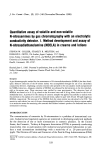
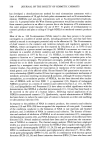
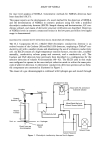
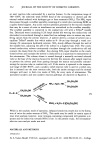
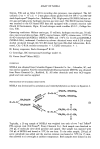
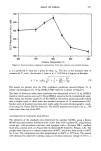
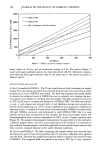
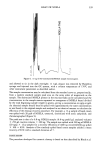
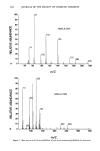
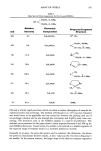
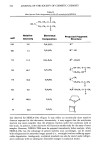
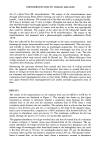
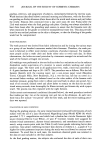
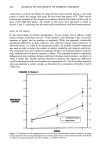
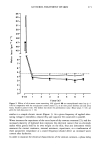
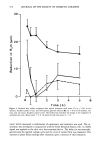
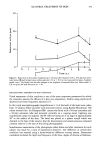
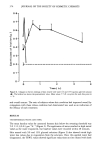
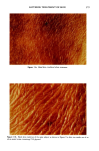
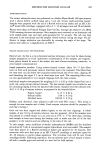
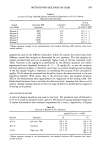
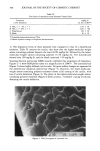
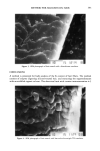
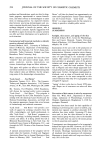
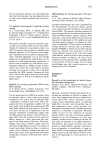
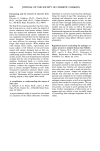
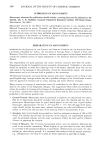
GLYCEROL TREATMENT OF SKIN 379 ./ Figure 1 la. Hand skin condition before treatment. Figure 1 lb. Hand skin condition of the same subject as shown in Figure 1 la after two weeks use of an oil-in-water lotion containing 15% glycerol.

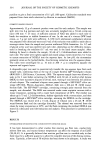
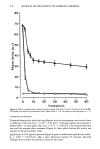
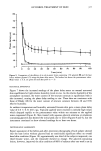
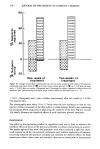
380 JOURNAL OF THE SOCIETY OF COSMETIC CHEMISTS readings attributed to water evaporating from the base thereafter the readings were equivalent to those found on the untreated control sites. The observed inhibition of TEWL as a result of glycerol treatment contradicts that published data (19,20) which was obtained either in vitro, where normal TEWL is lacking, or under conditions of abnormally low or zero external relative humidity. The present work is concerned with stratum corneum hydration under normal ambient con- ditions. Noninvasive techniques were deliberately chosen so that a minimal effect was produced on the skin water balance. In these circumstances, the rate of TEWL was significantly reduced following treatment with glycerol. This effect has been shown to persist for up to seven hours. Similarly, skin-smoothing effects have been shown to persist for at least 24 hours. Other work in this laboratory using analysis of tape strip- pings from glycerol-treated stratum corneum (21) has shown that glycerol builds up in the skin to form a reservoir. Slow release from such a reservoir would account for the persistence of its effects. The data reported here are consistent with the hypothesis that the beneficial effects of glycerol on skin condition are due to its physical effects on the status of water in the outer layers of the stratum corneum. This may be the result of glycerol interactions with stratum corneum lipid structures or proteins, altering their water-binding and/or hydrophilic properties. The observed reduction in TEWL is also consistent with the humectant properties of glycerol whereby it avidly binds water to itself. Since glycerol is known to diffuse into the stratum corneum, the simplest explanation of these findings is that water which would otherwise have been lost is held by the glycerol in the stratum corneum where it contributes to the smoothing of the skin surface by swelling the outer layers. After single applications of glycerol-containing preparations, the skin became smoother, the electrical impedance was decreased, and friction was increased. All these observations are consistent with the interpretation proposed above. The effects were significant, reproducible, and prolonged. REFERENCES (1) I. H. Blank, Factors which influence the water content of the stratum corneum, J. Invest. Dermatol., 18, 433-440 (1952). (2) M. E. Chernosky, Clinical aspects of dry skin, J. Soc. Cosmet. Chem., 27, 365-376 (1976). (3) L. E. Gaul, Relation of dew point and barometric pressure to horny layer hydration, Proc. Sci. Sect. Toilet Goods Assoc., 40, 1-7 (December 1963). (4) J. D. Middleton, The effect of temperature on extensibility of isolated corneum and its relation to skin chapping, Br. J. Dermatol., 81, 717-721 (1969). (5) D. L. Bissett and J. F. McBride, Skin conditioning with glycerol, J. Soc. Cosmet. Chem., 35, 345-350 (1984). (6) E. R. Cooper, P.J. Missel, D. P. Hannon, and G. B. Albright, Mechanical properties of dry, normal and glycerol-treated skin as measured by the gas-bearing electrodynamometer, J. Soc. Cosmet. Chem., 36, 335-348 (1985). (7) G. E. Nilsson, Measurement of water exchange through skin, Med. Biol. Eng. Comput., 15, 209-218 (1977). (8) S. Makki, J. C. Barbanel, and P. Agache, A quantitative method for the assessment of the micro- topography of human skin, Acta Dermatovener., 59, 285-291 (1979). (9) T. H. Cook and T. J. Craft, Topographics of dry skin, non-dry skin, and cosmetically treated dry skin as quantified by skin profilometry, J. Soc. Cosmet. Chem., 36, 143-152 (1985).
Purchased for the exclusive use of nofirst nolast (unknown)
From: SCC Media Library & Resource Center (library.scconline.org)