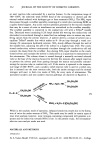
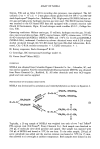
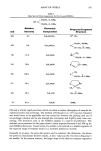
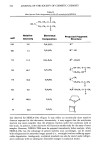
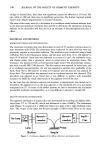
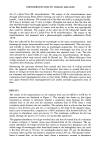
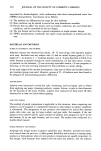
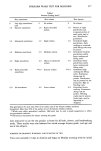
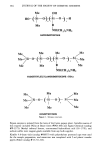
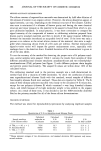
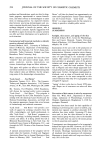
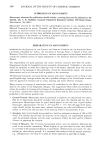
384 JOURNAL OF THE SOCIETY OF COSMETIC CHEMISTS Me OH I I o-)•-(-si o HO- (- Si-- -- 3 -H Me R •H(CH2)2NH2 Me Me Me Me•. I I / M SI-O- (-Si--O-) (-Si--O--)--Si e• I •' [ ' V Me Me Me R Me •H(CHz)zNHz ••LYLAI•ODn•T•COI• Me Me Me l i__O_ ) Si X/ Me•'Si-O- (-S -- '-----Me Me Me Me Figure 1. Siloxane structures. Papain enzyme is isolated from the latex of the Carica papaya plant. Suitable sources of this enzyme included Pfaltz & Bauer (item #PO1100) and Sigma Chemical (catalog #P-3375). Methyl isobutyl ketone, concentrated hydrochloric acid (36-37%), and sodium sulfite were reagent-grade available from any bulk supplier. Kimble 4.0-dram vials (catalog #60957) with polyethylene protected caps were used for the sample preparation, and extraction was completed with 5-ml plastic transfer pipets (Fisher catalog # 13-711-9A).

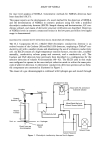
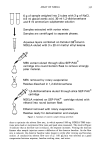
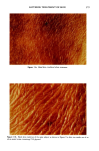
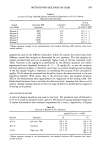
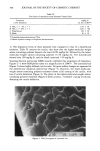
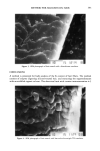
METHOD FOR SILICONES ON HAIR 385 INSTRUMENTATION The atomic absorption assay was performed on a Perkin Elmer Model 380 spectrometer with a silicon hollow cathode lamp and a 5-cm slot nitrous oxide-acetylene burner. Samples were prepared with the aid of a Burrell wrist-action shaker and an IEC Clin- ical © model 428 centrifuge, equipped with a 6 X 52-ml angle rotor and 50-ml shields. Photos were taken on Polaroid Polapan Type-52 film, through the objective of a JEOL T300 scanning electron microscope. Hair samples were mounted on an aluminum tab with double-sided tape and then gold-sputtered for 50 seconds. The tab was then mounted in the microscope and the samples viewed without tilting the stage. No dif- ference in image resolution was detectable by rotating the angle of the stage. The photos were taken at a magnification of 2000 x. SPECIFIC SILICON ASSAY TEST PROCEDURE [Special note: As this is a trace elemental analysis technique, care must be taken during sample preparation to avoid inadvertent contamination of the samples and reagents. Latex gloves should be worn if the analyst has used silicone-containing cosmetics, to avoid sample contamination.] Sample preparation procedure. Using solvent-cleaned scissors, about 50-75 hair fibers were cut from each previously treated, dried hair tress to be evaluated. The fibers from the tress were cut just below the (carnauba-waxed) bound end of the tress, clipping off and discarding the upper 2.5 cm of these hairs (root end). The remaining fibers were cut into approximately 0.3-cm length clippings with the clean scissors. Individual samples were prepared by weighing 0.10 _+ 0.02 g of the clipped hair into a tared vial, using solvent-cleaned tweezers. The hair sample weight was recorded to use for calculating mg/kg Si from the reported AAS results. Samples were then diluted with 10.0 _+ 0.10 g of enzyme solution, as prepared in the formula below: Papain enzyme 0.13 -+ 0.02 g Sodium sulfite 2.00 _+ 0.10 g Distilled water 100.00 _+ 0.10 g [Shaken until dissolved, then adjusted to pH 6.8 with HC1 (conc.). This recipe is enough for nine samples and a blank. Fresh enzyme solutions should be prepared for each day's testing.] Each vial was then capped and shaken lightly to wet the hair clippings. A blank sample, of just 10.0 g of enzyme solution, was also prepared. All of the samples were then placed in a block heater or in an oven set at 63øC _+ 3 ø for three days, swirling each sample at least once during the heating cycle to make sure that all of the hair sample is in the solution and not adhering to the sides of the vial. To each sample, seven milliliters of methyl isobutylketone (MIBK) and five hundred microliters (0.5 ml) of concentrated reagent hydrochloric acid were added. The samples were then placed in a Burrell mechanical shaker and agitated for 30 minutes. The extraction vials were then spun in an IEC Clinical © centrifuge at moderate speed for 20-30 minutes to permit phase separation. The 4.0-dram vials will fit into 50-ml centrifuge shields. Following separation, the top (solvent) layer of each sample is drawn off with a transfer pipet and reserved in a new vial for AAS analysis.
Purchased for the exclusive use of nofirst nolast (unknown)
From: SCC Media Library & Resource Center (library.scconline.org)