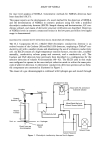
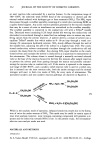
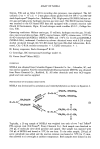
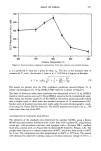
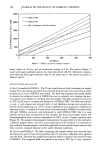
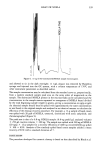
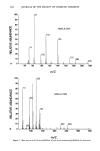
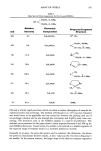
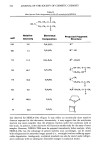
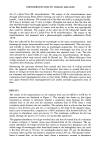
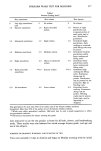
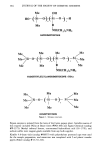
ASSAY OF NDELA 3 3 3 Station, TX) and an Altex C-R 1A recording data processor, was employed. The GC utilized a 2-m x V4" o.d. x 2-mm glass column packed with 3% OV-17 on 100/120 mesh Supelcoport © (Supelco Inc., Bellefonte, PA). High-purity (99.999%) helium car- rier gas and high-purity hydrogen reaction gas were used. The ELCD reaction furnace was attached to the GC-heated FID base and equipped with a ceramic reaction tube (North 40 Instruments, Elgin, IL) and nitrogen mode scrubber (O.I.C., College Sta- tion, TX). Operating conditions: Helium carrier gas, 35 mL/min hydrogen reaction gas, 50 mL/ min injector and detector base, 200øC reactor furnace, 600øC column oven, 145øC for bis-(O-trimethylsilyl)NDELA (NDELA-TMS) and 170øC for bis-(O-acetyl)NDELA (NDELA-OAc), isothermal. Conductivity solvent: deionized water with 0.2% n-hexyl alcohol circulated through AG 501-X8 mixed bed resin (Bio-Rad Laboratories, Rich- mond, CA). C-R 1A recorder attenuation x 5, ELCD attenuation x 1. B) Rotary evaporator, Buchi Rotavapor © R110. C) Centrifuge, IEC International Centrifuge model 14. D) Vortex Genie © Mixer S8223. CHEMICALS NDELA was obtained from Columbia Organic Chemicals Co. Inc., Columbia, SC, and was used as supplied, N,O-bis-(trimethylsilyl)trifluoroacetamide (BSTFA) was obtained from Pierce Chemical Co., Rockford, IL. All other chemicals used were ACS-reagent grade and were used as supplied. PREPARATION OF STANDARD DERIVATIVES NDELA was derivatized by acetylation and trimethylsilylation as shown in Equation 2. 0 = N- N / CH2CH2OH • CH2CH2OH CH2CH2- OSi(CH3) 3 O=N-N CH2CH 2 - OSi (CH3) 3 O=N-N O / CH2CH 2- O- C- CH 3 CH2CH2-O-C-CH 3 II o (2) Typically, a 25-mg sample of NDELA was weighed into each of two 7-ml Teflon © PFA septum vials (Tuf-Tainer ©, Pierce Chemical Co.). Each sample was dissolved in 250 •L of molecular sieve-dried pyridine and capped. One sample was injected with 250 •L of BSTFA and heated at 70øC for one hour. To the other sample, 250 •L of acetic anhydride was added and the reaction mixture was heated at 70øC for 15 min, then allowed to sit overnight at ambient temperature. Both samples were diluted in dry

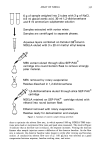
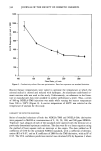
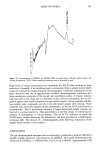
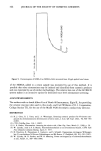
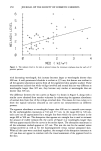
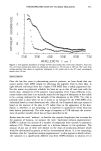
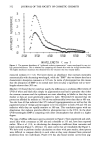
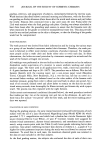
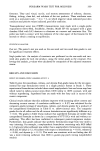
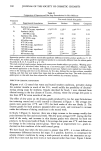
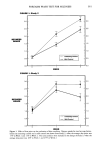
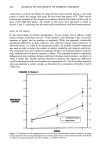
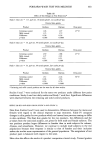
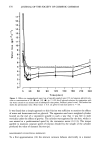
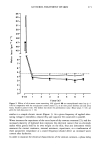
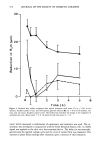
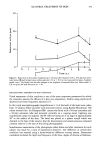
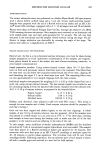
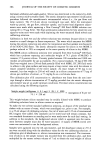
334 JOURNAL OF THE SOCIETY OF COSMETIC CHEMISTS pyridine to give a final concentration of 0.1 g/L (100 ppm). Calibration standards were prepared from these stock solutions by dilution in methanol (MeOH). COSMETIC SAMPLE CLEANUP Approximately 12 g of cosmetic product were used for each analysis. The sample was split into two 6-g portions and each was accurately weighed into a 50-mL screw-cap tube (150 mm X 25 mm). A sufficient amount of NaCI was added to each tube to break the emulsion or inhibit formation of one. In the case of a viscous O/W hand cream, ca. 3 g per tube were sufficient. A 10% (w/v) ammonium sulphamate solution was prepared with deionized water and 9 mL of this solution were added to each tube to scavenge nitrite from the sample and prevent artifactual NNA formation. Ca. 0.5 mL of glacial acetic acid was pipetted into each tube, depending on the difficulty encoun- tered in breaking the emulsion (0.7 mL was used in the hand cream sample). After shaking by hand to dissolve the sample, 30 mL of 1,2-dichloroethane were added to each tube. The tubes were tightly capped and mixed using a vortex mixer for 2 to 5 min to ensure extraction of NDELA into the aqueous layer. At low pH, the nitrosamine primarily exists as the hydrochloride, thus favoring extraction into the aqueous phase. The tubes were centrifuged for ca. 10 min at 200 x g to completely separate the aqueous and organic layers. A disposable pipet was used to quantitatively transfer the top aqueous layer from each sample tube, combining them at the top of a single Extrelut QE © Kieselguhr column (#901020-1, EM Science, Cincinnati, OH). The aqueous sample layer was allowed to soak in for 3 min before extracting the NDELA with 60 mL of methyl ethyl ketone (MEK) in three successive aliquots of 20 mL each, waiting 5 min between the addition of each aliquot. The combined aliquots were passed through a SEP-PAK © silica car- tridge (#51900, Waters Associates, Milford, MA) into a 100-mL '1•. 24/40 round- bottom flask. The SEP-PAK © cartridge, containing strongly polar material from the sample, was discarded. The MEK was removed under water aspirator vacuum with a rotary evaporator, operating with a water bath .temperature of 40øC. The residue was taken up in 75 mL 1,2-dichloroethane, shaken vigorously with a vortex mixer, and then passed through a SEP-PAK © silica cartridge, retaining the NDELA on the cartridge. The NDELA was eluted with a 15-mL aliquot of ethanol into a 25-mL '• 24/40 round-bottom flask and the cartridge discarded. The ethanol was removed from the eluate by rotary evaporation at 40øC, and the flask containing the residual NDELA was stored in a desiccator until derivatization and analysis. This procedure is summarized in Figure 2. RESULTS OPTIMIZATION OF ELECTROLYTIC CONDUCTIVITY DETECTOR (ELCD) It has been demonstrated in other studies that reaction gas flow rate, conductivity solvent flow rate, and reactor furnace temperature can affect the response of an ELCD (38,40,41). It is generally believed that reaction gas flow rate is a variable only in that there must be a sufficient quantity to allow for complete reaction of the eluting nitrosa- mine. Typically, a flow rate of 50 mL/min has been shown to be adequate. A study was
Purchased for the exclusive use of nofirst nolast (unknown)
From: SCC Media Library & Resource Center (library.scconline.org)