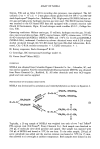
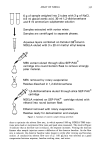
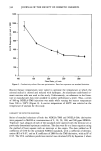
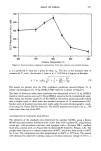
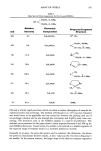
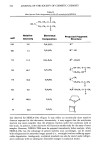
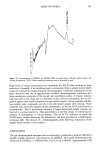
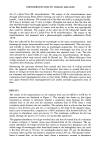
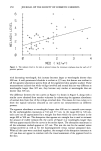
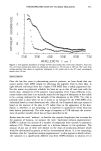
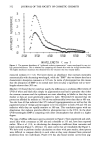
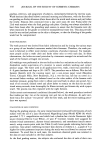
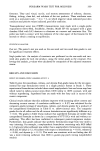
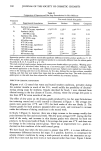
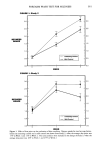
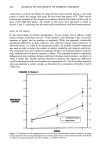
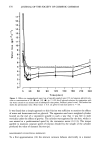
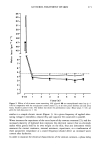
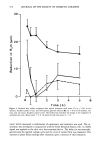
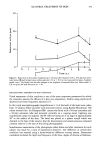
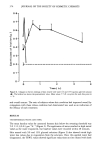
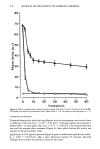
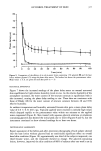
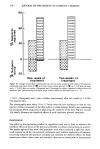
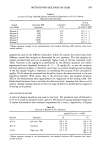
GLYCEROL TREATMENT OF SKIN 377 80- 70- 60- 20- 10- 0- I I • • • I • I I I • I 0 10 20 30 40 50 60 70 80 90 120 Time (min) Figure 9. Comparison of the efficacy of an oil-in-water lotion containing 15% glycerol (I) and the base lotion without glycerol (O) using the phase delay meter. The broken line shows the pretreatment value. Mean values + S.E. are given for each data point (n = 5). ELECTRICAL IMPEDANCE Figure 7 shows the increased readings of the phase delay meter on normal untreated skin equilibrated at high relative humidity levels in vivo. As the relative humidity of the atmosphere increased, the water content of the stratum corneum in equilbrium with it also increased, causing the phase delay reading to rise. These data are consistent with those of Blank (18) for the water content of stratum corneum between 20 and 95% relative humidity. At ambient temperature and humidity untreated forearm skin gave a mean phase delay value of 4.0 + 0.3 ! (S. E.) IXS. Topically applied water resulted in initially high values which dropped rapidly to the pretreatment value within ten minutes as the applied water evaporated (Figure 8). Skin treated with aqueous glycerol solutions or emulsions containing glycerol also showed the initial peak due to water (Figures 8 and 9), but the instrument continued to show elevated readings for at least two hours. PHOTOGRAPHIC ASSESSMENTS Expert assessment of the before-and-after-treatment photographs of each subject showed that the base lotion without glycerol had no statistically significant effect on overall hand skin condition (Figure 10) approximately one third of the subjects improved, one third became worse, and the remainder showed no change. The glycerol-containing lotion, however, improved the skin condition of 80% of subjects after one week's use (p

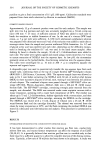
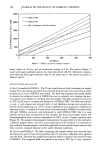
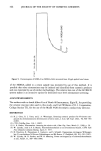
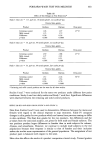
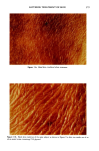
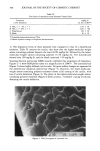
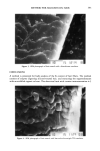
378 JOURNAL OF THE SOCIETY OF COSMETIC CHEMISTS e 60 o 30 One week of treatment Two weeks of treatment Figure 10. Change in hand skin condition after one and two weeks treatment with either a 15% glycerol- containing oil-in-water lotion (U1/I) or its base lotion without glycerol (O/O) (p 0.01 after one week and p 0.00 ! after two weeks, Chi-squared test). Percentage of subjects improved is shown above the horizontal axis, and percentage of subjects worse is shown below the horizontal axis (n = 15). 0.01, Chi-squared test), with a further improvement after two weeks (p 0.001 Chi-squared test). The photographs were taken 10 to 12 hours after the last treatment so that no oily product residues remained on the skin surface to mask dryness, thereby also confirming the persistent effects of glycerol in improving the condition of the skin. Figures 1 la and 1 lb clearly illustrate the beneficial effects of such long-term glycerol treatment. DISCUSSION Any effective skin-hydrating product or ingredient must aim at least to maintain the beneficial effects of water on the skin and preferably to enhance and prolong its activity. The results reported here show that treatment with water produced a rapid but short- lived response in all the instrumental techniques used, whereas application of glycerol- containing solutions and products increased and extended the observed effects. In those experiments where a base cream was included, there was an initial peak in instrumental
Purchased for the exclusive use of nofirst nolast (unknown)
From: SCC Media Library & Resource Center (library.scconline.org)