330 JOURNAL OF THE SOCIETY OF COSMETIC CHEMISTS has developed a chemiluminescent method for total nitrosamines assessment with a limit of determination of 50 ppb for both polar nitrosamines such as N-nitrosodiethan- olamine (NDELA) and non-polar nitrosamines such as N-nitrosomethyl-tetradecyla- mine (1). A proposal before the West German government would ban secondary amines from cosmetic products in an effort to prevent the in situ formation of N-nitrosamines this same proposal would mandate the use of 99 + % grades of triethanolamine in cosmetic products and place a ceiling of 10 ppb NDELA on marketed cosmetic products (2). Most of the ca. 130 N-nitrosamines (NNA) tested to date have proven to be potent carcinogens in a number of animal species, including primates (3), and they have been ranked as second in carcinogenic potential only to the aflatoxins (4). The N-nitrosamine of chief concern to the cosmetic and toiletries industry and regulatory agencies is NDELA, whose carcinogenicity was first reported by Druckrey et al. in 1976 (5) and later identified as a potent animal carcinogen (6). NDELA's occurrence as a trace con- taminant in a number of diverse cosmetics and toiletries was first brought to the in- dustry's attention in 1977 by Fan et al. (7). NDELA, in common with other NNA, appears to function as a "procarcinogen," requiring metabolic activation prior to be- coming an active carcinogen. The proximate carcinogen, probably an electrophilic car- bonium-ion or its labile diazonium-ion precursor, is believed (8) to initiate carcino- genesis by a mutagenic event involving the alkylation of a nucleic acid guanine or cytosine residue, thus altering the transcription or translation of the normal chromo- somal genetic code of the affected cell(s). Recent Hansch-Taft quantitative structure-ac- tivity relationship (QSAR) studies (9) have lent support to a predominant mechanism of metabolic activation involving microsomal [3-oxidation, although N-nitroso-2-hydrox- ymorpholine, an or-oxidation product of NDELA, has also been detected after incuba- tion of NDELA with rat liver 9000 X g supernatant (10). Reports of widespread NDELA occurrence in a variety of cosmetics and toiletries by Fan et al. (11), the FDA (12), and Spiegelhalder and Preussman (13) have taken on added significance with the demonstration that NDELA is absorbed percutaneously (14-16) and has been found to be excreted in the urine of a human subject, following topical application of an NDELA-contaminated cosmetic (17). Qualitatively, topical administration of NDELA has been shown to induce the same types of tumors in hamsters as either oral swabbing or subcutaneous injection (18). In response to the problem of NNA in cosmetic products, the cosmetics and toiletries industry (19) and FDA (20) have recognized the importance of twin goals: 1) assessment of the conditions conducive to the formation of NNA in raw materials and finished products and 2) inhibition of NNA in cosmetics and toiletries. The kinetics of forma- tion and methods of inhibition of NDELA in oil-in-water emulsions (21), nonaqueous triethanolamine systems (22), and NNA formation in the presence of micelies have been discussed (23). Several analytical methods have been used to quantitate the concentra- tion of NDELA in cosmetics. The thermal energy analyzer (TEA) has been employed widely as a sensitive and selective detector for NDELA when coupled with high perfor- mance liquid chromatography (HPLC) (11,24,25) and gas chromatography (GC) (26). HPLC in combination with ultraviolet spectrophotometric detection (27-30) or differ- ential pulse polarography (DPP) (31,32), and GC in combination with electron capture detection (ECD) (33,34) and flame ionization detection (FID) (35) have also been used

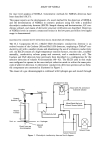
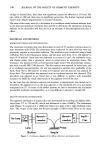
ASSAY OF NDELA 331 for trace level analysis of NDELA. Colorimetric methods for NDELA detection have been described (36,37). This paper reports on the development of a novel method for the detection of NDELA and the determination of NDELA in cosmetic products using GC with a modified electrolytic conductivity detector (ELCD). Sample cleanup and derivatization, GC con- ditions utilized, and means of derivative structure verification are described. Detection of NDELA levels in cosmetic creams and lotions in the low parts per billion level (ppb) range is demonstrated. ELECTROLYTIC CONDUCTIVITY DETECTION (ELCD) PRINCIPLES OF OPERATION The O.I. Corporation (O.I.C.) Model 4420 electrolytic conductivity detector is an evolved version of the Coulson (38) and Hall (39) detectors, employing a Teflon © con- ductivity cell with a smaller volume and abandoning the use of a reference conductivity cell. An ELCD consists of a high-temperature reaction furnace, reaction tube, scrubber assembly, conductivity solvent pump and reservoir, and a conductivity cell. The Coulson and Hall detectors have previously been described in a configuration for the selective detection of volatile N-nitrosamines (40-42). The ELCD used in this study was configured to operate in the non-catalytic reductive mode to utilize the same prin- ciple of selective detection. In electrolytic conductivity detection systems such as these, the components are connected as illustrated in Figure 1. The eluant of a gas chromatograph is combined with hydrogen gas and routed through Scrubber Ceramic Reaction Tube Reactor Furnace Vent Eluant from gas chromatograph Transfer Line L I Conductivity Cell • Hydrogen Solenoid Valve pH adjustment loop Vessel with 2% ammoniu hydrosolu I Mixed Resin Bed and Solvent Stream Splitter Solvent Pump Solvent Reservoir Figure 1. Electrolytic conductivity detector block diagram.
Purchased for the exclusive use of nofirst nolast (unknown)
From: SCC Media Library & Resource Center (library.scconline.org)