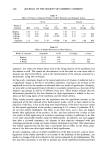
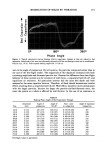
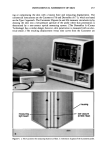
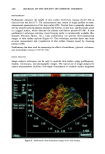
IN VIVO ELASTICITY 221 by a moisturizer further indicates that the ballistometer evaluates some properties of the skin that are more related to the deeper structure of the integument, which are slow to improve, rather than properties of some more superficial layers of the skin such as the stratum corneum, which can be easily measured by another instrument such as the gas-bearing electrodynamometer. CONCLUSION The advancement of the computing technology has allowed us to significantly improve the initial ballistometer, the design of Antonio Tosti (4), and to set up a system that allows for a rapid and accurate measurement of the viscoelastic properties of the skin. In this report we have shown that the ballistometer enables us to distinguish clearly between the elasticity of old and young subjects' skins based on measurements done on 120 persons. With this technique we were able to distinguish between the elasticity of the temple, the cheek, and the wrist, whereas we observed that these measurements were affected in the same manner by the age of the subjects they were performed on. We also found that chronic application of a topical treatment containing 0.1% vitamin A palmirate was able to increase significantly the elastic modulus of the skin as early as two weeks after twice-daily applications of the product on the skin. Such an effect could not be observed after treatment with a moisturizer, which indicates that the effects we were able to measure with this instrument are due to some structural modifications of the skin epidermis and/or dermis, rather than to a temporary improvement of the stratum comeurn morphology by moisturization. Counts et aL (10) have observed an increase in the epidermal thickness resulting from the repeated application of vitamin A palmirate to the skin of hairless mice. We hypothesize that similar changes occur in humans and that they are substantial enough to be measured by the instrument that is also able to distinguish between the elastic properties of young and old skin. This hypothesis is supported by our ultrasound measurements (Table V). Although based on the very simple concept of the rebound of an object on the surface of the skin, the ballistometer has been able to provide us with the necessary information to differentiate between old and young skin and to test the efficacy of various cosmetic formulations in improving the elastic properties of old skin, to make it react to an impact stimulus more like young skin. Such instrumental measurements provide infor- mation for the support of claims that are now submitted to severe scrutiny. In our hands, after a few modifications and connection to a computer, the ballistometer has proven to be a valuable tool. ACKNOWLEDGMENT The design and initial development of the ballistometer used for this work was done by C. W. Hargens PE, 1006 Preston Road, Philadelphia, PA 19118. REFERENCES (1) B. Finlay, Dynamic mechanical testing of human skin in vivo, J. Biomech., 3, 557-568 (1970). (2) J. L. Leveque, J. de Rigal, P. C. Agache, and C. Monneur, Influence of aging on the in vivo extensibility of human skin at low stress, Arch. Dermatol. Res., 269, 127-135 (1980).

222 JOURNAL OF THE SOCIETY OF COSMETIC CHEMISTS (lO) (3) M. Okada, T. Ishida, and S. Yuasa, Measurements of skin elasticity and slip applications in efficacy substantiation, POLA Laboratories, Japan. (4) A. Tosti, G. Compagno, M. L. Fazzini, and S. Villardita, A ballistometer for the study of the plastoelastic properties of skin, J. Invest. Dermatol., 69, 315-317, (1977). (5) J. Uitto, M. J. Fazio, and D. R. Olsen, Cutaneous aging and cosmetic dermatology, 1, 13-25 (1988). (6) C. Y. Tan, B. Statham, R. Marks, and P. A. Payne, Skin thickness measurements by pulsed ultra- sound: Its reproducibility, validation and variability, Br. J. Dermatol., 106, 657-667 (1982). (7) P. Pugliese, Use of ultrasound in evaluation of skin care products, Cosmet. Toiletr., 104, 61-76 (1989). (8) L. Packer, Ed. Retinoids, Part A. Molecular and metabolic aspects, Methods Enzymol., 189 (1990). (9) L. H. Kligman, H. C. Duo, and A.M. Kligman, Topical retinoid acid enhances the repair of ultraviolet damaged dermal connective tissue, Connect. Tissue Res., 12, 139-150 (1984). D. F. Counts, F. Skereko, J. McBee, and A. G. Wich, The effect of retinyl palmitate on skin composition and morphometry, J. Soc, Cos,net. Chem., 39, 235-240 (1988).
Purchased for the exclusive use of nofirst nolast (unknown)
From: SCC Media Library & Resource Center (library.scconline.org)