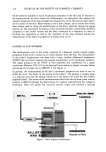
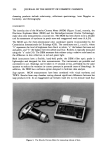
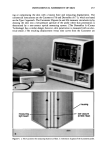
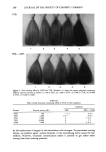
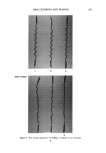
INSTRUMENTAL ASSESSMENT OF SKIN 251 Figure 1. The ServoMed Evaporimeter for measuring transepidermal water loss (TEWL) on skin. Dermatitis Society has developed preliminary guidelines to standardize instrumental evaluations of changes in the skin barrier function caused by disease or exposure to chemicals (23). Soap andsurfactant exposure. Most data on soap and surfactant effects on TEWL have been obtained with chamber test procedures (18,24-32). The current trend is to measure TEWL in exaggerated-use testing (e.g., on forearm and face), where prolonged (more than 30 seconds' soap exposure) and frequent washing cycles are involved. These studies have shown that an increase in TEWL correlates with increased visually assessed skin "dryness" (3-6). In many cases the change in TEWL precedes the visual dryness. The correlation between visual dryness and TEWL was not observed when the washing procedure excluded mechanical action (16). WATER CONTENT IN STRATUM CORNEUM The degree of hydration is most frequently determined by measuring electrical proper- ties of skin. In addition, infrared and photoacoustic spectroscopy have also been used. ELECTRICAL METHODS Measurement of skin permeability to alternating electric current (impedance) reflects elec-

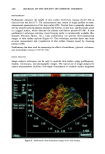
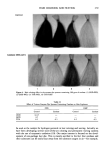
252 JOURNAL OF THE SOCIETY OF COSMETIC CHEMISTS tromagnetic interaction with skin dipoles (proteins) and electrolytes (33). In vitro and in vivo studies have shown that a low resistance (high impedance) correlates with an increase in skin hydration (water content). The measurement is more influenced by changes in the nearby and lower impedance stratum corneum layer than is the moist underlying tissue (high impedance). These measurements have been used to investigate soaps or surfactants (4,6,9,27,34). In the past, the IBS Skin Surface Hygrometer was the in- strument of choice for measuring conductance and capacitance (34-38). Lately the Skicon-100 or 200 hygrometer (conductance), the Corneometer (capacitance), and the Dermal Phase Meter (capacitance) have been used to measure skin hydration. These instruments are easy to use and are portable. The Corneometer and Dermal Phase Meter have a software option to facilitate data analysis. Figure 2 illustrates the Skicon. The dielectric constant probe (DCP, or microwave probe) uses a higher frequency- focused electromagnetic field, the frequency range ( 1 GHz) being selected at a water absorption band (39,40). The DCP measurement is specific for the stratum corneum since the electromagnetic field can be focused to limit its penetration. In vitro tests have shown a linear relationship between the weight fraction of water and DCP output (39). Only a few focused microwave probe instruments were built, and the instrument is not commercially available today. A concern for electrical measurements in some cases is that a product film on the skin surface can influence instrumental responses (14,15). The measurement of skin electrical impedance at different frequencies may help to exclude the effects of product residue on skin (37) however, no commercial instrument currently implements this technique. SKICON-200 Figure 2. Skicon-200 for measuring water content of skin.
Purchased for the exclusive use of nofirst nolast (unknown)
From: SCC Media Library & Resource Center (library.scconline.org)