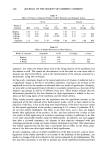
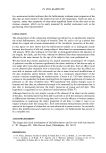
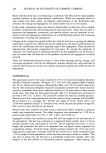
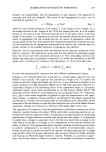
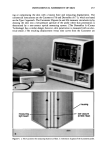
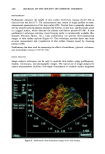
INSTRUMENTAL ASSESSMENT OF SKIN 265 Table I Instrumental Evaluation of Effects of Soap and Surfactant on Skin Assessed skin condition Measurement method Instrument ErythemaJredness Optical Dryness Water holding Roughness/scaliness Surface topography Stiffness/not soft Viscoelasticity Biological changes Cytological analyses Chromameter (Minolta), Dermal Erythema Meter (Dia-Stron), DermaSpectrometer (Cortex Technology) Laser Doppler Velocimeter (PeriMed, TSI) Evaporimeter (ServoMed), Skicon (lBS), Corneometer (Courage & Khazaka), Dermal Phase Meter (NOVA) Scopeman (Moritex) Microwatcher (Mitsubishi Kasei) Skin replicas (Silflo) Laser profilometry (Rodenstock) Dermal Torque Meter (Dia-Stron), Cutometer (Courage & Khazaka) Dermarlex A (Cortex Technology) D-Squames (CuDerm) instrumental techniques are useful for further characterization of skin changes (Table I). These methods include measurements of erythema, surface topography, elasticity, and cytology. STANDARDIZATION OF INSTRUMENTS When procuring a new commercial instrument, we would encourage the adoption of an existing operating procedure that is appropriate for the study design. The recent pub- lication of TEWL measurement guidelines (23) is an example of efforts to standardize an application. Further standardization of instrumental techniques in the future can be expected. INSTRUMENTAL PROTOCOL CONSIDERATIONS We have found that the quality of instrumental measurements depends upon a con- trolled environment (temperature and humidity), acclimation of subjects, qualified operators, consistent measurement site, and a fixed measurement schedule after appli- cation. In addition, the accuracy can be increased by taking a baseline measurement, having a control group to monitor environmental changes during the study, and paired comparison evaluations to reduce the impact of subject-to-subject variability. Key methodological differences in published study protocols include product application procedures, time interval after application for measurement, study duration, and types of instruments used. For example, some procedures which involve intensive mechanical agitation during the wash may exaggerate skin erythema and remove skin scales. Pro- tocols that involve gentle rubbing produce less erythema and more pronounced skin

266 JOURNAL OF THE SOCIETY OF COSMETIC CHEMISTS dryness. Protocol differences must be recognized when results of various studies are compared. NEW INSTRUMENTATION Continuous progress in understanding skin and instrumental techniques promotes the development of novel testing methodologies. A new generation of instruments will be hand-held, computer-controlled devices suitable for various body sites. Immediate data acquisition and analysis will simplify testing procedures. New instruments should be less influenced by, or corrected for, the ambient environment while preserving high sensitivity. They should assess multiple, relevant consumer characteristics. Future in- strumentation should not neglect dermatological needs to identify subclinical changes (invisible dermatology) in patients with subtle skin conditions (e.g., sensitive skin, aging skin). Further advancement in skin assessment can be achieved through develop- ment of multiprobe instrumental diagnostic tools and artificial intelligence capabilities. New instrumental approaches are also needed to understand the etiology of surfactant- induced effects. Understanding the biological mechanism and the sequence of events of skin alterations by cleansing products is important for developing milder cleansing products. Currently, few methods provide dermatologically relevant insights, and many lack sensitivity necessary for biological understanding. Noninvasive biological methods (cytological or biochemical techniques) appear to be potential candidates for discovering biochemical mediators of surfactant-induced effects in elucidating skin alterations. The instrumentation can increase the efficiency of biological methods and transform them into routine assessment techniques. SUMMARY Many methods exist for measuring changes in skin exposed to soaps or surfactants. The commercially available instruments that can be used in their clinical evaluation are listed in Table I. Instrumental measurements are becoming an industry standard for objective assessment of cleansing products. This literature review emphasizes commercial techniques that are useful in evaluating cleansing products. We expect the appearance of new instruments that will increase our current capabilities in the near future. REFERENCES (1) R. R. Suskind, Cutaneous effects of soaps and synthetic detergents, J. Am. Med Assoc., 163, 943- 946 (1957). (2) P. J. Frosch and A.M. Kligman, The soap chamber test: A new method for assessing the irritancy of soaps, J. Am. Acad. Dermatol., 1(1), 35-42 (1979). (3) M. F. Lukacovic, F. E. Dunlap, S. E. Michaels, M. O. Visscher, and D. D. Watson, Forearm wash test to evaluate the clinical mildness of cleansing products, J. Soc. Cosmet. Chem., 39, 355-366 (1988). (4) G. L. Grove, J. J. Leyden, P. T. Sharko, D. D. Strube, and K. L. Van Dyk, Correlation between instrumental and clinical methods for assessing the relative harshness of personal washing products, 48th Annual Meeting of the American Academy of Dermatology (abstr.) (1989).
Purchased for the exclusive use of nofirst nolast (unknown)
From: SCC Media Library & Resource Center (library.scconline.org)