INSTRUMENTAL ASSESSMENT OF SKIN 255 times daily for four consecutive days with an additional two washings on the fifth day), MCM detected differences in the erythema produced by a soap and synthetic bar. These results correlated with visual erythema assessments. The same authors found that the MCM has less variability in measuring erythema than the laser Doppler velocimeter (4,6). Because skin color can affect results, it is important to manage color differences between and within subjects. Also, panelists should not be exposed to sun during the test period to avoid tanning and sunburning. REFLECTANCE SPECTROSCOPY Reflectance spectroscopy is based on measuring the spectrum of light (450-700 nm) remitted from skin. Usually, it requires an integrated sphere to collect all backscattering light. The main disadvantages of existing reflectance spectrophotometers are possible skin blanching from the heavy probe and the cost of the instrument (49,50). Also, it does not appear to have an advantage over colorimetric techniques in measuring ery- thema. Soap exposure. Research on the use of reflectance spectrophotometry in measuring soap product effects on the skin is minimal. One study investigated erythema resulting from exposure to soap products in a chamber test however, the results were inconclusive (51). LASER DOPPLER VELOCIMETRY Laser Doppler Velocimetry (LDV), also known as laser Doppler flow (LDF) or skin blood flow (SBF), is a technique that can be used to measure cutaneous blood flow and thereby provide information on erythema. LDV has been used for the past ten years to measure skin irritation and contact dermatitis. LDV measures blood flow by detecting a shift in scattered light frequency. This shift in monochromatic laser light results from scattering from moving blood cells (Doppler effect) (52). Light (for example, from a 2-mW helium-neon laser) is guided by an optical fiber to the skin surface, where it penetrates to a depth of about 1 mm. The backscat- tered light is collected by optical fibers and brought to photodetectors. The low fre- quency signal produced by the photodetectors is proportional to the Doppler frequency shift. The instrumental output is expressed in relative units and corresponds to blood flow values (53,54). Total blood volume can also be measured by some instruments. The LDV method is used to measure subclinical irritation when redness is not visible. Microcirculation is easily influenced by the subject's physiological condition, which can result in high variability of LDV measurements. For this reason, stringent screening of panelists (to prevent interference from food and medication) and a long acclimation period (to reduce emotional or physical activity) are necessary. Soap and surfactant exposure. LDV has been used primarily in the measurement of skin irritation caused by surfactants using the occlusive chamber test. It has been shown that blood flow depends on concentration of surfactant (sodium lauryl sulphate) (54-57). Also, LDV blood flow increases with increased visual erythema, TEWL, and skin thickness (25,27,54, 56,58,59).

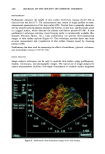
256 JOURNAL OF THE SOCIETY OF COSMETIC CHEMISTS The only reported measurements of soap irritation by LDV compares a soap bar and synthetic bar in an exaggerated forearm wash study (4,6). A significant difference in blood flow was found the data paralleled TEWL results. THERMOGRAPHY Contact and infrared thermography, which measure changes in skin temperature (60,61), have been proposed for assessment of skin irritation (erythema). Because skin temperature is influenced by many factors (moisture evaporation, tissue heat transfer, inflammation, etc.), we have found it is difficult to establish a definitive relationship between temperature changes and visual erythema. Soap and surfactant exposure. Contact thermography has been used to measure effects of experimental irritants on skin. The different irritants caused specific temperature changes (SLS reduced and croton oil increased the skin temperature) (62). The use of a liquid crystal thermometer provided a pictorial representation of skin temperature gra- dient. In a separate study, infrared thermography was used to assess the temperature changes caused by cleansing products (63). No significant differences were reported however, the authors demonstrated high-resolution images of skin temperature profiles. VISCOELASTICITY MEASUREMENTS Multiple skin layers (stratum corneum, epidermis, and dermis) are involved in skin's viscoelastic properties. Viscoelasticity of stratum corneum is a function of skin hydra- tion, while dermal mechanical properties strongly depend on skin age (64). Instrumen- tal measurements, therefore, may depend on both skin hydration and age (65,66), particularly if contributions from different layers of skin cannot be isolated. At one time, the pinch test of Hollingworth was used to measure elasticity (67), but today a number of more sophisticated methods are available. Skin elasticity techniques can be divided into two classes (65): 1) skin extension perpendicular to the surface--for example, indentation, leverometry (68), suction, and ballistometry (65,69) 2) skin extension parallel to the surface for example, stretching, torsion, and sound propagation. Elastic properties are responsible for skin's returning to normal shape after deformation. The higher the stress-strain ratio, the more force is required to produce deformation. Four approaches can be used to acquire skin stress-strain curves: Type 1: single stretching a fixed length of skin (Young modulus) Type 2: multiple stretching of a fixed length of skin (dynamic modulus) Type 3: single stretching of unimpeded skin Type 4: multiple stretching of unimpeded skin (dynamic modulus) MEASUREMENTS OF ELASTICITY PERPENDICULAR TO THE SKIN SURFACE Methods of indentation, suction, and elevation or leverometry (68) involve either pull-
Purchased for the exclusive use of nofirst nolast (unknown)
From: SCC Media Library & Resource Center (library.scconline.org)