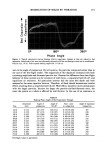
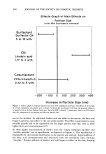
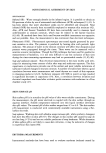
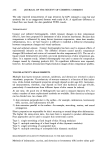
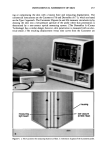
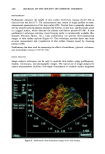
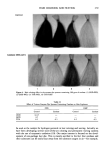
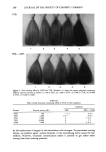
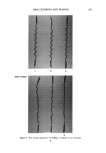
INSTRUMENTAL ASSESSMENT OF SKIN 263 Coulter counter can measure thickness of corneocytes, which is inversely related to the projected area (107). The size of corneocytes provides an indirect assessment of epider- mal conditions (73) and is related to skin barrier function for example, permeability increases as cell area decreases (108,109). Amount of scaling. The number and size of cell aggregrates determines the degree of visible scaling. The Squameter was the first commercial instrument developed to mea- sure cell aggregrates (110). Recently image analysis has been used to measure size and amount of scales (97,99,111). The differences in normal and dry skin can be easily visualized and quantified (Figure 9). DESQUAMATION Visual scales are a clinical manifestation of abnormal epidermal turnover (92). The scales are probably due to higher than normal intercorneocyte adhesion (l 12). Multiple meth- ods have been developed to quantify the rate of desquamation, corneocyte adhesion, and structure of desquamating layers. Rate. The rate of desquamation can be measured by disappearance of dansyl chloride- stained stratum corneum (13, 113). Other methods involve collection (104,114)and counting of corneocytes (115) from the skin surface. Cohesion. Intercorneocyte binding force can be measured in vivo using a "cohesograph" (116). A gradual loss of cohesion has been found toward the skin surface (117). Morphology. The morphology of desquamating corneocyte layers can be assessed if an Scales Area = 7.3 sq. mm Scales Area = 48.4 sq. mm Figure 9. Image analysis of D'Squames. a. Normal skin. b. Dry skin.

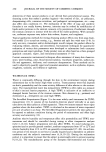
264 JOURNAL OF THE SOCIETY OF COSMETIC CHEMISTS intact portion of stratum corneum is removed with cyano-acrylate glue (surfometry). The unevenness of the stratum corneum inner surface and the amount of removed material relate to both the internal structure and the strength of intracorneal adhesion. The method has been used to distinguish between normal and diseased skin condition (e.g., psoriasis, ichthyosis). It was also demonstrated that the structure of stratum corneum relates to skin hyration (118). Soap and surfactant exposure. Biological methods have been successfully used for evaluat- ing skin moisturizers (103) however, their application in investigating soap or surfac- tant effects has been limited. BIOCHEMICAL ANALYSES OF THE SKIN Visual and instrumental changes caused by cleansing products are a result of skin biochemical alterations. For example, surfactant-induced abnormal stratum corneum structure could be the result of chemical changes in skin lipids and proteins (119). These changes have been shown to correlate with visible redness and dryness and instrumental measurements (electrical impedance, TEWL, etc.) (34,120-122). Most biochemical research has been conducted on skin biopsies. A novel approach to allow assessment of biochemical characteristics using noninvasive collection techniques have been investi- gated. For example, acid phosphatase activity in the stratum corneum has been mea- sured using tape-stripping samples (123,124). The development of noninvasive biochemical collection techniques is a new area for understanding effects of skin care products. Biological markers may indicate the mech- anism and kinetics of adverse reactions and provide insight to sensory, visual, and instrumental assessments. DISCUSSION MULTIPLE INSTRUMENTAL APPROACH We recommend the use of multiple instruments in measuring the effect of cleansing products on skin to characterize the broad spectrum of surfactant effects. Also, a multi- instrumental approach can aid in interpretation of test results. Single methods may produce ambiguous data for example, electrical impedance measurements may be in- fluenced by product components (14,15). An additional measurement of skin viscoelas- tic properties, which are not as sensitive to surface residues, can aid in clarification of skin response. Researchers have used the multiple instrumental approach for cleansing products (3,4,6,9) and found that the instrumental measurements are consistent and correlate to subjective visual assessments. INSTRUMENT SELECTION This review indicates that instrumental methods can provide a definitive assessment of cleansing product effects on skin. The majority of studies include measurement of skin TEWL and electrical properties therefore, it would be advantageous to include these assessments in future studies to facilitate comparisons and provide continuity. Other
Purchased for the exclusive use of nofirst nolast (unknown)
From: SCC Media Library & Resource Center (library.scconline.org)