INSTRUMENTAL ASSESSMENT OF SKIN 253 SPECTROSCOPY Infrared (IR). Water strongly absorbs in the infrared region. It is possible to obtain an IR spectrum of skin by use of attenuated total reflectance (ATR) techniques (! 1,41). It has been shown that water absorbance peaks can be identified and measured. Near infrared (NIR) has recently been successfully employed to measure skin moisture (42). Also, ATR and Fourier Transform IR have been successfully used to measure Iipid order/disorder in stratum corneum, which may be related to the barrier function (43,44). IR methods have been little used because available instruments are expensive and not portable. Also, the measurement is less convenient than electrical techniques. Photoacoustic (PAS). Photoacoustic spectroscopy uses sound signals generated by pres- sure variation in skin. The pressure is produced by heating skin with periodic light radiation. The amount of water in the stratum corneum will affect heat dissipation and pressure waves propagated through the tissue. These waves can be measured with a sensitive acoustic microphone. Though the PAS technique has been used for qualitative measurements of hydration, it is not only difficult to use but occlusion of skin sites during the time-consuming experiments may lead to questionable results (11,45,46). Soap and surfactant exposure. Skin electrical measurement is the most widely used tech- nique for measuring water content of skin after soap and surfactant exposure. The skin capacitance or conductance provides one of the earliest and most reliable indications of surfactant-induced changes to stratum corneum. A number of studies have shown a good correlation between water measurement and visual dryness as a result of skin exposure to cleansing products (4,6,9). Surfactant exposure (4% SDS in water) on legs resulted in significant decreases in capacitance (34). Also, a correlation between irritation and electrical impedance was found after occlusive patch treatment with surfactant in a Finn chamber study (27). SKIN SURFACE pH Skin surface pH is in actuality the pH value of skin water-soluble constituents. During the measurement, the pH meter electrode is coupled with the skin surface through an aqueous interface. Soluble components extracted into this liquid interface determine skin pH values. The normal pH of skin surface ranges from 4.5 to 6.0. The skin surface pH measurement is conducted with commercially available instruments using a flat- surface electrode. Soap exposure. Washing skin with alkaline soaps increases pH, while synthetic detergent bars have less effect on skin pH (47). The changes in skin surface pH caused by soap do not last long (2 hr) and are not reliable predictors of soap harshness. XVhile alteration of skin surface pH is not likely to cause skin irritation, it may be indicative of changes in superficial skin layers (48). ERYTHEMA MEASUREMENTS Instrumental methods that have been used to evaluate erythema (redness) caused by

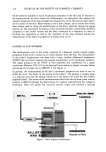
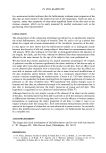
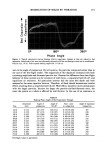
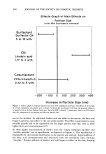
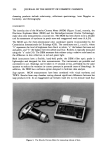
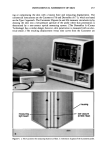
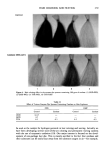
254 JOURNAL OF THE SOCIETY OF COSMETIC CHEMISTS cleansing products include colorimetry, reflectance spectroscopy, laser Doppler ve- Iocimetry, and thermography. COLORIMETRY The introduction of the Minolta Chroma Meter (MCM) (Figure 3) and, recently, the Dia-Stron Erythema Meter (DEM) and the DermaSpectrometer (Cortex Technology), make skin color measurements a routine test. The MCM has been shown to be a reliable tool for assessment of erythema in patch tests and exaggerated wash tests (4,6,24). The MCM uses the three-dimensional color coordinate system recommended by the Commission Internationale de l'Eclairage (CIE). The coordinates are L, a and b, where "L" represents the level of brightness from black to white, "a" the balance between red and green, and "b" the balance between yellow and blue. Redness is typically measured using the "a" scale (24). The DEM measures skin redness using a relative scale based on the difference in skin reflection in red and green light. Both instruments have a flexible, hand-held probe the DEM's fiber optic probe is lightweight and designed for skin measurements. The instruments are portable and convenient to use. Readings can be taken in 15 seconds or less, preferably by the same operator to reduce the variation in contact pressure (a potential cause of blanching). In addition, the DEM has a software option designed to facilitate data analysis. Soap exposure. MCM measurements have been correlated with visual erythema and TEWL. Results from soap chamber testing showed significant differences between bar soap products (24). In an exaggerated use forearm wash test (a two-minute wash four Figure 3. The Minolta Chroma Meter for measuring redness of skin.
Purchased for the exclusive use of nofirst nolast (unknown)
From: SCC Media Library & Resource Center (library.scconline.org)