J. Soc. Cosmet. Chem., 42, 249-271 (July/August 1991) Review of the instrumental assessment of skin: Effects of cleansing products T. M. KAJS and V. GARTSTEIN, Procter & Gamble Co., Sharon Woods Technical Center, 11511 Reed Hartman Hwy, Cincinnati, OH 45241, and Miami Valley Laboratories, 11810 East Miami River Road, Ross, OH 45061. Received March 27, 199 I. Synopsis The role of biophysical instrumental techniques in assessing the effect of cleansing products on the skin is reviewed. Commercially available instruments can measure numerous skin characteristics: water holding, color, blood microcirculation, viscoelastic properties, surface profile, and desquamation. These noninvasive techniques can be used in concert with expert and consumer evaluations of visual and tactile changes. The use of multiple instruments is recommended to test the broad spectrum of surfactant and soap effects. Key requirements for accurate and reproducible measurements include a controlled environment, acclimation of subjects, standard measurement procedures, realistic product application protocols, and qualified operators. INTRODUCTION Biophysical instruments are objective and quantitative tools for characterization of various skin conditions. Instrumental techniques have been used to describe the effects on skin of cosmetic products, skin aging, solar exposure, and skin diseases. In the past, researchers often invented their own methods due to the lack of accepted methodologies and available commercial instruments. The result has been a diversity of techniques and protocols that has made comparison of data difficult. Today, many of the best technical approaches have been implemented in commercially available instruments, and attempts are beginning to be made to standardize their usage in investigative studies. This paper will review the noninvasive biophysical instruments used to assess changes in skin exposed to cleansing products. Particular emphasis will be given to commercially available techniques. Key aspects of instrumental protocols for measuring skin condi- tions will also be discussed. BACKGROUND Cleansing products are composed of soap and/or synthetic surfactants. Soap surfactants originate from animal or natural products synthetic surfactants are either chemical 249

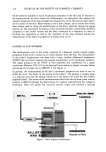
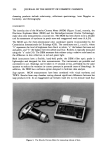
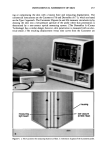
250 JOURNAL OF THE SOCIETY OF COSMETIC CHEMISTS derivatives of these natural products or are derived from petrochemical sources. The cleansing action that makes a product hygienic--the removal of dirt, air pollutants, desquamating cells, cutaneous secretions, and pathogenic microorganisms, etc.--may also affect skin conditions (1). The mechanism of the effect of soap and synthetic formulas is not totally known however, irritation may be evoked by modification of lipids and/or proteins in the stratum corneum or by penetration of surfactants through the stratum corneum to interact with the cells of the viable epidermis. With intensive use, surfactant exposure may induce skin redness, dryness, and roughness. Topical application methods for testing cleansing product effects vary from soap cham- ber models (2) to actual-use testing, e.g., forearm and split face wash tests (3-6). In early use tests, consumers and/or dermatologists would compare the product effects by evaluating redness, dryness, and smoothness. Instrumental techniques for quantitative evaluation of various skin parameters were developed to substantiate both consumer perceptions and expert gradings. Today product tests are often based on a three-pronged approach: consumer, expert, and instrumental assessment (7-10). Current noninvasive instrumental techniques allow assessment of many skin character- istics: water holding, color, blood microcirculation, viscoelastic properties, surface pro- file and appearance, thickness, and corneocyte desquamation. These methods can be used to objectively quantify expert and consumer assessment, such as erythema, dryness, roughness, scaliness, and stiffness or tightness. WATER FLUX (TEWL) Water is continually diffusing through the skin to the environment (except during submersion) due to the body's high water activity. Transcutaneous water flux depends on skin's permeability and the water activity difference of skin relative to the environ- ment. The transepidermal water loss measurement (TEWL) is often taken as a measure of skin's intrinsic barrier properties. A high TEWL is indicative of an ineffective or damaged barrier function of the stratum corneum. Skin diseases (e.g., psoriasis) and chemicals (e.g., detergents) can cause high TEWL. The ServoMeal Evaporimeter (Figure 1) is the most widely used instrument for TEWL measurement (11). It consists of two humidity detectors placed vertically in an open tube above the skin surface at a fixed separation. These two sensors measure water vapor gradient above the skin surface. TEWL is calculated as the amount of water evaporated per unit of surface in an hour. The ServoMed Evaporimeter permits the skin surface to be exposed to ambient conditions during the period of measurement and offers high accuracy and sensitivity (12). Ambient relative humidity and temperature affect skin permeability and TEWL mea- surements and should be controlled during testing to allow comparative analyses (4,8, 11,13-16). Subject perspiration will also affect TEWL. To avoid inducing per- spiration (and to provide general comfort), ambient temperatures from 19 ø to 22øC and relative humidity from 31% to 65% are generally recommended (17-20). An acclima- tion period of ten minutes to one hour is usually required and is dependent on ambient conditions and the subject's emotional state (4,14,19-22). During the acclimation period, it is important to ensure that the subject is emotionally calm to prevent sweating (4,19,22). The standardization group of the European Environmental and Contact
Purchased for the exclusive use of nofirst nolast (unknown)
From: SCC Media Library & Resource Center (library.scconline.org)