j. Soc. Cosmet. Chem., 42, 223-233 (July/August 1991) Segregation by sedimentation and competition for voids in vibrated granular beds WILLIAM T. MOREHEAD and EDWARD G. RIPPLE, Institute of Pharmaceutical Sciences, Syntex Research, 3401 Hillview Avenue, Palo Alto, Calij•rnia 94303 (W.T.M.), and Department of Pharmaceutics, College of Pharmacy, University of Minnesota, 308 Harvard Street SE, Minneapolis, Minnesota 55455 (E.G.R.). Received March 6, 1990. Synopsis Solid particle beds subjected to harmonic vertical vibration were studied using granulations of dicalcium phosphate dihydrate and starch paste, containing 15% by weight graphite to enhance electrical conduc- tivity. Electrical conductance and capacitance characteristics of monodisperse beds were measured. Segre- gation of binary systems of particles differing only in size was also studied. Low amplitudes and large particle size differences favor maximum segregation wherein the small particles go to the bottom of the bed. On the other hand, increasing amplitude and decreasing particle size difference reverses the segregation process wherein the small particles tend to rise to the top of the bed. Electronic measurements showed that deviation from an idealized free-flight model increased at the larger amplitudes and with the small particles. This indicates that air resistance and particle sedimentation became a factor. This process and competition for void space as the particles compact during the cycle were the major processes found to determine the extent and nature of segregation in this system. INTRODUCTION The transportation, handling, storage, and mixing of particulate solids are fundamental activities in the production and manufacture of cosmetics and pharmaceuticals. In any unit operation that involves powder blending, an understanding of the processes that may lead to particle segregation is necessary. Even for a single-component particulate system, size segregation may lead to variability in the final product. Products such as creams, lotions, and toothpaste that contain suspended solids require known and re- producible particle size distributions even if the suspended solid is a single component. In addition, any operation that measures particulate solids by volume is affected by particle size segregation. The increased utilization of micronized and microencapsulated particulate solids in the cosmetics industry adds to system complexity because of their small size and susceptibility to air drag effects. Any material-handling steps involving these materials hold the potential for introducing particle size segregation. 223

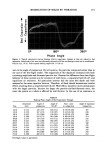
224 JOURNAL OF THE SOCIETY OF COSMETIC CHEMISTS Much work has been done in attempting to understand the effects of the many possible variables inherent in any mixer-mixture combination. While the empirical results of such studies have been useful, an adequate understanding of the mechanisms that influence the mixing and segregation of a solids system has yet to be attained. In this study, capacitance versus time data are obtained from an electronic device capable of almost instantaneously determining particle bed capacitance. These data are used to quantitate bed expansion, contraction, and particle motion, and are examined in con- junction with the segregation characteristics of a vibrated binary particle bed to propose mechanisms of mixing and segregation. Changes in the composition profile within the vibrated beds due to varying the shaking amplitudes or particle size differentials can be explained by the relative predominance of one of two mechanisms that favor opposing types of bed segregation. These are particle sedimentation and particle competition for void space. By varying the amplitude of vibration, the contribution of sedimentation effects on bed segregation can be altered to such an extent that the direction of the gradient of particle size segregation is totally reversed. These two mechanisms should be borne in mind when assessing mixing, storage, and conveying equipment. Particle size differential, absolute particle size, and amplitude of induced relative particle motion can combine to produce qualitatively different particle segregation. EXPERIMENTAL The granulation used in this study consisted of 71% w/w dicalcium phosphate dihydrate (Stauffer Chemical Company, Westport, CT), 15% w/w bulk graphite (Bulk Graphite No. 66-16, Doyle Lock Company, Minneapolis, MN), and 14% w/w starch (Argo Corn Starch). The dicalcium phosphate dihydrate and graphite powders were mixed and then wetted in a planetary mixer with a sufficient amount of 14% starch paste to form a moist sticky mass. This mass was then passed through a #4 U.S. Standard sieve and dried in an oven at 90 ø C for 72 hours. This procedure yielded very hard and durable particles. Particle size of this coarse granulation was then reduced using a hammer mill (FitzMill, W.J. Fitzpatric Co., Chicago, Ill.). Particle size ranges of 14/16, 18/20, 20/25, and 25/30 were separated using U.S. Standard sieves, where the particles passed through the first sieve but were retained on the second. Particle beds were vibrated vertically using a mechanical shaker designed to generate nearly pure sinusoidal motion. The shaker frequency was maintained at 17.09 Hz at peak-to-peak amplitudes of 0.254, 0.358, 0.442, and 0.508 cm. Segregation studies were carried out using 50% each by weight of two size fractions of the granulation. The bed was contained in a segmented brass cylinder with a 2.54-cm internal diameter with a bed depth of 10.0 cm. The six segments were each 1.6 cm in length and permitted the bed to be separated into six equal volume segments for composition analysis. All of the binary systems studied contained the 14/16 size as the large-particle component. Loading of the bed was carried out in small increments using 1/12 by weight of each granulation, which had been previously mixed in a beaker. This was done to insure that the bed was in a completely mixed state initially. Zero time analysis of the bed showed no discernable particle segregation. After shaking, the
Purchased for the exclusive use of nofirst nolast (unknown)
From: SCC Media Library & Resource Center (library.scconline.org)