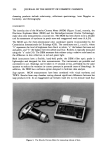
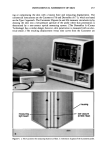
INSTRUMENTAL ASSESSMENT OF SKIN 259 tab attached to the skin surface. Displacement of the probe by a sinusoidal driving force is measured (65,75). The slope of the stress-strain curve, a measure of the viscous component, has been related to skin hydration. (Usually greater displacement equates with greater consumer-perceived softness.) (7,74,76-78). Sound propagation methods have been investigated to measure skin elasticity of the stratum corneum (9,79). The sound transmission relates to the elastic modulus and density of the tissue. Improvement in skin condition, as indicated by this technique, has been correlated to consumer perception of smoothness and expert graders. Body sites for measurement. The forearm is the typical body site used for viscoelastic measurements. Some instruments can be used on the face, hand, or leg (calif. Soap exposure. A noncommercial twistometer has been used to discriminate the effects of a synthetic versus a soap bar (4,6). The studies indicated that skin treated with a synthetic bar had a lower torque/angle ratio (less stift• and was more resilient than skin treated with a soap bar. Cleansing bars with little formula variation produced no significant differences. Sound propagation measurements made on skin treated with glycerin-added soaps were found to correlate with consumer-perceived skin condition (9). FRICTION Skin friction plays an important role in both subjective and objective evaluations of many skin attributes (e.g., texture, suppleness, softness, smoothness, dryness, and oiliness) (80-83). It has been shown that skin friction increases with skin hydration (80,84). Skin friction techniques measure either the static or the dynamic coefficient of friction. Techniques for determining the dynamic coefficient of friction are based on either a wheel or a rotational probe. The rotational probe can be vertical or horizontal. The only available commercial instrument is the Newcastle Friction meter, which utilizes the horizontal probe (wheel) pressed against the skin with a constant pressure. For this instrument, friction depends on the probe material and skin elasticity, with softer skin resulting in a higher contact area. Friction studies reported in the literature have dealt mainly with effects of moisturizers (83,85). Soap exposure. Effects of soap and emollient on skin friction were investigated by Prall (86). He found that washing with soap caused an immediate large decrease (70%) in skin friction. SKIN SURFACE Profilometry is the commonly used method to quantitate skin surface topography. Optical and scanning electron microscopy as well as photography can be used to visualize the skin surface. Image analysis techniques may be used to quantify both profilometric and visual data.

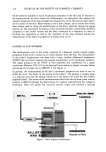
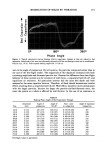
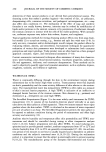
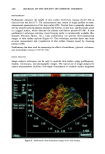
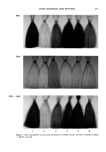
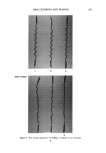
260 JOURNAL OF THE SOCIETY OF COSMETIC CHEMISTS PROFILOMETRY Profilometry measures the height of skin surface relief from replicas (81,87-89) or directly from the skin (17). The measurements may consist of single profiles or three- dimensional representation of the skin surface (89). Normal skin is generally character- ized by smooth-surfaced plateaus separated by furrows. In dry skin, uplifted scales result in a jagged surface, which obscures the plateau and furrow pattern (87,88). A new profilometric technique utilizing a laser focusing probe is commercially available (Ro- denstock Precision Optics, Inc.). Laser profilometry can provide three-dimensional images of skin surface replicas (Figure 6). This technique provides faster and more accurate measurement and visualization of skin surface changes caused by cleansing products (90). Profilometry has been used for measuring the effects of emollients, glycerol, occlusion, and antiwrinkle creams (17,87,91-94). IMAGE ANALYSIS Image analysis techniques can be used to quantify skin surface using profilometric, shadow, microscopic, and photographic images. The typical use of image analysis for surface measurements includes a low-angle illumination to visualize surface roughness X[m] 2.4S 2 22 1.4• 1.LI 8.46 8.. Figure 6 Profilometric three-dimensional image of the volar forearm
Purchased for the exclusive use of nofirst nolast (unknown)
From: SCC Media Library & Resource Center (library.scconline.org)