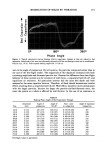
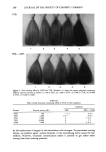
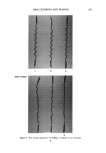
274 JOURNAL OF THE SOCIETY OF COSMETIC CHEMISTS In both treatments hair and skin may be damaged because of strong chemical oxidations. As an approach to alleviate these damages, mild air oxidation instead of chemical oxidation has been investigated (3,4). However, use of air oxidation is not satisfactory for hair coloring and waving because of its relatively weaker oxidation effect. In order to alleviate these problems accompanying chemical oxidation, we have been investigat- ing the application of activating oxygen in air with oxidases to hair coloring (5) and permanent waving. Compared to chemical methods, the enzymatic oxidation is quite mild because of lower hydrogen peroxide concentration in the formulation. Thus, use of enzymes might result in novel products, which can be characterized as mild for hair as well as easy-to-use, possibly of the one-package type. In this study we report screening results on enzymes for hair treatments, and the effect of enzymatic oxidation on hair coloring and permanent waving. EXPERIMENTAL Enzymes used in this study are uricase (EC 1.7.3.3) from Enterobacter cloacae,' glucose oxidase (EC 1.1.3.4) from Aspergillus niger,' laccase (EC 1.10.3.2) from Pyricularia oryzae tyrosinase (EC 1.14.18.1) from mushroom mutarotase (EC 5.1.3.3) from pig kidney galactose oxidase (EC 1.1.3.9) from Dactylium dendroides and catalase (EC 1.11.1.6) from Micrococcus lysodeikticus (6-8). Uricase (UOD) was obtained from Kyowa Hakko Kogyo Co., Ltd (Japan), and glucose oxidase (GOD), laccase (LAC), tyrosinase (TYR), and galactose oxidase (GAL) were purchased from Sigma (USA). Mutarotase (MUTA) and catalase were purchased from Oriental Yeast Co., Ltd. (Japan) and Nagase Sangyo Co., Ltd. (Japan), respectively. All substrates for these enzymes are reagent grade. Enzymatic reactions were carried out in 0.2 M phosphate buffer (pH 6.5) or 0.2 M phosphate buffer (pH 8.5) at 25øC. For hair dyes we used p-phenylenediamine (PPD) as an aromatic amine precursor, catechol (OHP) as an aromatic polyhydric precursor in a ratio of 1 to 1. For permanent waving 6.5% ammonium thioglycolate aqueous solution (pH 9.0) was used as the waving lotion. The neutralizer was made as follows: ß 10% sodium bromide or 1,000 U UOD ß 0.1 M uric acid ß 0.2% hydroxyethyl cellulose ß 100 ml deionized water Enzymatic coloring was performed by applying the dye solution to 2 g of white goat hair by brushing and leaving it for 30 min at 30øC, after which the hair was shampooed and dried. In screening for enzymatic hair coloring, the reaction solution contained 1,000 U of enzyme, 0.1 M substrate, and 1% dye. GOD and MUTA were mixed in a ratio of 100 to 1. In the case of LAC and TYR, the aromatic dyes themselves might be used as the substrate. Hydrogen peroxide produced in the reaction was determined by a vol- tammetric titration with 0.1 M KMn0 4. Measurements for UOD and GOD were carried out at 1, 2, 5, 10, 20, and 30 min after the start of reaction. Titration was made with a Hiramuma Reporting Titrator Model COMTITE-101 (Hiramuma Sangyo Ltd., Ja- pan). Coloring inhibition by catalase was evaluated in the reaction solution containing 1,000 U enzyme, 0.1 M substrate, and 5,000 ppm catalase.

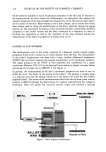
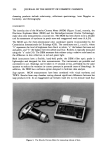
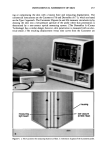
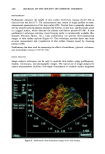
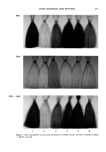
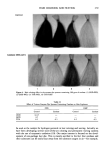
HAIR COLORING AND WAVING 275 PPD: OHP: PPD + OHP: I 3 4 5 6 Figure 1. Hair coloring effect in six enzyme-dye systems: (1) UOD, (2) LAC, (3) TYR, (4) GOD, (5) GOD + MUTA, (6) GAL.
Purchased for the exclusive use of nofirst nolast (unknown)
From: SCC Media Library & Resource Center (library.scconline.org)