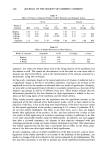
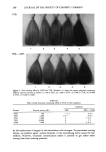
282 JOURNAL OF THE SOCIETY OF COSMETIC CHEMISTS Table IV Effect of NaBrO 3 and UOD on Wave Index and Wave Retention Coefficient NaBrO 3 UOD Control Wf (%) Wr (%) Wf (%) Wr (%) Wf (%) Wr (%) 35.7 20.0 37.1 19.2 34.3 -- In order to market these brand-new products, it might be a key factor to establish the long-term storage stability of enzyme activity in the liquid formulation. Experiments for enzyme storage stability are now in progress. ACKNOWLEDGMENTS We wish to thank Messrs. Tetsuo Kinoshita and Yuuji Nakamura, Yamahatsu Sangyo Kaisha, Ltd., and Dr. Hiroshi Hagino, Kyowa Hakko Kogyo Co., Ltd., for their extensive and valuable discussions during this study. REFERENCES (1) F. E. Wall, "Bleaches, Hair Coloring, and Dye Removers," in Cosmetics: Science and Technology, 2nd ed., M. S. Balsam and E. Sagarin, Eds. (Wiley-Interscience, New York, 1972), Vol. 2, pp. 279-343. (2) S. D. Gershon, M. A. Goldberg, and M. M. Rieger, "Permnent Waving," in Cosmetics: Science and Technology, 2nd ed., M. S. Balsam and E. Sagarin, Eds. (Wiley-Interscience, New York, 1972), Vol. 2, pp. 167-250. (3) L. J. Wolfram, K. Hall, and J. Hui, The mechanism of hair bleaching, J. Soc. Cosmet. Chem., 21, 875-900 (1970). (4) C. R. Robbins and C. Kelly, Amino acid analysis of cosmetically altered hair, J. Soc. Cosmet. Chem., 20, 555-564 (1969). (5) E. Zeffren and J. F. Sullivan, Enzyme-activated oxidative process for coloring hair, United States Patent 1,320,250 (1973). (6) R. Bentley, "Glucose Aerodehydrogenase (Glucose Oxidase)," in Methods in Enzymology, S. P. Colow- ick and N. O. Kaplan, Eds. (Academic Press, New York, 1955), Vol. I, pp. 340-345. (7) E. Leone, "Uricase," in Methods in Enzymology, S. P. Colowick and K. P. Kaplan, Eds. (Academic Press, New York, 1955), Vol. II, pp. 485-489. (8) C. R. Dawson and R. J. Magee, "Plant Tyrosinase," in Methods in Enzymology, S. P. Macorwick, and K. P. Kaplan, Eds. (Academic Press, New York, 1955), Vol. II, pp. 817-827. (9) D. H. Kirby, The waving efficiency of cold permanent wave lotion, Drug and Cosmetic Industry, 80(3), 314-397 (1957). (10) Y. Tsujino, Y. Yokoo, K. Sakato, and H. Hagino, Hair preparation composition, United States Patent 4,961,925 (1990).

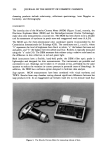
j. Soc. Cosmet. Chem., 42, 283 (July/August 1991) Letter to the Editor TO THE EDITOR: We read with considerable interest recent articles (1-2) describing the utility of the Minolta Chroma Meter in the quantitation of skin surface color and brightness. In a recent soap mildness study involving 78 panelists, we found significant correlations between the L* (white-black) and a * (red-green) scores as measured by the Chroma Meter (Model CR-200) and visual gradings of erythema by an experienced grader (FED). In our study, the dorsal surfaces of panelists' hands were graded for erythema and dryness both visually (using scales of 0-4) and using the Chroma Meter. Readings were taken before hand washing and after completing 32 hand washes over a two-day period. We found a highly significant correlation between the a ½ scores and visual gradings of erythema (r = + 0.45, p = 0.0001). The L ½ scores also correlated significantly with gradings of erythema, although the relationship was not as substantial (r = + 0.24, p = 0.034). The b ½ (blue-yellow) scores showed a fairly high negative correlation with erythema ( - 0.18), but this correlation failed to reach statistical significance. Similarly, we found no significant correlations between the L ½, a * or b ½ scores and visual gradings of dryness (r = + 0.18, + 0.09, and - 0.18, respectively). These results and those of previous studies indicate that the Chroma Meter is a very promising instrument for objective quantification of erythema in clinical studies. When coupled with the fact that Chroma Meter readings can be obtained quickly and easily, the instrument appears to provide a practical clinical measure of erythema that could be used in addition to visual gradings or as an alternative to visual gradings in clinical studies of erythema. James L. Boren Frank E. Dunlap Argus Research, Inc. Tucson, AZ 85710 REFERENCES (1) N. Muizuddin, K. Marenus, D. Maes, and W. P. Smith, Use of a chromameter in assessing the efficacy of anti-irritants and tanning accelerators, J. Soc. Cosmet. ½hem., 41, 369-378 (1990). (2) Ernest H. Braue, Jr., Millard M. Mershon, John V. Wade, and Marty R. Litchfield, In vivo assessment of vesicant skin injury using a Minolta Chroma Meter, J. Soc. Cosmet. ½hem., 41, 259-265 (1990). 283
Purchased for the exclusive use of nofirst nolast (unknown)
From: SCC Media Library & Resource Center (library.scconline.org)