j. Soc. Cosmet. Chem., 46, 53-65 (January/February 1995) A new noninvasive method to evaluate the antipruritic efficacy of over-the-counter skin care products CURT WEINSTEIN, Pharmaceutical and Cosmetic Evaluations, Danbury, CT 06811, RONALD DROZDENKO, Pharmaceutical and Cosmetic Evaluations and Western Connecticut State University, SIDNEY WEINSTEIN, Neurocommunication Research Laboratories, Inc., Danbury, CT, and HOWARD SPIVAK, Varvak Computing, Inc., Brooklyn, NY. Received August 2, 1994. Synopsis Mild-to-moderate pruritus can be validly and reliably induced nonchemically by means of an itch esthe- siometer comprising a set of calibrated nylon monofilaments. This patented itch esthesiometer is related to another instrument that is used extensively in diagnoses of neuropathology. This paper presents a brief overview of the literature on itch and itch induction methods. Data are presented that establish the reliability and validity of the new procedure, thereby enabling the measurement of antipruritic efficacy. In contrast to other methods, the itch esthesiometer induces itch without discernible wheal or flare. Further, the itch elicited is sufficiently brief to allow the time course of antipruritic action to be determined. Therefore, by using this procedure, it is possible to measure the effects of antipruritic agents on mild itch, simulating conditions such as dry skin itch or itch mechanically induced on mildly irritated skin. Exper- iments are reported that show the antipruritic efficacy of both a moisturizing vehicle (oil-in-water) and a topical anesthetic (benzocaine). INTRODUCTION The literature on itch, while extensive, still leaves many incompletely answered ques- tions. Although there has been considerable research on the anatomy, physiology, and psychophysiology of itch (for reviews see references 1-3), it has been difficult to relate clearly anatomy and physiology to sensation and perception. Sinclair (4) stated that the clinical testing of pain and itch were unsatisfactory. He argued that electrical, temperature, or chemical methods to induce itch or pain tend to arouse other sensations as well, because no pure stimulus for these sensations exists. The literature indicates that there are a few paradigms for inducing itch. Early work by Titchener (5), working with hairs, describes low-intensity stimulation producing itch and higher-intensity stimulation producing pain. Chapman et al. (2) reported that itch can be induced by electrical stimulation, thermal radiation, cowhage (i.e., itching powder), light repeated pin pricks, vasodilation (chemical or ultraviolet light induced), 53

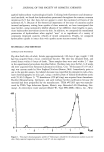
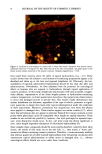
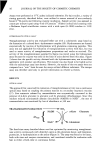
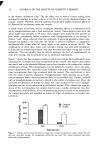
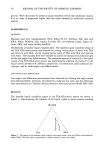
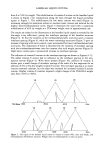
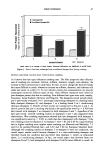
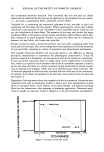
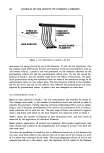
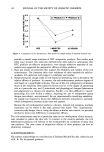
54 JOURNAL OF THE SOCIETY OF COSMETIC CHEMISTS and intradermal histamine injection. They concluded that itch and pain are closely related and are subserved by the same neural apparatus in the peripheral nervous system, i.e., the small, unmyelinated fibers, sometimes called C-fibers. Torebj/3rk (6), in examining the anatomical substrates of itch, was able to elicit itch employing von Frey hairs and itch powder. While supporting the notion that C-fibers contribute to the sensation of itch, Torebji3rk (7) later concluded that he could not rule out the contribution of other fibers. The sensation of itch may also involve the larger myelinated fibers of the somatic nervous system (sometimes called A-fibers), which have been implicated in touch sensation. Further, he noted that there may be a distinction between itch and tickle, itch being more pain-like. Sinclair (1) also has made a distinction between itch and tickle, classifying tickle with touch and itch with pain. Free nerve endings have been implicated in both the sensations of itch and tickle, implying an overlap of anatomical and physiological mechanisms. This possible distinction between itch and tickle points to the difficulty in relating perceptual characteristics to anatomical and physiological characteristics. Using the previous research as a foundation, the perception of itch can be viewed as a continuum. At one end of this continuum there is a slight tickle in the middle there is a moderate itch, which is an episodic tactile sensation that elicits an immediate response to scratch and at the other end there is a chronic sensation having characteristics related to pain, such as burning and stinging, which may elicit additional pain when scratched. The A-fibers are proposed as relatively more involved with the tickle end of the continuum. In contrast, the C-fibers are proposed to be relatively more involved with the pain end (see Figure 1). Regardless of the arguments about the complexity of the itch sensation, histamines have commonly been used in antipruritic studies to induce itch. Two representative studies (8,9) are discussed below. Local redness, local edema (wheal), and adjacent erythema (flare) are the characteristic skin responses to histamine application. Histamine appli- cation is usually via injection however, Magerl et al. (8) used histamine iontophoresis. crj n, uiI m 0 0 rn o uiI Higher A:C Ratio Lower A:C Ratio Touch 4-- Nearly Touch : ß ß ß : ß : ß ,' Nearly Pain ß ß Tickle Moderate Itch : I¾CH PN(3E Figure 1. Perception neural-fiber model. ß ß ß ß ß Severe Itch ,' Pain ß ß ß
Purchased for the exclusive use of nofirst nolast (unknown)
From: SCC Media Library & Resource Center (library.scconline.org)