ANTIPRURITIC EVALUATION 55 These authors state that iontophoresis is a less damaging method of histamine applica- tion, and reported that the wheal and flare response was linearly related to dose over a wide range of stimulus strengths. Sensory discrimination of different stimulus levels in this study was demonstrated with visual analog scale ratings. While histamine ionto- phoresis may be less invasive than other methods of histamine application, even the lowest levels of histamine iontophoresis in this study produced visual signs of skin irritation (i.e., wheal). Bjerring and Arendt-Nielsens (9) also induced itch with histamines. The itch was abolished with lidocaine infiltration. They reported, however, that a topical analgesic cream had no effect on the ratings of itch induced by the histamines. Because of the extent of irritation resulting from histamine-induced itch, it is unlikely that a good general model for the testing of OTC antipruritics can be developed on histamine-based or other invasive methods. OTC antipruritics are commonly recommended and used for the relief of itch due to dry skin, winter itch, or minor irritation. The usual signs of non-aggravated dry skin or even minor irritation are often not comparable to the more severe irritation induced by histamines (i.e., showing both wheal and flare). Based on this disparity between histamine-affected skin and skin conditions most relevant to OTC antipruritic agents, a new itch induction method was developed. The objective in developing this new method was to establish a valid and reliable means to determine the efficacy of OTC products in alleviating itch on skin that was mostly devoid of visual erythema and edema. BACKGROUND ON A NEW METHOD TO INDUCE AND TO MEASURE OTC LEVEL ITCH As mentioned previously, researchers have induced itch by dragging hairs or filaments across the skin. This method simulates common itch stimulants, such as clothing fibers on dry skin. In order to provide valid and reliable itch induction, a method was devised to deliver a more consistent stimulus. The itch esthesiometer utilizes modified nylon monofilaments, a patented (U.S. patent number 5316011, others pending) improve- ment of the Semmes-Weinstein esthesiometer (10). Nylon monofilaments have prop- erties consistent with the induction of consistent itch. When placed against the skin and bent slightly, the monofilaments deliver a constant force that is dependent only on the diameter and length of the right-cylindrical monofilament. When applying the mono- filament, the applied force rapidly approaches the constant-characteristic force of the monofilament, and additional bending of the monofilament does not increase the force normal to the skin. Nylon monofilaments also stimulate the cutaneous receptors in a natural fashion, in contrast to electrical and chemical methods that can bypass the primary cutaneous receptors or simultaneously stimulate receptors, afferent and efferent pathways. The Semmes-Weinstein esthesiometer employs a set of monofilaments of different forces, and is used to evaluate tactile sensitivity. Tactile sensitivity is affected by many factors, including neuropathologies, aging, irritation, and the application of anesthet- ics. The Semmes-Weinstein esthesiometer has been applied to the measurement of topical anesthetics (! !) and low-level skin irritation (!2). For example, Weinstein (11) reported that the topical application of anesthetics (benzocaine) increased tactile sensory thresholds as measured at four body locations.

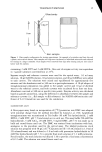
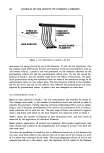
56 JOURNAL OF THE SOCIETY OF COSMETIC CHEMISTS Therefore, based on the general utility of the Semmes-Weinstein esthesiometer for tactile sensitivity under various conditions, this device was taken as the starting point to develop an itch esthesiometer. ENHANCEMENT OF THE ITCH STIMULUS Recently we have improved upon the Semmes-Weinstein esthesiometer. The monofil- aments of the Semmes-Weinstein are right cylinders, and may press a sharp edge into the skin upon application. Thus, dragging the filaments across the skin would not only induce itch but would also relieve itch by a scratching action that could also alter the physical condition of the skin. A new esthesiometer (trade name: Weinstein Enhanced Sensory Test TM , also WESTTM), has the following characteristics that differentiate it from the original Semmes- Weinstein esthesiometer: 1) the end of each filament is round in order to minimize the possibilities of scratching the skin, 2) the tip has texture that alternately grips and releases the skin in order to produce a stronger itch response, 3) multiple filaments mounted on the same handle enable more rapid testing, and 4) each filament is indi- vidually calibrated for grams of force applied. The resulting itch esthesiometer, WEST- itch TM , is used to induce itch sensation. STUDY OBJECTIVES In order to evaluate the efficacy of the itch esthesiometer in a procedure to measure low-to-moderate (i.e., OTC-level) antipruritic efficacy, two double-blind studies were conducted. The preliminary study (Study I) was conducted to establish methodologies and perform a general validation. Study II evolved from the results of Study I, further establishing the methodology that is applicable to testing OTC antipruritics. The methods to elicit itch were modified in Study II to enhance expedience and to increase the reliability of itch induction. Part of the procedural change included tape stripping the skin to mimic the irritation elicited by consumers' scratching, an action that usually precedes the use of OTC antipruritics. STUDY I (PRELIMINARY STUDY) The objectives of Study I, conducted on intact skin, were to determine whether the proposed method could differentiate: 1. Itch levels treated (oil-in-water vehicle) versus untreated skin 2. Itch levels between a potentially active ingredient (benzocaine) in the vehicle versus the vehicle alone The first hypothesis was that an oil-in-water vehicle, acting as a lubricant, emollient, and moisturizer would reduce itching. The immediate antipruritic effect of the oil-in- water vehicle is most probably caused by a combination of 1) lubrication, a reduction of friction at the skin surface, 2) hydration, an increase in skin moisture, 3) tactile sensation from evaporative cooling of the skin, and 4) emollient, a softening of the skin. The softening of the skin surface that accompanies the application of moisturizers may contribute to itch reduction by minimizing the skin's "hard-plate leverage" effect on
Purchased for the exclusive use of nofirst nolast (unknown)
From: SCC Media Library & Resource Center (library.scconline.org)