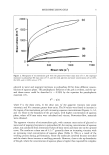
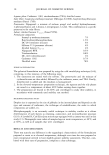
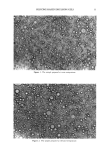
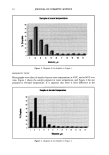
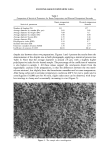
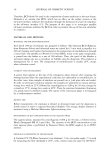
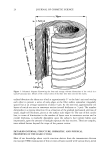
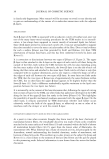
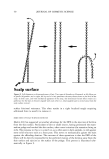
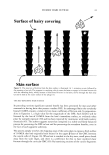
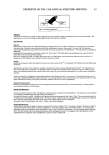
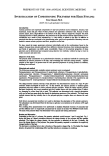
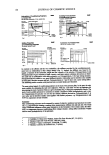
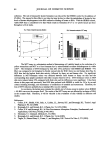
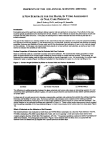
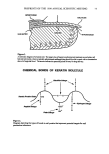
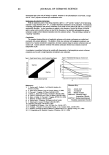
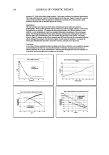
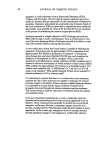
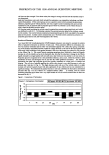
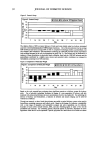
40 JOURNAL OF COSMETIC SCIENCE Scalp surface Figure 8. Self-alignment or disentanglement of hair. Two types of disorder are illustrated: at left fibers out of parallel alignment, and at right, the tip-end of a hair penetrates the array almost down to the level of the scalp. In both cases, and with mechanical agitation of the array, the directional friction effect results in a preference for the hairs to become aligned with each other (i.e., disentangled) and to extend away from the scalp surface (center). surface frictional resistance. This often results in a tight localized tangle requiring additional force (a snatch) to remove it. REJECTION OF SCALP SURFACE DETRITUS Martin (64) has suggested yet another advantage for the DFE in the rejection of detritus from the skin surface. Particulates of dirt or small insects, having penetrated the mam- malian pelage and reached the skin surface, often cause irritation (the sensation being an itch). The response to this is to scratch or, as is often seen in farm animals, to rub against some solid structure such as a fence post. This serves to mechanically agitate the hairs against the offending detritus. The outcome of these operations is that the DFE of the fibers will be directly responsible for the preferred motion of the detritus away from the skin surface and ejection at the surface of the pelage. This process is illustrated sche- matically in Figure 9.

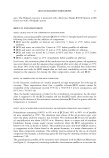
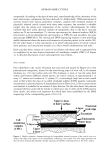
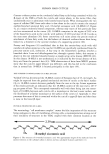
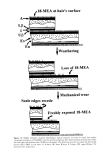
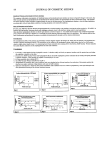
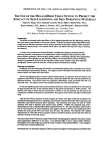
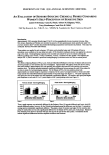
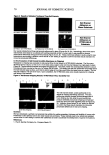
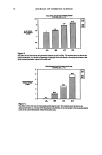
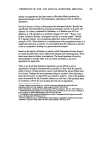
HUMAN HAIR CUTICLE 41 Surface of hairy covering Skin surface Figure 9. The rejection of detritus from the skin surface is illustrated. At 1, irritation occurs, followed by the sensation of an itch. The response is scratching, which causes the hairs to engage in frictional interaction with the offending body, which, because of directional friction in the hairs, moves through the hair array (2) and is shed at the outer surface of the pelage (3). THE SELF-REPAIRING HAIR SURFACE In preceding sections significant natural benefit has been presented for man and other mammals in having hairs that possess a surface DFE. In undamaged hairs the covalently bound 18-MEA ensures a relatively low mean coefficient of friction and, by proportion- ality in Equation 1, a high value for the magnitude of the DFE. Such benefit will be lessened by the loss of 18-MEA from the hair's immediate surface, as evidently takes place by sunlight exposure (50) and has been reported for treatments with harsh toiletry chemicals (45). The author suggests nature has conspired in a subtle and finely balanced process for preserving the DFE in hair and for preserving the attendant benefits, even in the face of such apparent adversity. The process simply involves the chipping away of the scale edges to expose a fresh surface of 18-MEA that had originally been located in the upper [B-layer of the CMC between the cuticle cells (cf. Figure 10). When hair is combed in the dry state, small pieces break away from the scale edges, and there is a preference for this to have involved shear fracture through the cuticular CMC (65). By examining sections of the cuticle fragments
Purchased for the exclusive use of nofirst nolast (unknown)
From: SCC Media Library & Resource Center (library.scconline.org)