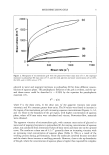
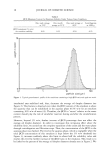
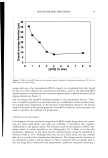
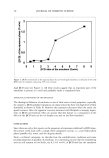
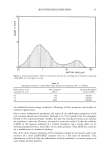
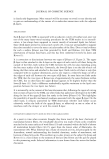
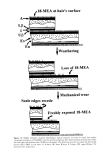
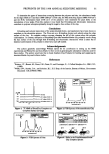
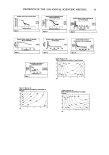
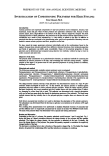
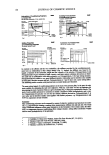
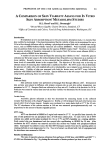
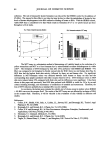
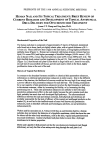
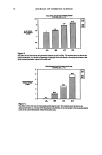
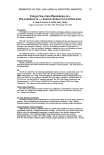
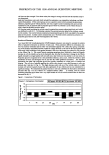
PREPRINTS OF THE 1998 ANNUAL SCIENTIFIC MEETING 57 BEHAVIORAL PROPERTIES OF SOAPS AND SURFACTANTS USING IN VITRO HUMAN SKIN EQUIVALENT CULTURES R. Warren, L.M. Sanders, S.L. Curtis, C. Zhu, F.R. Tollens, and T.E. Otte Sharon Woods Technical Center, The Procter and Gamble Company, Cincinnati, OH Evaluation of irritant properties of commercial surfactants is related to the type of exposure model used. Indeed, results from different in vivo exposure models may not be in agreement with one another (Smeenk, 1969, and Frosch, 1982). These inconsistencies may be related to how the methods differ from the actual use of the test material. For example, outcome may be affected by mode of application (patch occlusive or non-occlusive, or rinse off), frequency of application, or implement used to apply the test material (i.e., mechanical shear force). Outcome can also be affected by the chemical composition of the test material (and related physical properties of solubility, melt point, salt, etc.) or whether the material being tested is pure or part of a mixture (Emery_ and Edwards, 1940, and Dillarstone and Paye, 1993). Given the complexity associated with in vivo test methods, developing a useful in vitro test model can be ambitious and test methodology must be carefully considered. Skin equivalent cultures have been used to predict the irdtancy potential of surfactants (Gay et al., 1992). The general methodology utilizes the application and static exposure (approximately 16-24 hours) of the test material to the stratum comeum surface of the culture. The endpoints measured generally include irritation markers, such as IL-ltx, or the toxic endpoint, MTT. For personal cleansers and related mild surfactants, this methodology can be viewed as exaggerated as it does not reflect typical use of material, e.g., skin corrosion or toxicity is not typically observed, exposure times are brief, shear force application of test material, etc. Consequently, the data must be interpreted cautiously. Indeed, the data presented here for typical commercial soap bars show that relatively long static exposure (measured in hours) to skin equivalent cultures can generate results that are inconsistent with in vivo test behavior. We believe this relates t6 the in vitro model's IL-• (pg/ml Sldn Equivalent Cultme Forearm Controlled Application Test Dryness Na Soap 230 a Syndet 1.38 b 1.58 a 0.8• b 0.88 b 100 150 • •1• F. xposure Tinm (mln)

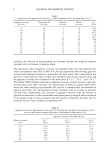
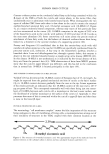
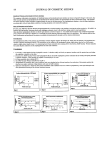
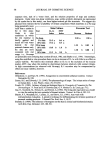
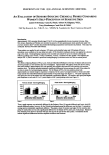
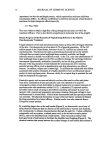
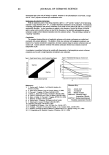
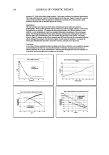
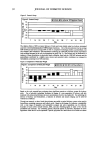
58 JOURNAL OF COSMETIC SCIENCE exposure time, lack of a 'water rinse', and the solution properties of soap and synthetic detergents. Under static non-shear conditions, soap, unlike synthetic detergents (as represented by the syndet bar in this study), can form higher-ordered gel-like structures. We suggest this physical form restricts the bio-availability of irritant components which manifests as a Na-soap Skin Culture Forearm Test Test IL-lc• MTT Index Index Dryness Redness being potentially more 'mild' than a syndet in the in vitro assay. Under in vitro conditions in which the test matedhal is briefly applied and rinsed off with water (typical for real personal cleanser use), the data are more consistent with real usage, i.e., Na-soaps Na Soap 5% Soln 23.5 a 0.6 a 10% Soln 19.6 a 0.5 a TEA Soap 10% Soln 10.0 b 1.0 Syndet 10% Soln 13.3 b 0.9 2.30 a 1.58 a 1.25 b 0.82 b 1.38 b 0.88 b are potentially more irritating than syndets (Frosch, 1982, and Sharko et al., 1991). Interestingly, using this modified in vitro procedure there can be an increase of IL-l•t with little to no effect on culture viability. We believe this restricted effect on IL-l•z to the exclusion of the toxicity marker, MTT, may allow this method to discriminate between relatively mild contact irritants. At high concentrations (as observed with Na-soap), IL-1 excretion may be compromised by effects on tissue viability, however. References: Dillarstone, A. and Paye, M. (1993). Antagonism in concentrated surfactant systems. Contact Dermatitis 28, 198. Emery, B.E. and Edwards, L.D. (1940). The pharmacology of soaps. The irritant action of soaps on human skin. J. Am. Pharm. Assoc. 29, 251-254. Frosch, P.J. (1982). Irritancy of soap and detergent bars, in: Principals of Cosmetics for The Dermatologist. P. Frost and S.N. Horwitz (eds.) C.V. Mosby Co: St. Louis, pp. 5-12. Gay, R., Swiderek, M., Nelson, D., and Ernesti, A. (1992). The living skin equivalent as a model in vitro for ranking the toxic potential ofdermal irritants. Toxicol. In Vitro 6, 303-315. Sharko, P.T., Murahata, R.I., Leyden, J.J., and Grove, G.L. (1991). Arm wash with instrumentation evaluation. A sensitive technique for differentiating the irritation potential of personal washing products. J. Derreal Clin. Eval. Soc. 2, 19-27. Smeenk, G. (1969). The influence of detergents on the skin (a clinical and biochemical study). Arch Klin. Exp. Dermatol. 235, 180-191.
Purchased for the exclusive use of nofirst nolast (unknown)
From: SCC Media Library & Resource Center (library.scconline.org)