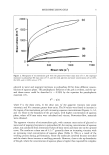
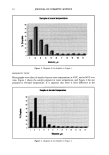
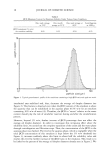
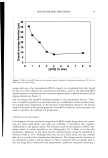
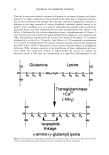
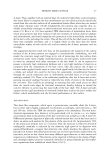
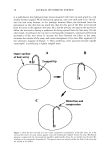
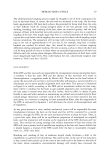
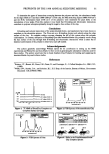
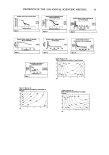
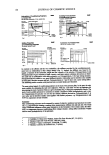
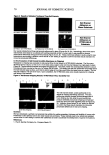
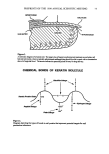
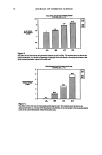
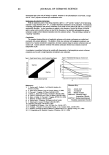
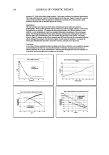
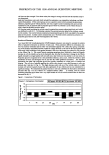
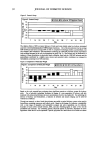
PREPRINTS OF THE 1998 ANNUAL SCIENTIFIC MEETING 91 cell sizes are then averaged. From these values, the change in average cell size from the baseline at day 0 was determined. Eight test formulations were used which included four polyesters, one competitive technology, and three control formulations. Of the control group, one was a positive control which contained the penetration enhancer, propylene glycol without polyester one was a negative control containing only acid and one contained no acid, no polyester and no propylene glycol which was referred to as the vehicle because it solely related to the basic emulsion carrier. All formulas tested (excluding the vehicle control) contained ten percent undissociated lactic acid which was buffered to a pH of 3.5. All formulas contained five percent polyester added to the oil phase, except for the controls. One control formula contained acid and propylene glycol which was added to the aqueous phase at five percent. Another control contained only acid. The third control contained no polyester, no propylene glycol and no acid, and was designated as the vehicle. Results and Discussion Two linear 800 MW trimethylpentanediol (TMPD)/adipate polyesters were tested to evaluate the relative effect of polyester termination on delivery of lactic acid. These polyesters differed in termination only. One was hydroxy terminated and the other was terminated (capped) with a fatty alkyl group, isonanoate. Use of the hydroxy terminated polyester resulted in a larger decrease in cell size for the first fourteen days of the study while exhibiting a more gradual increase in cell size as the dosage was reduced by fifty percent on day fifteen (Fig. 1). The control formula containing propylene glycol exhibited a sharp and dramatic decrease in cell size initially and up to the fourteenth day, but after the reduction in dosage at day fifteen, rapidly returned to average baseline cell size (cell size at day twenty-one was similar to cell size at day 0). Propylene glycol is recognized to be a skin penetration enhancer, and as such, tended to promote a rapid distribution of lactic acid throughout the SC and into the viable epidermis and dermis. The increased penetration rate noted with propylene glycol also typically contributes to a high level of irritation and stinging. The cell size of panelists applying the vehicle only showed a very small decrease in cells size between day 0 and day 14 (Fig. 2). The slight decrease noted with use of the vehicle relates to a slight increase cell turnover typically found with daily application of any vehicle and was not considered as a significant change. We interpreted the gradual increase in cell size contributed by the hydroxy terminated polyester after day 14 to be evidence of a sustained delivery effect. In contrast, with the control containing propylene glycol there was a very rapid increase in cell size which occurred after the dose was decreased on day ! 5. Figure 1. Comparison of Termination Figure 1. Comparison of termination ] ß Capped, 800 MW El-OH terminated, 800 MW 15 8 lO ß '•-•ø • • -5 o -lO -15 7 14 21 28 7 14 21 28 Day

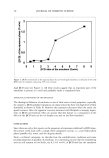
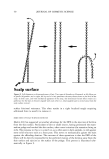
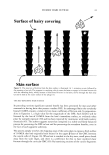
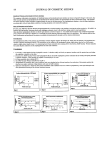
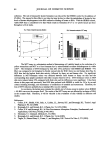
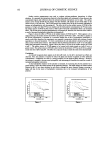
92 JOURNAL OF COSMETIC SCIENCE Figure 2. Control Group Figure 2. Control Group _-- 15 i 5 o -5 o -lO *• -15 I BVehicle B No polymer O Propylene Glycol I 7 14 21 28 7 14 21 28 7 14 21 28 Day The relative effects of MW on topical delivery of lactic acid were studied using two hydroxy terminated polyesters with trimethylpentandiol (TMPD)/adipate backbones. One of the test polyesters had an average MW of 800 and one had an average MW of 1500. A competitive technology product, a polyurethane, was also utilized in this comparison. Test formulations containing the 1500 MW polyester and the polyurethane both exhibited increases in the cell size throughout the study (Fig. 3). The increase may be attributed to a tendency of these formulations to physically retard exfoliation, since both the 1500 MW polyester and the polyurethane contributed to a slightly more viscous and somewhat sticky consistency as compared to formulations containing lower MW polyesters. Figure 3. Comparison of Molecular Weight Figure 3. Comparison of Molecular Weight _-- 15 6 -10 • -15 B 800 MW B 1500 MW O Polyurethane I 7 14 21 28 7 14 21 28 7 14 21 28 Day Based on the work reported here, polyesters have significant promise as a delivery system for hydroxy acids. Use of polyester technology facilitates the design of a new generation of hydroxy acid skin treatment with enhanced performance at lower concentrations of acid or at a higher pH. By optimizing the delivery of hydroxy acid formulations, a reduction in irritation and sensory stinging can be achieved without loss of efficacy Through our research, we have found that polyesters are useful as topical delivery systems when used in formulations containing sunscreens and hydroxy acids. Based on the design of a polyester, compatibility with a wide range of lipophilic and hydrophilic excipient and active ingredients can be achieved. Examples of such actives include tretinoin, DHA, and skin whitening agents to name a few, but the possibilities are numerous. By controlling specific structural aspects of polyesters, deposition of active ingredients within the SC can be optimized. Specific polyesters have been shown to be useful as a means
Purchased for the exclusive use of nofirst nolast (unknown)
From: SCC Media Library & Resource Center (library.scconline.org)