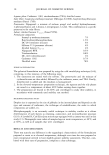
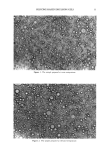
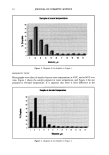
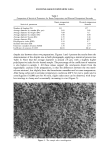
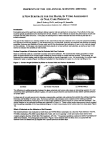
PREPRINTS OF THE 1998 ANNUAL SCIENTIFIC MEETING 85 NOVEL DELIVERY OF HYDROXY ACIDS TO THE SKIN: TRIMETHYLSILYL DERIVATIVES Gary E. LeGrow, 1 Ph.D., W. Leonard Terry, Jr., • Ph.D., Anna K. Floyd z and Rebecca A. Henger z •PCR, Inc. (a subsidiary of BTP plc), Gainesville, FL 2Hill Top Research, Inc. St. Petersburg, FL Introduction Alpha-hydroxy carboxylic acids, most commonly glycolic and lactic acids, are widely known in the cosmetic industry for their "anti-aging" benefits [1]. Alpha-hydroxy carboxylic acids, which are protic and water soluble, work by pene•xating the outermost layers of the epidermis, the s•xatum cometun. Therein, they initiate an increase in the rate of sloughing of dead surface cells, forcing an increase in the rate of replacement by new cells [2]. Associated with the use of alpha-hydroxy carboxylic acids are undesirable side effects, namely stinging, burning and itching sensations. These forms of skin irritation are the major drawbacks associated with the "anti-aging" benefits of these acids. Various methods have been used to reduce the initmacy of alpha-hydroxy acids, including partial neutralization [3], partial or complete esterification [4], or the use of additives [5]. None of these approaches change the real interaction of the alpha-hydroxy carboxylic acid with the outer layers of the epidermis. Rather, they provide the appearance of reduction of irritation often with reduced efficacy. For efficacious [3]. Recent research by Kligman [6] suggests that beta-hydroxy carboxylic acids, such as salicylic acid, are better for anti-aging and for cell exfoliation than alpha-hydroxy carboxylic acids, and they do not have the irritancy factors associated with the alpha-hydroxy carboxylic acids. Large scale conlxolled studies, such as those conducted by Stiller [1], have not yet been carried out on beta-hydroxy carboxylic acids. It is hypothesized that beta-hydroxy carboxylic acids, with their greater hydrocarbon content than that in glycolic or lactic acids, have the ability to penetrate into lower layers of the epidermis more effectively than do alpha-hydroxy carboxylic acids. Once there, the beta-hydroxy carboxylic acids have a greater aff'mity for the lipid domains of the epidermis [7]. To date, no attempt has been made to modify hydroxy carboxylic acids to simultaneously more effectively target the lipid domains of the lower layers of the epidermis, deliver free hydroxy carboxylic acids to those sites, and eliminate the irritation factors usually associated with topical application of hydroxy carboxylic acids. The purpose of this paper is to address all of these issues and to demons•xate the efficacy of a new product type on human subjects. Materials Lactic, glycolic and salicylic acids were each trimethylsilylated with hexamethyldisilazane to form Bis(Trimethylsilyl)-lactate, -glycolate and -salicylate respectively. Via this conversion, these hydrophilic hydroxy acids were converted into their corresponding lipophilic trimethylsilyl derivatives. These aprotic liquid materials, which range from 50-60% silicone were found to possess spreadability, smoothness, tatkiness and residue sensory characteristics similar to volatile dimethylsilicones. Trimethylsilyl ether (Me3SiOC) and more particularly trimethylsilyl ester (Me3SiOC=O) containing compounds are well known to be hydrolyrically unstable, regenerating their parent alcohols and carboxylic acids on exposure to water. Human Sensitivity Testing Facial sensitivity studies, using double-blinded paired comparison designs, in humaas were carried out using 10% lactic acid in water, 25% Bis(Trimethylsilyl)lactate in 5 cp Phenyl Trimethicone, 25% Bis(Trimethylsilyl)glycolate in 5 cp Phenyl Trimethicone, 20% Bis(Trimethylsilyl)salicylate in 5 cp Phenyl Trimethicone, distilled water and 5 cp Phenyl Trimethicone. Of the 30 female subjects who participated in these studies, all of whom were pre-qualified as "stingers" to 10% lactic acid in water, only 3 demonstrated a mild sting response to the trimethylsilyl substituted hydroxy acids. There were no adverse events associated with the use of these new substances.

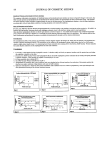
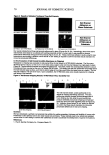
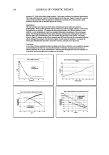
86 JOURNAL OF COSMETIC SCIENCE Active containing Formulations Prototype 1otiou and ointment formulations were prepared coutaining 25% bis(trimethylsilyl)lactate. This concentration ofbis(trimethylsilyl)lactate corresponds to an effective concentration of 10% lactic acid after complete hydrolysis of the active. Because of the moisture sensitivity of the active, anhydrous formulations were prepared and packaged to minimize exposure to water or water vapor during repeated dispensing. In addition to the active, other ingredients present in the lotion were Hexyl Methicone, Dimethiconol, Polybutene and Caprylyl Trimethicone. Other ingredients present in the ointment, in addition to the active, were C24-28 Alkyl Dimethicone wax, Caprylic/Capric/Stearic Triglycerides, Hexyl Methicone, Caprylic/Capric Triglycerides, and Caprylyl Trimethicone. Both formulations contained 0.5% fragrance. Human Repeat Insult Daily Topical Application Testing In a pilot study the above prototype lotion was applied to the back of the hand and to the inside of the forearm using the ASTM Method E 1490-92, "Sensory Evaluation of Materials and Products" protocol twice daily for 45 days. No irritation or reddening of the skin was observed or felt during this period and no indications of sensitization to the formulation were observed. By comparison to the untreated back of the opposite hand and inside of the forearm, increased smoothness and reduction of aging spots were observed. Human Efficacy Study and Three Dimensional Digital Imaging Analysis A lotion and an ointment containing the same ingredients as described above, except without the active bis(trimethylsilyl)lactate, were prepared. An efficacy study of the four formulations, using over 100 women, of ages ranging from 30 to 60 years, was conducted over a 90 day period. The group was divided into approximately 35 with the active lotion, 17 with the inactive lotion, 35 with the active ointment, and 17 with the inactive ointment. Participants were requested to apply their test material twice daily. Visual analysis of participants was conducted at the beginning, and weeks 2, 4, 8, and 12. A trained dermatologist supervised these analyses. Silicone negative skin replicates were made of all participants at the beginning, and weeks 4 and 12. Quantitative analysis of the skin replicates was obtained by laser light scanning directed at a 25 degree angle from the plane of the replica. A Cohu Solid State B&W camera was used to photograph each of the scans. The B&W luminanee pattern of each scan was then converted into a visible color image of each replica. Changes in the skin surface during the 90 day efficacy test are readily seen via these color images. Standard statistical methods were used to analyze all of the data obtained in this study. Twenty nine within treatment study parameters and fifteen between treatment study parameters were determined to be statistically significant. These include reductions in free lines, coarse wrinkling, mean spacing of lines, tactile roughness, mottled pigmentation, yellowing, and e•tthema. Reduction in the % of the negative skin replicate area covered by shadows was statistically significant. Conclusions Treatment of human skin with lotion or ointment formulations comprising 25% bis(trimethylsilyl)- lactate, which corresponds to the ultimate delivery to the epidermis of 10% lactic acid after complete hydrolysis of this active, has demonstrated no significant irritation or inflammation of the skin even after repeated application. Although it is known that bis(trimethylsilyl)lactate is hydrolyrically unstable and that the skin has a high moisture content, lactic acid is apparently not formed in the upper layers of the epidermis. The lipophilic nature of bis(trimethylsilyl)lactate would suggest that it should have an affinity for the lipophilic domains in the lower layers of the epidermis such as those sites which synthesize collagen and promote new cell growth. The forty four study parameters which identified statistically significant improvements to the skin, in the 90 day efficacy test, suggest that bis(trimethylsilyl)lactate is reaching the lower layers of the epidermis. The location in the epidermis and the mechanism of hydrolysis of bis(trimethylsilyl)lactate to liberate lactic acid therein is unknown at this time and is the subject of ongoing research. References 1. Stiller, M.J., "Topical 8% Glycolic Acid and 8% Lactic Acid creams for the Treatment of Photodamaged Skin", Archives of Dermatology, 132 631-636 (1996). 2. http://www.mistyisle.corn/alpha.htm 3. US Cosmetics Industry, "Special Report, AHA Consumer Products 1990o1993," p. 6 4. http://www.dc.enews.corn/maqazines/gen• news/archives/960401-005.html 5. Hahn, G.S., "A New Line of Defense Against Aging: Breaking the Irritation Barrier", DCI, 162 (2) 18- 22 (1998). 6. Kligman, A., '•ext Generation of Skin Care for Aging Skin?", DC1160 (4) 6 (1997). 7. http://www.mistyisle.com/beta.htm
Purchased for the exclusive use of nofirst nolast (unknown)
From: SCC Media Library & Resource Center (library.scconline.org)