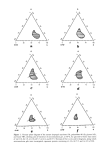
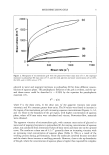
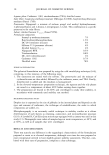
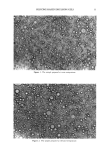
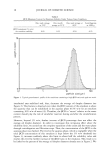
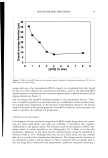
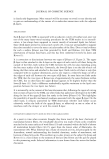
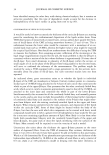
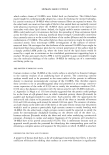
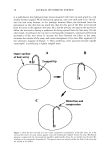
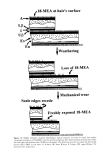
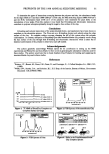
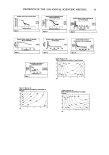
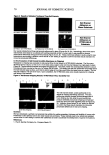
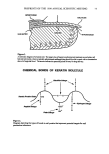
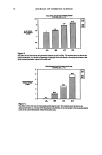
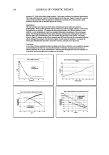
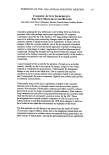
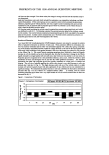
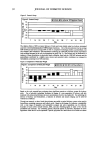
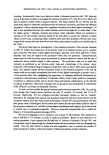
PREPRINTS OF THE 1998 ANNUAL SCIENTIFIC MEETING 81 PH EFFECT ON THE PHASE BEHAVIOR OF DODECYLTRIMETHYLAMMONIUM BROMIDE AND POLYVINYLAMINE SOLUTIONS Stacey V. Maggio and Robert Y. Lochhead University of Southern Mississippi, Hattiesburg, MS 39406 Introduction Polymer - surfactant interactions play an important role in industrial fields such as pharmaceuticals, cosmetics, food preparations, and detergents. This wide array of applications has sparked an interest in the fundamental research of polymer-surfactant interactions. Although there has been much work conducted in this area, there is still a need for fundamental research to gain a better understanding of these interactions. The overall goal of the proposed research is to study a model system by tailoring the charge density and hydrophobic content ratio of a cationic polyelectrolyte, polyvinylamine, in order to induce unique liquid crystalline phase behavior resulting from the interactions with a cationic surfactant, dodecyltrimethylammonium bromide. The ability to control the counterbalance between attractive and repulsive forces may allow for the precise control of desired phase behavior, which could offer significant advantages in the industrial applications of polymer-surfactant pairs. Experimental Polyvinylamine was synthesized by acid hydrolysis of free radically polymerized N-vinylformamide. Following the synthesis, phase diagrams were constructed by preparing samples of varying polymer and surfactant concentrations. After an equilibrium period the samples were observed using polarizing light microscopy to check for birefringence. Surface tension measurements were made using the Wilhemy Plate method on a Kruss K12 Tensiometer equipped with a Dosimat. Results and Discussion Phase diagrams were constructed to observe if hydrophobic interactions between the unmodified PVAm and the DTAB resulted in any unique phase behavior. Figure I shows the binary phase diagram for DTAB and PVAm at pH 5. As observed in the data, for DTAB alone the hexagonal phase does not appear until a surfactant concentration of 50 wt%. However, in the presence of PVAm the hexagonal phase appears at a surfactant concentration of 20 wt% with 40 wt% PVAm, which is much lower than in the surfactant alone. The binary phase diagram for DTAB and PVAm at pH 7 is shown in Figure 2. At pH 7, just as at pH 5, the hexagonal phase for DTAB alone shows up near 50 wt%, while in the presence of DTAB it appears at 20 wt% DTAB with only 30 wt% PVAm. At the increased pH the hexagonal phase is appearing at the same lower surfactant concentration, but with less polymer concentration. At pH 10 the hexagonal phase for DTAB alone also shows up near 50 wt%, while in the presence of PVAm the hexagonal phase appears at 10 wt%DTAB with 30 wt% PVAm. At even higher pH the hexagonal phase appears at even lower surfactant concentrations. For comparison with the pH5 and 7 systems, the hexagonal phase at 20 wt% DTAB at pH I0 show up with only 20 wt% PVAm, which is even lower in polymer concentration. DTAB and P•y(vi•lamine) Binary Phase Diagram ß pH5 4O "1 'H 'H I - IIO•al• 30 "1 "1 'H ,i ,i ,H&I ß 1 ,I "1 "1 q ,14,14,14 . Figure I DTAB a•l P•y(vinylaml•e) Binary Phase Diagram •40 q q I. ISOtrOl• . 30 1 '1 '1 ,,i • ,,i *N&i *N _ , . , _ . . . . . . , o m • •o ,,o •o Weight Percent DTAB Figure 2

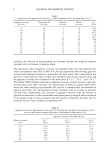
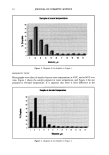
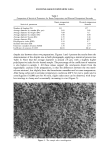
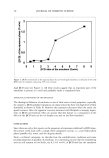
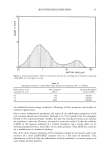
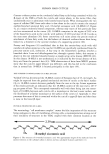
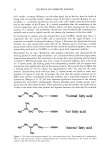
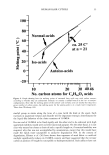
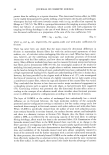
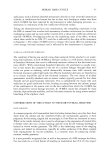
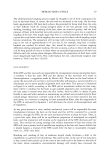
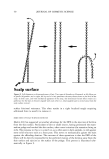
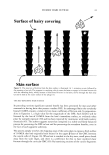
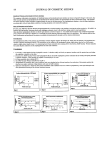
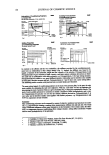
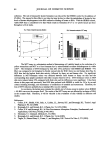
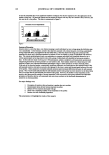
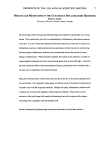
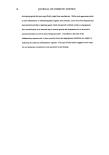
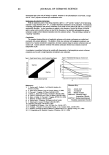
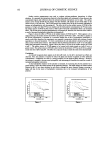
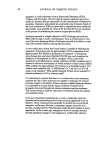
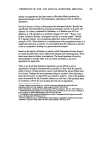
82 JOURNAL OF COSMETIC SCIENCE Surface tension measurements were used to evaluate polymer-surfactant interactions in dilute solutions. It is assumed that interactions observed in the dilute region will correspond to those shown in the concentrated regions and inferences about the polymer-surfactant interactions can be made. The surface tension curves for the DTAB did not change with pH therefore, pH appears to have little effect on the surface activity of DTAB alone. The PVAm became more surface active as the pH increased, indicating an increase in hydrophobicity with increasing pH. The effect of pH on the surface tension of DTAB in the presence of 2.Sg/L and 10g/L PVAm was studied, and for both polymer concentrations the PVAm lowers the surface tension of DTAB at pH's 5 and 7, while at pH 10 for both concentrations there is an increased effect. The PVAm shows increased hydrophobicity at increased pH, therefore, the observed effect could be a result of increased hydrophobic interactions at increased pH. Figure 3 shows the effect of PVAm on the surface tension of DTAB at pH 5. There appears to be a slight lowering in the surface tension of DTAB in the presence of PVAm at pH 5. The effect is greater as the PVAm concentration is increased. It is uncertain whether this is due to hydrophobic interactions or merely a salt effect therefore, the experiments were repeated in ammonium chloride salt solutions of molar equivalence to the polyvinylamine. For both concentrations the salt and polymer solutions had the same effect on the DTAB surface tension. This indicates that the observed interactions at pH 5 are salt effects rather than hydrophobic interactions. Figure 4 shows the effect of PVAm on the surface tension of DTAB at pH 7. The surface tension of DTAB appears to be lowered with similar trends as at pH5, but to a greater extent. The surface tension of DTAB is also lowered in the presence of PVAm at pH 10 to a greater extent than that of pH5 and pH7. The effect of 2.5 g/L and 10 g/L is nearly the same at this increased pH. Conclusions An induced hexagonal phase appears at all three pH levels. As the pH is increased two effects are observed. First, less polymer is required to induce the phase and second it appears at lower surfactant concentrations. Competition for water is a strong possibility for the observed phase behavior. However, the polymer is assumed to become more hydrophobic with increasing pH, therefore this could be a result of 'increased hydrophobic interactions. As the hydrophobic character of the polymer is increased, by increasing the pH, the polymer has a greater ability to lower the surface tension of the surfactant solutions. The small changes in surface tension detected at pH 5 have been attributed to salt effects, although the more dramatic changes occuning at higher pH may be the result of hydrophobic interactions due to the increased hydrophobicity of the polymer. Figure 3 Figure 4
Purchased for the exclusive use of nofirst nolast (unknown)
From: SCC Media Library & Resource Center (library.scconline.org)