j. Cosmet. Sci., 50, 49-97 (January/February 1999) Preprints of the 1998 Annual Scientific Seminar December 10-11, 1998 New York Hilton New York, NY 49

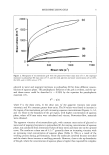
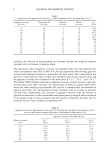
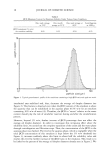
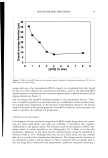
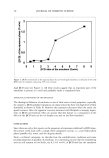
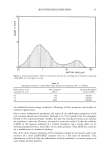
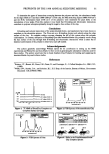
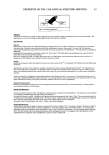
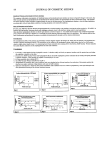
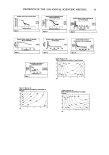
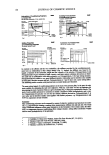
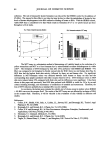
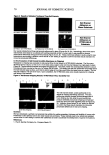
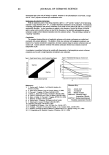
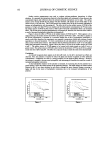
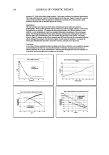
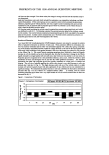
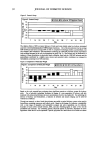
50 JOURNAL OF COSMETIC SCIENCE INVESTIGATING THE BOUND FRACTION OF POLYACRYLAMIDE COPOLYMERS ADSORBED ONTO MONTMORILLONITE CLAY Cheri McConnell Boykin and Robert Y. Lochhead, Ph.D. University of Southern Mississippi, Department of Polymer Science, Hattiesburg, MS 39406 Introduction Clay/polymer interactions are utilized in cosmetic compositions to provide enhanced theologies required for stabilization against separation and for desired theological attributes during use. However, determination of the mechanisms of stabilization and fiocculation is incomplete and few studies have been directed towards a systematic investigation of the fundamental behavior of these systems. If the binding interactions for these systems are understood, their physical properties can be dictated and controlled. This paper will focus on determining the polymer conformation upon adsorption and the types of interactions that occur between montmorillonite clay and a nonionic and cationic polyacrylamide. Experimental Materials. Ion exchanged homosodium montmorillonite was obtained from Southern Clay Products as a 3.1 wt% slurry and was used as received. Polyacrylamide, PAIn, and poly(acrylamide-co-[3- (methacryloylamino)propyl]trimethylammonium chloride), PAmMaap Quat, with 5 and 12 mol% cationic comonomer incorporation were synthesized free-radically utilizing potassium persulfate as the initiator at 37øC for 6-8 hours under a N2 atmosphere. The comonomer incorporation was evaluated using a •3C gated decoupling experiment and the molecular weights were determined from light scatting experiments in 1M NaCl and calculated from Berry plots. Line Broadening Experiments) Polymer and clay samples were adjusted to the appropriate pH, mixed at concentrations corresponding to complete surface coverage as determined from adsorption isotherms and allowed to equilibrate for 48 hours after which the complexes were centrifuged at 18,000 rpm. The pellet was then redispersed in a minimum amount of D20, transferred to a 10mL NMR tube and ran immediately. •3C spectra were obtained at 75 MHz with a Bruker AC 300 spectrophotometer. The 90 ø pulse width was 22.8 gs. Approximately 200,000 scans were accumulated with a repetition of 0.27s. Rolling baselines were eliminated using Grams © software. Infrared Studies. • The polymer and clay samples were adjusted to the appropriate pH, mixed at complete surface coverage and allowed to equilibrate for 48 hours, at which time they were deposited on AgBr plates and the solvent evaporated off in a desiccator for 48 hours. Absorbance spectra for each of the pure components and each of the complexes were obtained after 32 scans from 4000 to 400 cm q with a resolution of 4 cm '• on either a Bruker IFS 88 spectrophotometer or a Nicolet Prot6g6 460 spectrometer E.S.P. Results and Discussion PAm. PAIn in solution has a relatively sharp line width at half height, Av•,2, as shown in Figure-1 with Av•,2 -- 23 Hz. As the polymer is adsorbed and rotation is inhibited the line-width broadens. Theoretically, if the polymer adsorbs in a totally flat conformation Av•,• = o,,. Qualitatively speaking one can compare and determine the relative conformation of the polymer on the clay surface. Figure-1 illustrates this by comparing spectra as a function of pH. PAIn adsorbs in a more loopy conformation at pH 7 than at pH 3 (Avw -- 44 versus 76 Hz) and at pH 10 a rather flat or hindered conformation is observed (Av•,• = 788 Hz). The types of interactions contributing to the adsorption were determined by observing relative peak shifts of the polymer and clay before and after polymer adsorption. Figure-2 represents the infrared spectra of the montmorillonite clay and Figure-3 of the PAIn. The absorbance bands at 3620 and 1000-1200 cm '• were monitored for interactions occurring along the edge and face surfaces, respectively. In addition, the absorbance band from 3000-3750 cm q was monitored for H-bonding interactions occurring in the NH2- stretching region of the polymer. As shown in Figure-4, by observing the change in the absorbance band, adsorption primarily occurs along the edge surface of the clay through H-bonding of the amide group of the polymer (significant shifts being greater than 4 cm'•). PAmMaap Quat. In general, the PAmMaap Quat adsorbs in a flat or hindered conformation with visible floc formation observable at each pH studied. From the line broadening studies it can be shown that at pH 7 and pH 10 the polymer adapts a flat conformation, while at pH 3 a low degree of chain mobility rolating to a more loopy conformation is observed.
Purchased for the exclusive use of nofirst nolast (unknown)
From: SCC Media Library & Resource Center (library.scconline.org)