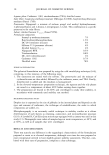
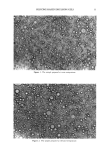
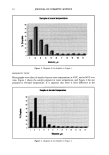
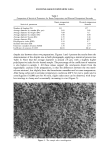
MICROEMULSION GELS 7 ACKNOWLEDGMENTS The authors wish to express their thanks to the State Scholarship Foundation of Greece for the scholarship provided to C. A. Ayannides. REFERENCES (1) D. Artwood, "Microemulsions" in Colloidal Drug Delivery Systems, J. Kreuter, Ed. (Marcel Dekker, New York, 1994), pp. 31-71. (2) M. Trotta, S. Morel, and M. R. Gasco, Effect of oil phase composition on the skin permeation of felodipine from o/w microemulsions, Pharmazie, 52, 50-53 (1997). (3) G. Ktistis and I. Niopas, A study on the in-vitro percutaneous absorption of propranolol from disperse systems,.]. Pharm. Pharmacol., 50, 413•418 (1998). (4) J. L. Parra, J. J. Garcia Dominguez, F. Comelies, J. Sanchez, C. Solans, C. Pelejero, and F. Balaguer, Use of microemulsions as vehicles for nucleophilic reagents in cosmetic formulations, Int..]. Cosmet. Sci., 7, 127-141 (1985). (5) H. L. Rosano, J. L. Cavallo, D. L. Chang, and J. H. Whittam, Microemulsions: A commentary on their preparation,.]. Soc. Cosmet. Chem., 39, 201-209 (1988). (6) S. E. Friberg, Micelies, microemulsions, liquid crystals and the structure of stratum corneum lipids,.]. Soc. Cosmet. Chem., 41, 155-171 (1990). (7) J. L. Zatz and G. P. Kushla, "Gels" in Pharmaceutical Dosage Forms: Disperse Systems, H. A. Lieberman, M.M. Rieger, and G. S. Banker, Eds. (Marcel Dekker, New York and Basel, 1989), Vol. 2, pp. 495-510. (8) T. X. Viegas, A. H. Hikal, and A. B. Jones, Percutaneous absorption of bendroflumethiazide from gel and membrane controlled gel systems: An in vitro and in vivo study, Int..]. Pharm., 152, 165-178 (1997). F. Dreher, P. Walde, P. L. Luisi, and P. Eisner, Human skin irritation studies of a lecithin micro- emulsion gel and of lecithin liposomes, Skin PharmacoL, 9, 124-129 (1996). F. Dreher, P. Walde, P. Walther, and E. Wehrli, Interaction of a lecithin microemulsion gel with human stratum corneum and its effect on transdermal transport, J. Controlled Release, 45, 131-140 (1997). C. Provost and R. Kinget, Transparent oil-water gels: A study of some physiochemical and biophar- maceutical characteristics. Part I. Formation of transparent oil-water gels in the 4-component-system of Eumulgin B3, Cetiol HE, isopropyl palminate and water, Int..]. Pharm., 44, 75-85 (1988). C. Provost, H. Herbots, and R. Kinget, Transparent oil-water gels: Study of some physicochemical and biopharmaceutical characteristics. Part 3: Viscosity and conductivity measurements, Pharm. Ind., 50, 1190-1195 (1988). D. Artwood and G. Ktistis, A light scattering study on oil-in-water microemulsions, Int. J. Pharm., 52, 165-171 (1989). D. Artwood and A. T. Florence, Surfactant Systems (Chapman and Hall, London, New York, 1983), pp. 519-524. A. Martin, P. Bustamente, and A. H. C. Chun, Physical Pharmacy, 4 'h ed. (Lea & Febiger, Philadelphia, London, 1993), pp. 456-457. (9) (10) (11) (12) (13) (14) (15)

j. Cosmet. Sci., 50, 9-14 (January/February 1999) The effect of preparation technique on droplet size in silicone emulsions V. GALLARDO, A. HERN.•NDEZ, A. PARERA, and M. A. RUIZ, Pharmacy and Pharmaceutical Technology Department, School of Pharmacy, University of Granada, E- 18071 Granada, Spain. Accepted for publication December 15, 1998. Presented at the 9th National Congress of Dermopharmacy, Granada, Spain, April 1998. Synopsis A sunscreen formulation, a gel emulsion based on silicones, has been prepared through the use of these polymers to manufacture emulsions at room temperature. Changes in droplet size are studied in a formu- lation prepared by two methods (at room and at elevated temperature) using the microscopy technique. The influences of time, temperature, and centrifugation are examined. We have concluded that the room- temperature manufacturing process provides emulsions with a homogeneous droplet size that are slightly more stable than those obtained at elevated temperature. INTRODUCTION Recent advances in the preparation of topical formulations have demonstrated the im- portance of the vehicle in obtaining maximum effectiveness (1,2). The enormous devel- opment of silicone chemistry in recent years has given rise to numerous compounds with ever better properties for use in pharmaceutics and particularly in dermocosmetics (3,4). Formulations with these compounds can therefore be found in shampoos, hydrating gels, anti-aging creams, non-fat emulsions, deodorants, antiperspirants, make-up, and espe- cially sunscreen preparations (5). In the many types of cosmetics, the use of emulsions has grown the most in the last few years, thanks to state-of-the-art techniques and particularly to the great advances in research into raw materials. We have carried out a detailed study of the variation in the preparation of emulsion gels based on silicones, taking advantage of the fact that these polymers can be used to prepare emulsions at room temperature. Variations in droplet size are studied in a formulation prepared with the microscopy technique in two ways: at room or at elevated temperature. The influences of time, temperature, and centrifugation are also examined. EXPERIMENTAL Silicone phase: DC-244 (tetramer silicone) Silbione V-5 (pentamer silicone) DC-1401 (dimethiconol).
Purchased for the exclusive use of nofirst nolast (unknown)
From: SCC Media Library & Resource Center (library.scconline.org)