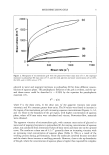
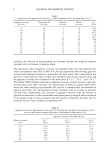
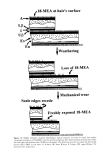
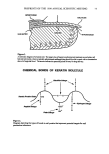
PREPRINTS OF THE 1998 ANNUAL SCIENTIFIC MEETING 93 to focus organic sunscreen actives in the outer layers of the SC. By focusing sunscreens in the outer SC, risks of irritation can be minimized and efficiency and effectiveness of sunscreens can be enhanced. Other polyesters have been shown to be effective in distributing and sustaining hydroxy acids throughout the SC. By sustaining hydroxy acids in the SC, increases in the rate of skin renewal attributed to hydroxy acids can be enhanced while irritating side effects can be minimized. References 1. Carpenter, T., Howe, A., O'Connor, A., Orfanelli, $., Siegfried, R. Protection From Sun Protectors, Drug & Cosmetic Industry, March 1996. 2. Vaughn, C. Solubility Effects in Product, Package, Penetration, and Preservation. Cosmetics & Toiletties, Vol. 103, 48, 1988. 3. Vaughn, C. Solubility Parameters for Characterizing New Raw Materials. Cosmetics & Toiletties, Vol. 108, 58-62, 1993. 4. Grove, G..•. Investigative Dermatology, 73 (1), 6?-69, 1979. 5. Baker, H. and Blair, C. Br. •. Investigative Dermatolog•, 80, 36?-3?2, 1968. 6. Piewig, G..•. Investigative Dermatolog•, 54 (1), 19-23, 1970.

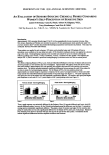
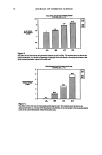
94 JOURNAL OF COSMETIC SCIENCE IN gigo AND IN VITRO EFFICACY TESTING OF AN EXTRACT OF THE MEMBRANE OF A BROWN SEAWEED Suelien BennetO and Romuald Vallee 2 •Biosil Technologies, Paterson, N J, ZCodif lnternational, Saint-Malo, France Introduction Over the last five years, there has been extreme interest in the immune stimulatory and protective properties of polysaccharides. Using controlled enzymatic hydrolysis, an oligosaccharide composed of mannuronic and guluronic acids has been extracted from the membrane of a brown seaweed, LaminariB digitata. The extract, both by itself and complexed with different minerals, was tested in vivo and in vitro for efficacy in skincare products. The parent compound has the INCI name hydrolyzed alvin, and the derivatives are complexed with either zinc or magnesium and manganese. Materials & Methods The parent extract (hydrolyzed alvin) was tested for anti-inflammatory effects using three testing modalities: quantification of epidermal interleukine l•x, lactic acid sting test, and protection of Langerhans cells after UVB irradiation. For the quantification of interleukine l•x, the ingredient was incorporated into a cosmetic base (ac•lic polymer aqueous gel) at 5%. It was then applied at 12 hour intervals to the forearms of 10 volunteers for a period of one day. On the second day, the quantity of interleukine loc was measured using ELISA. These values were compared to the baselines and the untreated sites. The lactic acid sting test was carried out on 8 panelists after using a cosmetic base containing 5% of the hydrolyzed alvin for 28 days. To determine the ability of the ingredient to protect Langerhans calls after UVB irradiation, human skin explants were treated twice daily with product for three days and then irradiated with 1.5 J/cm 2 of UVB. Langerhans cells were marked using monoclonal antibodies and then counted. Treated explants were compared to untreated controls. The parent extract was complexed with magnesium and manganese and tested for free radical scavenging ability. Using the hypoxanthine/xanthine oxidase system, the ingredient was compared to superoxide dismutase for free radical scavenging ability. A culture of human fibroblasts was incubated with varying concentrations of the ingredient for 24 hours and then exposed to UV radiation (325 mJ/cm2). The control was screened from the UV. Cellular proteins were extracted and their level of oxidation was measured by immunological determination. Protection against apoptosis was determined by measuring the rupture rate in the DNA of human fibroblasts exposed to UVB irradiation. The results were compared to a reference of ascorbic acid and glutathione and also an untreated control. The parent extract was complexed with zinc and tested for ability to combat the development of ache. The ingredient has the ability to inhibit the formation of 5•x reductase as exhibited via radioactive labeling of testosterone in Skinrex models (3D reconstituted epidermis). Models were incubated for 24 hours in the presence of 10% of the extract, a 10 's M solution of finasteride as the positive control, and a negative control which was incubated in culture medium alone. Models were radiolabelled, incubated, and then analyzed using thin layer chromatography and autoradiography. The ability of the extract to reduce surface sebum levels was investigated on 12 volunteers. Using a sebumeter, casual surface sebum levels were measured. The panelists then used a product containing 5% of the extract and a placebo twice a day for 28 days. Surface sebum levels were measured again on Day 28 and compared. In vitro anti-microbial assay shows that the extract has the ability to inhibit the growth ofPropionibacterium acnes, one of the species of skin flora responsible for the development of ache. Bacteria were cultured anaerobically in the presence of the extract (or with no extract for the control). Number of organisms was determined via turbidimetric assay after 48 hours of incubation. Results & Discussion After two applications of the hydrolyzed alvin to the forearm of ten panelists, there was an 11.1% increase in epidermal interleukine 1oc levels over an untreated control. The lactic acid sting test, carried out on eight volunteers, showed that treatment with the active resulted in a 36.6% reduction in the reactivity of the skin• In the in vitro immunoprotective assay, it was shown that the extract at 0.5, 2.0, 3.0 and 5.0% was able to give 35, 64, and 75% protection of the Langerhans cells versus an untreated control.
Purchased for the exclusive use of nofirst nolast (unknown)
From: SCC Media Library & Resource Center (library.scconline.org)