PREPRINTS OF THE 1998 ANNUAL SCIENTIFIC MEETING 89 extract or progesterone has been used to offset the effects produced by decreased estrogen levels. Phytoestrogenic materials provide an effective alternative. We have chosen to focus on the pentacyclic triterpene betulin. Betulin has specifically been identified as possessing estrogenic activity in human cell cultures. In a study conducted by Mellanen, et al Betulin was 45% as effective as 1713-estradiol at a minimum dosage of 23 nM iii. Recio, et al, further evidences Betulin's estrogenic activity in a recent paper iv. Betulin (0.5 mg/ear)reduces 12-O-tetradecanoylphorbol acetate (TPA) induced edema by 45%. When betulin is co-administered with progesterone there is a significant reduction in activity. It is postulated that the reduction in activity is due to competitive binding at a glucocorticoid receptor. Based on the ability of Betulin to inhibit cAMP-Dependent Protein Kinase v it is quite possible that it may inhibit both elastase and melanogenesis. Both these areas deserve further investigation. The broad spectrum of activity demonstrated by betulin make it an excellent candidate as an active ingredient for aging skin. There is no doubt that botanical ingredients can be effective active ingredients if properly characterized or purified. In fact while the specific mode of action of these products can be well defined the actual effects tend to be broad. Perhaps the most important thing to consider when selecting a plant derived active is what effect you intend to achieve. One of the greatest areas of potential for the Cosmetic Industry as well one of the greatest areas of contention will be the use of plant derived active ingredients. i Thomas J Stephens and Associates, Inc. "MatTek Corporation Epidenn Skin Model (EPI-200) Antioxidant Study with PGE2 Endpoint" Study Number L98-D037 (MTr/PGE) • AMA Laboratories, "Evaluation of Sun Protection by SPF Determination". Ref. No. WP97-BERN1-33 ß •i "Wood-derived estrogens: studies in vitro with breast cancer cell lines and in vivo in Irout" Mellanen P, et al Toxicology & Applied Pharmacology 1996 Feb: 136(2): 381-388 i• "Investigations on the steroidal anti-inflammatory activity if triterpenoids from Diospyros leucomela", Pieco et al, Planla Med 1995 Feb 61(l):9-12 v "Selective inhibition of cyclic AMP-dependent protein kinase by amphiphilic triterpenoids and related compounds.", Bing Hui Wang, Gideon M. Polya, Phytochemisuy 1996:41(1):55-63

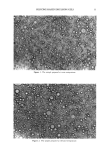
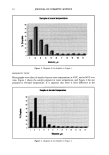
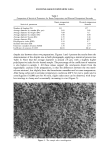
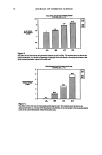
90 JOURNAL OF COSMETIC SCIENCE OPTIMIZING EFFICIENCY OF SKIN TREATMENT ACTIVE INGRED•IENTS VIA SPECIALIZED POLYMERIC TECHNOLOGY Diana L. Smith and Andrew P. O'Connor lnolex Chemical Company, Philadelphia, PA 19148 lntroductiou Several different types of technologies exist for controlling the delivery of active ingredients in topical cosmetic and pharmaceuticals. The discovery of the ability of polyesters to mitigate the skin penetration of sunscreen active ingredients led to the evaluation of polyesters as delivery systems for hydrophilic actives [1]. In our present study, solubility parameters were employed to design polyesters compatible with hydrophilic active ingredients. The effects of applying formulations containing the alpha hydroxy acid (AHA) lactic acid and the polyesters to human skin in-vivo were examined. We utilized a comparative cytology method that determined the change in stratum corneum (SC) cell size at weekly intervals for 28 days. The results indicated that certain polyesters of sufficiently low molecular weight could enhance the effects attributed to the lactic acid application. The proposed mechanism of action is that the polyesters are able to carry the lactic acid to the target site of action in the skin and release the lactic acid at a sustained rate. Initial experiments were conducted also on the polyesters' abilities to enhance the effects attributed to dihydroxyacetone (DHA) which is the active used in sunless tanning preparations. Our preliminary experiments indicate that the initial color intensity and persistence attribmed to DHA application may be enhanced with formulations containing polyesters. Based on the results of the AlIA and DHA experiments, we have found that polyesters have the potential to act as controlled delivery systems for AHAs and DHA, as well as other hydrophilic and lipophilic actives ingredients. Using the polyesters as controlled, topical delivery systems may afford benefits such as enhanced potency or efficacy, reduced irritation, and sustained activity of active ingredients. Materials and Methods Structural characteristics significantly influence a polyester's behavior and properties, such as solubility. To describe the solubility behavior of a polyester and select active and inactive moieties, solubility parameter theory was employed. The method we used in polyester design and the method most commonly used by cosmetic formulators is the Hildebrand Solubility Method [2,3]. Using this approach, we were able to design polyesters which delivered hydrophilic actives to the SC and which were compatible with common oil-phase excipients. Active ingredients of interest were able to partition into specially designed polyesters. Specific structural features designed into the polyesters, provided for a maximized and sustained distribution of the active(s) throughout the SC. To measure the performance of AHA with polyesters, as well as the irritation potential associated with hydroxy acids, we utilized an in-vivo human panel testing. While there are other known methods used to determine desquamation rates, we were interested in specifically evaluating delivery of the actives in terms of exfoliation rate with a measurement method which would be sensitive enough to reflect slight performance differences. For our studies we utilized a comparative cytology method. This method was based on published research which correlated decreases in squamous cell size to increased rates of exfoliation [4,5,6]. Our test also utilized a dosage curve which resulted in much higher concentration of AHA being applied during the first half of the study. The dosage curve allowed us to study potential residual delivery or potential enhanced exfoliation as the dosage was decreased. The comparative cytology method we employed involved the following steps: 1. Test products were applied to the volar forearms of eighteen panelists twice per day for 15 days. The application was reduced to one application at day 16 to the avoid the possibility of too much irritation to panelists, and to determine the ability of the polyesters to sustain the effect of the AHA even at reduced levels. 2. Surface biopsies were removed from the sites via D-Squame discs five times during the study at seven day intervals days 0, 7, 14, 21, and 28. The cells are then stained and photomicrographed at 132X magnification. The negatives are projected onto a white surface and the cells are sized in each frame. The
Purchased for the exclusive use of nofirst nolast (unknown)
From: SCC Media Library & Resource Center (library.scconline.org)