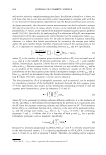
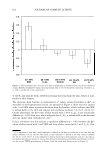
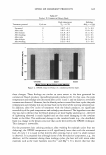
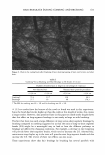
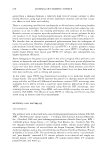
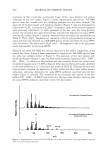
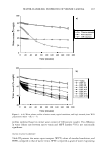
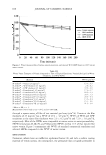
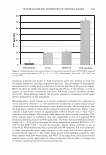
608 120 100 i so .... = 60 ·c:y.... y = 40 20 0 (I) 1 wt% sos JOURNAL OF COSMETIC SCIENCE (iii) In Vitro Control (PBS) (iv) 10 wt% PG (v) 10 wt% G Figure 1. Skin electrical currents induced by aqueous solutions i-v upon contacting p-FTS in vitro in diffusion cells. The error bars represent standard errors based on six p-FTS samples. The skin electrical currents induced by aqueous surfactant solutions i and ii ( 1 wt% SDS and 1 wt% C 12 E6 , respectively) are significantly higher than those induced by the in vitro) PBS control solution (iii) and by the aqueous humectant solutions iv and v (10 wt% PG and 10 wt% G, respectively). Clearly, and perhaps as expected, these results indicate that surfactants induce the greatest extent of perturbation to the skin aqueous pores through which ions can cross the skin barrier, thereby resulting in the largest observed skin electrical current values. 9 In addition, aqueous contacting solution v (10 wt% G) induces a lower skin electrical current than aqueous contacting solution iv (10 wt% PG). 10 This is consistent with the observation that G is able to diffuse into the SC, increasing skin hydration and relieving clinical signs of erythema and skin dryness more readily than PG and the in vitro PBS control (iii) (30-35). More specifically, the following effects of glycerol on the skin barrier have been reported in the literature: (a) Glycerol affects the crystalline arrangement of the intercellular lipid bilayers, thereby enhancing SC barrier function and decreasing SC water permeability 9 Note that 1 wt% SDS induces a larger skin electrical current in vitro, and consequently, a greater extent of perturbation to the skin aqueous pores in vitro than that induced by 1 wt% C 12 E 6 in vitro. This finding is consistent with SDS inducing a greater extent of erythema than C 12 E6, although C 12 E 6 does induce skin dryness (21-24). 10 A Student t-test with a significance (p 0.05) indicates that each of the bars in Figure 1 is statistically different from the other bars.

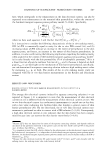
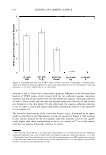
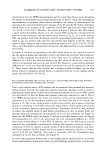
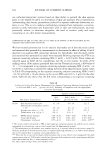
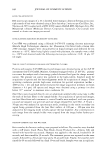
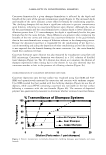
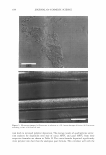
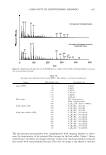
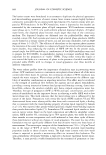
RANKING OF SURFACTANT-HUMECTANT SYSTEMS 609 (34), (b) glycerol increases the rate of corneocyte loss from the upper layers of the SC through a keratolytical effect on desmosome degradation, thereby reducing the scaliness of dry skin and maintaining the SC barrier (33) and (c) glycerol can penetrate into the SC and, due to its high hygroscopic property, is able to bind water and thus reduce water evaporation (30). The mannitol skin permeability values induced by aqueous contacting solutions i-v are reported in Figure 2. As can be seen, aqueous contacting solution i (1 wt% SDS) induces the largest mannitol skin permeability in vitro. Because the 1 wt% aqueous SDS con tacting solution i induces the largest perturbation to the skin aqueous pores relative to the other aqueous contacting solutions (ii-v), the mannitol skin permeability values are the largest for SDS. This result is consistent with those of the skin electrical current measurements (see above). In addition, the 1 wt% C12E6 aqueous contacting solution (ii) induces a significantly larger mannitol skin permeability relative to the in vitro control (iii) and also relative to the aqueous humectant solutions (iv and v). This result is consistent with those of the in vivo skin barrier measurements, which show that a 1 wt% C12E6 aqueous contacting solution induces a larger extent of erythema and skin dryness than a 10 wt% PG and a 10 wt% G aqueous contacting solution (see below). It is important to note that aqueous contacting solution v (10 wt% G) induces the smallest extent of perturbation to the skin aqueous pores relative to the other aqueous contacting solutions (i-iv), as reflected in both the in vitro skin electrical current and the mannitol skin permeability measurements (see Figures 1 and 2). This finding is consistent with 0 e OS � e � = ·= = OS 8 7 6 5 4 3 2 1 0 (i) 1 wt% sos (iii) In Vitro Control (PBS) (iv) 10 wt% PG (v) 10 wt% G Figure 2. Mannitol skin permeability induced by aqueous solutions i-v upon contacting p-FTS in vitro in diffusion cells. The error bars represent standard errors based on six p-FTS samples.
Purchased for the exclusive use of nofirst nolast (unknown)
From: SCC Media Library & Resource Center (library.scconline.org)