J. Cosmet. Sci., 58, 629-636 (November/December 2007) Hair breakage during combing. IV. Brushing and combing hair CLARENCE ROBBINS and YASH KAMATH, 12425 Lake Ridge Circle, Clermont, FL, 34711 (C.R), and Textile Research Institute, PO Box 625, Princeton, NJ 08540 (Y.K.). Accepted for publication June 26, 2007. Synopsis During combing of hair, longer fiber breaks (2.5 cm) occur principally by impact loading of looped crossover hairs, while short segment breaks ( 2.5 cm) occur primarily by end wrapping. Brushing provides breakage similarly but with a higher ratio of long-to-short segment breaks, and the ratio of long-to-short segment breaks (LIS) is a good way to follow these two pathways of breakage under different conditions. For example, bleaching hair, a longer comb stroke, increasing fiber curvature, wet combing versus dry combing, and brushing versus combing all provide for an increase in long segment breaks and this ratio, with the largest effect produced by brushing. INTRODUCTION The objective of this work was to provide a better understanding of how human hair fibers break during combing and brushing by exploring variables that have not been examined previously: brushing versus combing, increasing length of comb stroke, and hair fiber curvature. In the first paper in this series (1), hair snags were examined to determine the important hair-on-hair versus hair-on-comb arrangements and interac tions that might be involved in breakage. Hairs looped over other hairs as shown earlier by Brown and Swift (2) and end wrapping were shown to be important factors in hair breakage. Our second paper (3) showed that longer fiber breaks are consistent with impact loading of one hair against another in a snag, while short segment breaks are more consistent with end wrapping (4). We also decided to examine the variables of brushing versus combing, increasing the length of the comb stroke, hair curvature, and some of the variables in our earlier work through the ratio of long-to-short segment breaks, which reveals how breakage by impact loading versus end wrapping is involved. EXPERIMENT AL The hair used in all of these experiments was 12-inch dark brown, virgin hair from Caucasians, reported to be undamaged and purchased from DeMeo Brothers of New 629

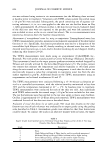
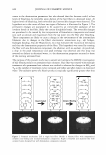
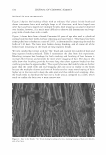
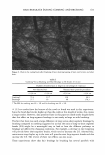
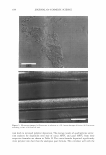
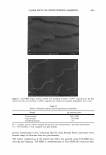
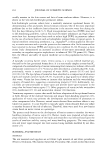
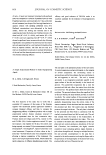
630 JO URN AL OF COSMETIC SCIENCE York City. The hair photographs were made using a Nikon D2X camera equipped with a 55-mm close-up lens. COMBS AND BRUSHES USED A Goody "flat" brush with holes in the back was used (see Figure 1). It was 22.2 cm long with a handle 10.2 cm long. The bristles were a white plastic with blue bulbous tips. The bristle shaft diameter was 0.1829 cm, the bristle shaft length 1.9 cm, and the bristle bulb diameter 0.2134 cm. A cylindrical Priven styling brush with a wooden 11-cm long handle was attached to a 2.2-cm diameter shaft containing plastic bristles (see Figure 1). The bristles were 1 cm long with a bristle shaft diameter of 0.0762 cm and bristle bulbs 0.1118 cm in diameter. An Ace comb #61286, the same type of comb used in the previous hair breakage experiments was used in these studies. PREPARATION OF HAIR FOR CURVATURE EXPERIMENTS One-gram tresses of the DeMeo hair described above was permanent-waved in straight and curled configurations using a commercial ammonium thioglycolate home wave for normal-to-wave hair in the following manner. For the curled hair, each tress was wet with 2 grams of waving lotion, wound tightly around a 6-mm rod, and bound at the top and bottom with rubber bands. It was wet with waving lotion a second time after ten minutes, and then after 20 minutes it was rinsed with 20 ml of water and allowed to stand on the rod for another ten minutes. Neutralizer was then added. After remaining Figure 1. Two different brushes used in this work. Ar the top is the Goody "flat" brush and at the bottom is the styling brush.
Purchased for the exclusive use of nofirst nolast (unknown)
From: SCC Media Library & Resource Center (library.scconline.org)